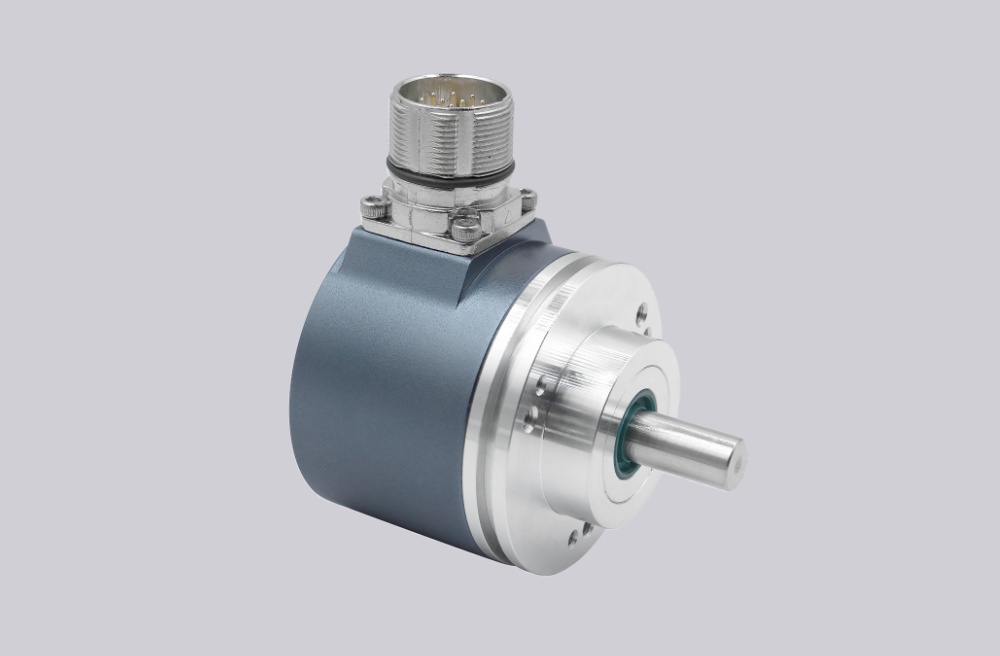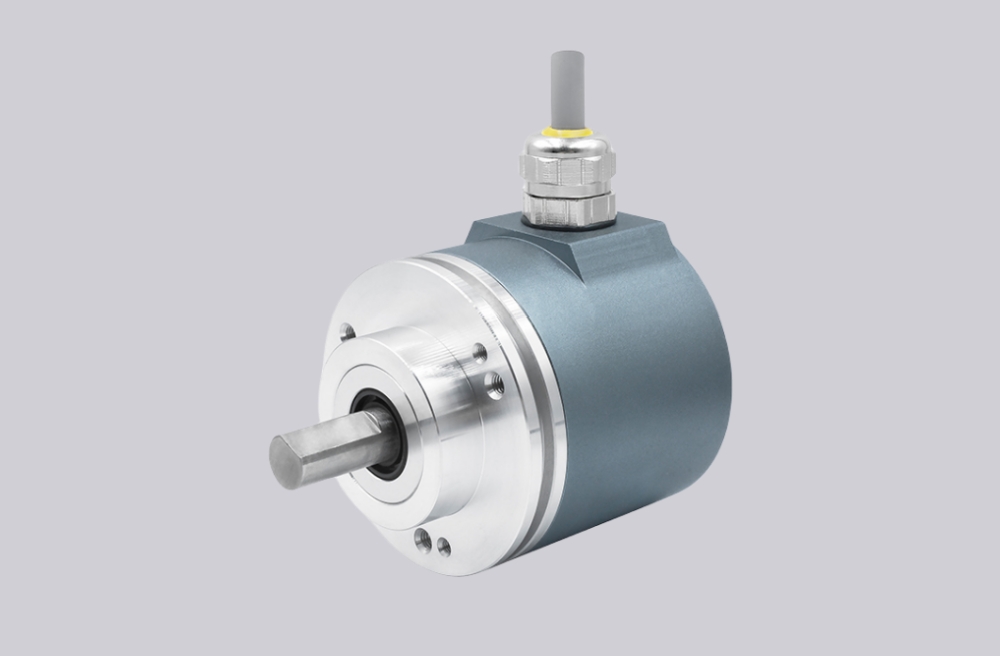





Single-turn and multi-turn absolute encoders are both used to provide direct position feedback, but they are designed for different motion requirements. In industrial applications, the choice between them is not simply a matter of specification level. It depends on whether the control system only needs angular position within one revolution or must also retain the number of completed revolutions.
A single-turn absolute encoder provides one unique position value within a single mechanical rotation. After each full revolution, the position pattern repeats. This type of encoder is suitable for systems where motion is limited to one turn or where the controller only needs angular position within a known range. Typical examples include valve positioning, indexing applications, and rotary devices with defined motion limits.
A multi-turn absolute encoder provides not only the angular position within one revolution, but also the total number of revolutions completed. This allows the system to retain full positional information even after multiple rotations. In applications such as lifting systems, long-travel rotary mechanisms, storage equipment, and positioning systems with repeated turns, this additional information is essential. Without multi-turn capability, the control system may know the shaft angle but not the actual mechanical position in the larger movement sequence.
The most important difference appears after power loss or restart. A single-turn encoder can immediately provide angular position, but it cannot determine how many full turns occurred unless that information is managed elsewhere in the system. A multi-turn encoder retains both components of position data, allowing the machine to recover actual position without re-homing in applications where full travel history matters. In many real systems, this is the deciding factor.
From an engineering perspective, the selection should begin with the motion structure of the machine. If the application only requires one-turn positional awareness, using a multi-turn encoder may add complexity without practical benefit. If the application involves repeated or accumulated rotation and actual machine position depends on turn count, selecting a single-turn encoder will create functional limitations that may only appear during restart, maintenance, or abnormal operating conditions.
Data structure should also be considered. A multi-turn encoder usually transmits more bits because it includes both single-turn and turn-count information. The controller must be able to read and interpret this data correctly. In practical integration, communication may be stable while system position is still wrong if the controller does not process the multi-turn structure properly.
Mechanical selection principles do not fundamentally change between the two types, but practical application often does. Multi-turn encoders are more likely to be used in systems where travel range, restart behavior, and process continuity are critical. In these cases, installation quality, coupling stability, and long-term reliability become especially important because feedback errors may affect accumulated position logic over time.
Commissioning logic is also different. In a single-turn system, verification often focuses on angle range, direction, and signal interpretation within one revolution. In a multi-turn system, engineers must also verify turn count behavior, restart consistency, preset logic, and controller interpretation across the full motion range. A system may appear correct in local rotation tests while still producing errors in full-travel operation if multi-turn data is not handled correctly.
Replacement planning is another important issue. In many maintenance projects, an encoder is replaced based on shaft size or interface type, while the distinction between single-turn and multi-turn is overlooked. This can lead to serious system mismatch. A replacement encoder may communicate correctly and fit mechanically, yet still fail to provide the position logic required by the original machine. For this reason, restart behavior and travel logic should always be checked before replacement.
Neither single-turn nor multi-turn is universally better. A single-turn encoder is often the more efficient and appropriate choice when the application only requires angular position within one revolution. A multi-turn encoder becomes necessary when the system must retain actual position across repeated rotations, especially after restart or power interruption.
In practical system design, the selection should be based on machine movement logic, controller interpretation, and restart requirements rather than on specification level alone. Choosing a multi-turn encoder where it is not needed may increase cost and complexity. Choosing a single-turn encoder where turn count matters may compromise operation and recovery.
This article explains the practical differences between single-turn and multi-turn absolute encoders and outlines the main factors that determine correct selection in industrial applications.