



EncoderWorks EncoderWorks
  • Home
  • Solutions
    • SSI
    • RS485 / Modbus-RTU
    • CANopen
    • Analog
    • Profinet
    • Profibus
    • Parallel
    • EtherCAT
    • EtherNET
    • Incremental
  • Absolute Encoder
  • Incremental Encoder
  • Draw Wire Sensors
  • Technical Insights
  • Contact
Home › Technical Insights › How to Choose the Right Encoder for Your Application

How to Choose the Right Encoder for Your Application

EncoderWorks Team
2 hoursago

Selecting the right encoder is not simply a matter of matching shaft size or resolution. In industrial applications, encoder selection affects system stability, signal reliability, commissioning complexity, and long-term maintenance performance.

In many projects, problems such as unstable feedback, incorrect positioning, communication failure, or repeated replacement are not caused by the encoder itself, but by incorrect selection at the beginning. A technically compatible encoder must match not only the mechanical structure, but also the signal logic, interface type, installation conditions, and control system requirements.

This guide explains a practical, engineering-based approach to choosing the right encoder for real industrial applications.


Step 1: Define the Application Requirement

Before looking at any encoder model, the first step is to clearly define what the system needs.

Typical questions include:

  • Is the application measuring position, speed, or both?
  • Is absolute position required after power loss, or is homing acceptable?
  • Is the motion continuous rotation or limited travel?
  • What is the operating speed range?
  • Is the system part of closed-loop control or monitoring only?

These questions determine whether an absolute encoder or an incremental encoder is appropriate.

In general:

  • Incremental encoders are suitable for speed feedback and relative motion measurement.
  • Absolute encoders are suitable where position must be known immediately after restart.

Choosing the wrong type at this stage often leads to unnecessary system complexity later.


Step 2: Confirm Mechanical Compatibility

Mechanical fit is often the most visible parameter, but it is only one part of the selection.

Key points to confirm:

  • shaft type (solid shaft or hollow shaft)
  • shaft diameter
  • flange type and mounting interface
  • installation space and alignment condition
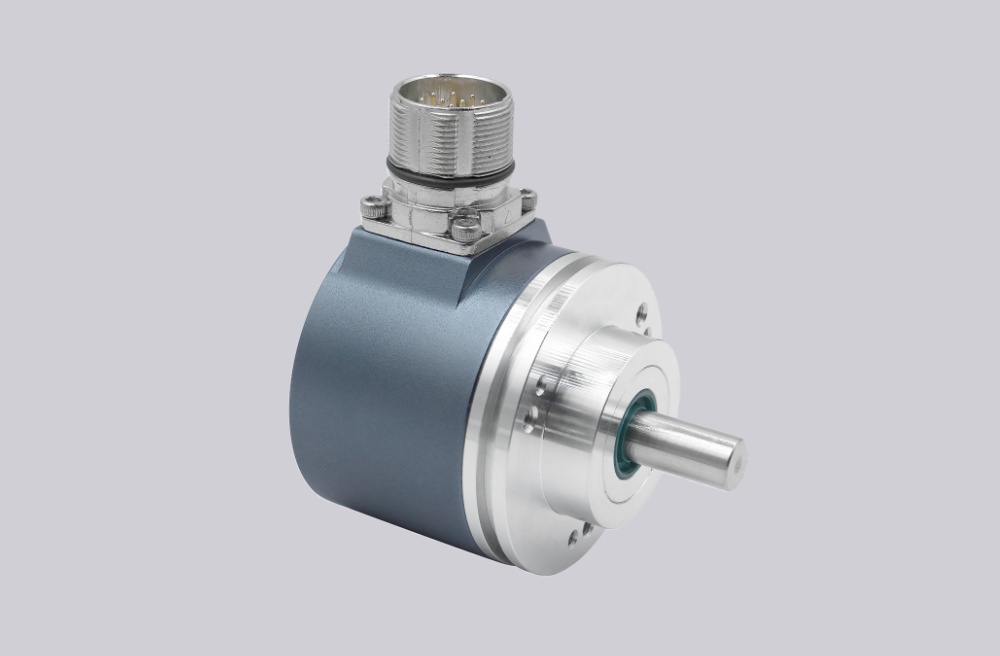
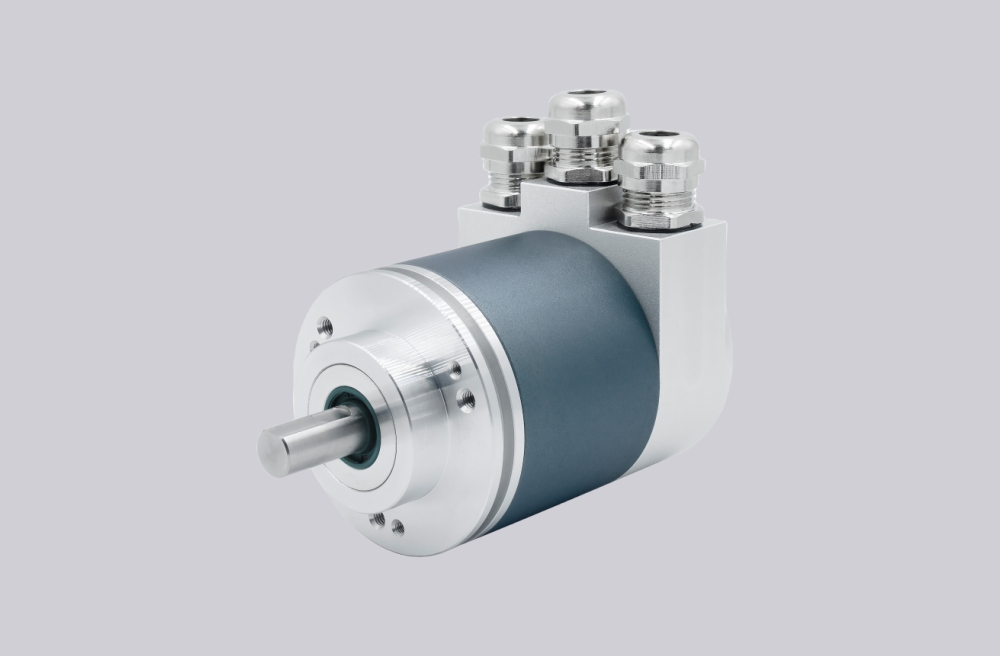
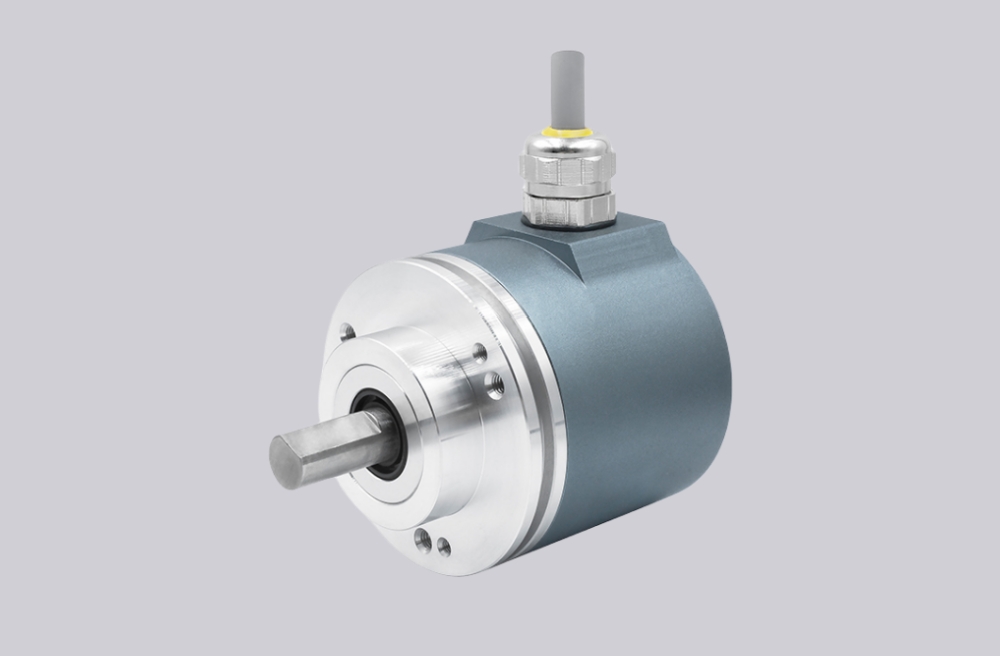
  • cable outlet direction or connector type

Even when the encoder function is correct, poor mechanical matching can lead to vibration, misalignment, or premature failure.

A common mistake is focusing only on shaft size while ignoring installation constraints such as mounting depth or cable routing space.


Step 3: Select the Right Resolution

Resolution determines how finely the system can detect movement.

For incremental encoders, resolution is expressed as pulses per revolution.
For absolute encoders, it is expressed as bit count or position steps.

However, higher resolution is not always better.

Consider:

  • controller processing capability
  • required positioning accuracy
  • maximum rotational speed
  • signal frequency limits

Excessively high resolution can increase signal frequency beyond what the controller can process, leading to missed counts or unstable readings.

From an engineering standpoint:

Resolution should match application requirements, not exceed them unnecessarily.


Step 4: Match the Output Signal or Interface

This is one of the most critical steps.

For incremental encoders, common outputs include:

  • TTL / differential signals
  • HTL / push-pull signals
  • open collector

For absolute encoders, common interfaces include:

  • SSI
  • RS485
  • CANopen
  • Profibus
  • Profinet
  • EtherCAT

The encoder must match the controller input capability exactly. Mechanical compatibility alone is not sufficient.

A typical field issue is installing an encoder with the correct dimensions but incompatible signal output, resulting in no readable feedback.

Always confirm:

  • electrical signal type
  • controller input specification
  • communication protocol compatibility

Step 5: Evaluate Installation Environment

Industrial environments vary significantly, and the encoder must be suitable for real working conditions.

Consider:

  • temperature range
  • vibration level
  • presence of oil, dust, or moisture
  • electrical noise from drives or motors
  • cable length and routing conditions

For example, in high-noise environments, differential signal output and proper shielding become important. In harsh environments, protection level and sealing structure must be considered.

Ignoring environmental factors often leads to unstable operation even when the encoder is technically correct.


Step 6: Consider Wiring and Integration Requirements

Encoder selection should also consider how easily it can be integrated into the system.

Key points:

  • cable type and length
  • shielding and grounding requirements
  • connector or direct cable connection
  • controller configuration complexity
  • commissioning effort

Some encoder types may be easy to install mechanically but require complex communication configuration. Others may be simple electrically but require careful pulse interpretation.

The goal is to reduce overall system complexity, not just select a device that “works in theory.”


Step 7: Check Power Supply Requirements

Encoders operate within specific voltage ranges. Common supply options include 5V or 10–30V systems.

Ensure:

  • the available power supply matches encoder requirements
  • voltage drop is acceptable for cable length
  • power source is stable under load

An encoder supplied with unstable voltage may produce unreliable signals even if everything else is correct.


Step 8: Plan for Replacement and Compatibility

In many industrial projects, encoders are replaced or upgraded during maintenance.

When selecting an encoder, consider:

  • availability of equivalent models
  • flexibility of interface adaptation
  • ease of replacement without system redesign
  • compatibility with existing control logic

A well-chosen encoder should not create long-term dependency or replacement difficulty.


Common Selection Mistakes

Several mistakes appear frequently in real projects:

Choosing based only on mechanical size

Mechanical fit does not guarantee signal compatibility.

Selecting maximum resolution without need

Higher resolution increases system load and may reduce stability.

Ignoring controller interface requirements

Electrical mismatch is one of the most common causes of failure.

Overlooking installation conditions

Cable routing, shielding, and environment affect long-term performance.

Not considering restart behavior

Using an incremental encoder where absolute position is required can create operational problems after power loss.


A Practical Selection Checklist

A simple engineering checklist can help avoid most problems:

  1. Define application purpose (position, speed, or both)
  2. Choose encoder type (absolute or incremental)
  3. Confirm mechanical fit
  4. Match signal or communication interface
  5. Select appropriate resolution
  6. Evaluate environment and installation conditions
  7. Verify power supply compatibility
  8. Consider long-term replacement and integration

Following this sequence can significantly reduce commissioning time and system instability.


Final Thought

Choosing the right encoder is not about selecting the most advanced or highest specification model. It is about selecting the device that fits the control system, installation environment, and application logic with the least complexity and highest stability.

In industrial practice, a well-matched encoder improves not only measurement accuracy, but also system reliability, commissioning efficiency, and long-term maintenance performance.

Industrial Encoder Technical Consultant

EncoderWorks Team

WeChat: +86 150 5045 0799 (WhatsApp)

Email: sividi360@outlook.com

Industrial Encoder Technical Consultant

EncoderWorks Team

WeChat: +86 150 5045 0799 (WhatsApp)

Email: sividi360@outlook.com

Common Causes of Encoder Signal Loss and How to Fix Them

Previous

EncoderWorks Team

WeChat:+86 150 5045 0799 (WhatsApp)Email:sividi360@outlook.com
1215
Posts
0
Comments
0
Likes

Articles

How to Choose the Right Encoder for Your Application
Common Causes of Encoder Signal Loss and How to Fix Them
How to Wire an Incremental Encoder (Step-by-Step Guide)
SSI vs RS485 Encoder: Key Differences and How to Choose

Related posts

What Is the Difference Between Absolute Encoder and Incremental Encoder?

What Is the Difference Between Absolute Encoder and Incremental Encoder?

EncoderWorks Team
SSI Encoder Customization Scope and Interface Configuration Considerations

SSI Encoder Customization Scope and Interface Configuration Considerations

EncoderWorks Team
Pressure Measurement Film: China Offers High-Quality Alternatives

Pressure Measurement Film: China Offers High-Quality Alternatives

EncoderWorks Team
RS485 vs CANopen Encoder Comparison

RS485 vs CANopen Encoder Comparison

EncoderWorks Team

About

EncoderWorks focuses on industrial encoder technology, interface compatibility, and system integration.

Column

Home Absolute Encoder Incremental Encoder Draw Wire Sensors Technical Insights Contact

Contact

sividi360@outlook.com
© 2026 EncoderWorks. All rights reserved.
  • Home
  • Solutions
    • SSI
    • RS485 / Modbus-RTU
    • CANopen
    • Analog
    • Profinet
    • Profibus
    • Parallel
    • EtherCAT
    • EtherNET
    • Incremental
  • Absolute Encoder
  • Incremental Encoder
  • Draw Wire Sensors
  • Technical Insights
  • Contact
  • AMG11P29Z0
  • 862229127
  • Absolute Encoder
  • FG4K-1024G-90G-NG
  • PVM78E-011K2R0BN-1213
  • 809645­-01
  • 825860-01
  • 14-1436X-200
  • AVS78E-022K2A0GN-0012
  • AVM78E-022KRA0BN-1212

EncoderWorks Team

WeChat:+86 150 5045 0799 (WhatsApp)Email:sividi360@outlook.com