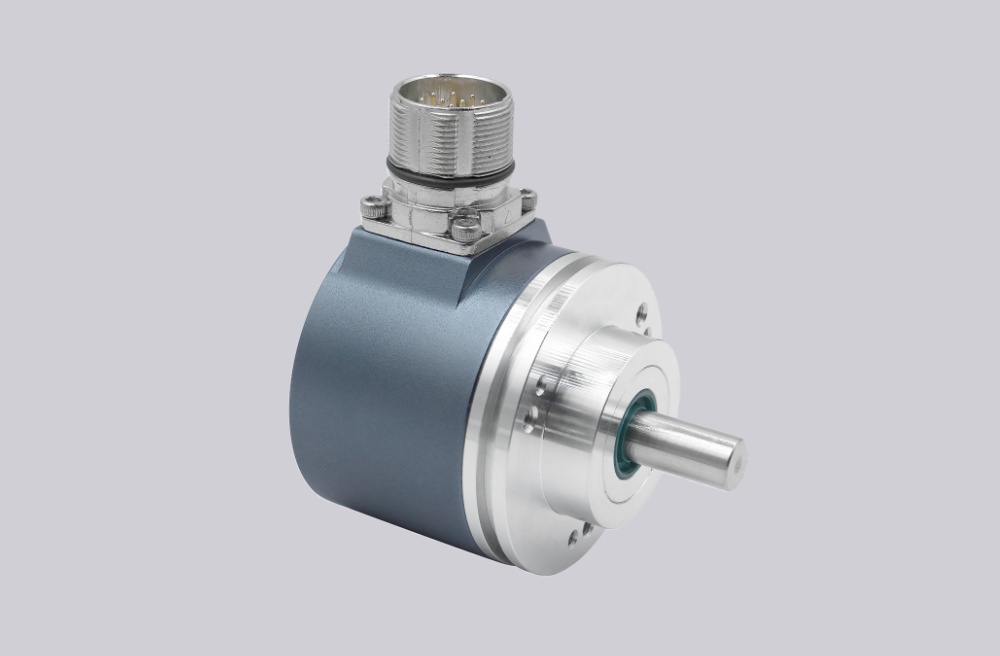





Encoder signal loss is one of the most common and most misdiagnosed problems in industrial motion systems. In many cases, the encoder itself is not the root cause. What looks like an encoder failure may actually come from unstable power supply, poor wiring practice, shielding problems, controller input mismatch, or installation conditions that gradually reduce signal integrity during operation.
From an engineering perspective, signal loss should never be treated as a single-cause fault. It is usually the result of how the encoder, cable, controller, grounding path, and machine environment work together. A system may run normally during initial testing and then begin losing pulses, position data, or communication stability after speed increases, load changes, inverter switching, or machine vibration appear in real production conditions.
This article explains the most common causes of encoder signal loss and the practical steps used to identify and correct them.
What Does Encoder Signal Loss Usually Look Like?
Signal loss does not always mean the signal disappears completely. In industrial applications, it often appears in one of these forms:
- missing pulses
- unstable position values
- intermittent feedback drop
- incorrect direction detection
- communication timeout
- sudden count jump
- position drift after repeated cycles
- system alarm related to feedback failure
For incremental encoders, the problem often shows up as lost counts, unstable speed reading, or false direction changes. For absolute encoders, it may appear as invalid position words, communication interruptions, or protocol read errors.
The first practical point is simple:
Signal loss is often partial before it becomes complete.
That is why intermittent faults should be treated seriously during early diagnosis.
Cause 1: Unstable Power Supply
An encoder can only output stable feedback when its supply voltage remains within the correct operating range. If the power supply drops under load, fluctuates due to electrical noise, or is affected by long cable voltage loss, the encoder may produce weak or inconsistent signals.
Typical symptoms include:
- signal present at startup but unstable during operation
- random drop after machine acceleration
- communication errors that appear only at certain cycles
- encoder resets after load changes
This problem is especially common when the supply is measured at the cabinet but not at the encoder side. A long cable run, undersized conductor, or poor terminal connection can create a real voltage deficit at the device even though the power supply looks correct at the source.
How to fix it
- verify the encoder supply range from its technical data
- measure voltage at the encoder side during operation, not only at idle state
- check terminal tightness and connector condition
- reduce voltage drop by improving cable selection or supply routing
- isolate encoder supply from unstable power sources if necessary
In real industrial systems, stable encoder supply should be treated as a signal quality requirement, not just a basic wiring task.
Cause 2: Incorrect Output Type Matching
A common reason for signal loss is electrical mismatch between the encoder output and the controller input. The mechanical installation may be correct, but the signal still cannot be interpreted reliably if the output form is unsuitable.
Typical mismatch situations include:
- TTL output connected to an incompatible HTL input
- open collector output used without correct pull-up logic
- differential encoder connected as if it were single-ended
- controller input threshold not matching the encoder signal level
This type of problem can be misleading because the machine may still show partial response during testing. At low speed or short cable distance, the signal may appear usable, but under real conditions it becomes unstable.
How to fix it
- confirm encoder output type before replacement or installation
- confirm the controller input requirement, not just the connector pin position
- wire differential outputs as true signal pairs where required
- avoid assuming that “same number of wires” means “same signal logic”
In practice, output matching should always be checked before suspecting encoder damage.
Cause 3: Poor Shielding and Cable Routing
Industrial environments are full of electrical noise sources: inverters, servo drives, motor power cables, relay switching, contactors, and switching power supplies. Encoder signals, especially pulse outputs and serial communication lines, can become unstable if the cable shielding strategy is poor.
Typical symptoms include:
- unstable feedback only when nearby motors run
- count errors that increase with speed
- faults that appear only when inverter output is active
- intermittent communication problems with no clear mechanical cause
One common field mistake is routing encoder cables together with motor power lines over long distances. Even if the wiring is technically connected, the signal quality may degrade enough to create pulse corruption or communication instability.
How to fix it
- use proper shielded encoder cable
- separate encoder cable from motor and power lines
- avoid long parallel cable runs with high-current circuits
- review shield termination according to cabinet grounding design
- inspect cable damage, compression points, and connector shielding continuity
Shielding should be treated as part of the encoder system, not an optional accessory.
Cause 4: Grounding and Reference Problems
Even when the signal wires are correctly connected, unstable reference potential can cause the feedback to become unreliable. Grounding issues are especially difficult because they may create symptoms that look random or inconsistent.
Typical effects include:
- drifting counts
- communication errors over long cable distance
- intermittent faults between cabinets
- unstable behavior that changes with machine load or nearby equipment activity
In large systems, the encoder 0V reference, controller signal common, and cabinet grounding may not remain at the same stable potential if the grounding architecture is weak. This can distort how the controller interprets encoder outputs.
How to fix it
- confirm the intended signal reference path
- check controller common and encoder 0V relationship
- review grounding quality in multi-cabinet systems
- avoid uncontrolled ground loops
- improve grounding consistency where shield and signal reference interact
A stable encoder signal depends not only on the wire carrying the signal, but also on the reference condition surrounding it.
Cause 5: Connector or Cable Damage
Cable and connector faults are among the most practical causes of encoder signal loss, especially in machines with motion, vibration, bending, or repeated installation cycles.
Common failure points include:
- broken conductors near cable outlet
- loose connector pins
- oxidized contacts
- bent terminals
- damaged cable jackets allowing noise ingress
- repeated flexing beyond cable design limits
This problem often produces intermittent rather than permanent failure. The signal may return temporarily when the cable is moved, the machine stops vibrating, or the connector is reseated.
How to fix it
- inspect the cable at the encoder outlet, connector, and cabinet entry points
- check for damage caused by dragging chains, sharp bends, or mechanical pressure
- reseat and examine connectors carefully
- replace suspect cables instead of repeatedly retightening unstable terminations
- use motion-rated cable where the application requires repeated flexing
In service work, cable and connector issues should be checked early because they are common and often easier to confirm than internal encoder failure.
Cause 6: Incorrect Installation or Mechanical Stress
Not all signal loss problems are purely electrical. Mechanical installation errors can also affect encoder stability. Excessive shaft load, misalignment, vibration, or improper coupling can create signal irregularities by disturbing the encoder internally or by causing unstable rotation behavior.
Typical signs include:
- signal loss at higher speed only
- unstable feedback during vibration or impact
- repeated failure after encoder replacement
- pulse irregularity associated with mechanical runout
This is especially important where the encoder is mounted through rigid coupling, misaligned bracket structures, or unsuitable shaft support conditions.
How to fix it
- verify shaft alignment and coupling condition
- check whether the encoder housing is under mechanical stress
- review mounting rigidity and vibration exposure
- avoid transmitting excessive radial or axial load into the encoder
- confirm that the installation follows the intended mechanical design
A new encoder installed into the same poor mechanical condition may show the same signal problem again.
Cause 7: Excessive Cable Length or Unsuitable Transmission Conditions
Some encoder systems are stable over short distance but become unreliable as cable length increases. Longer cable runs increase the effects of attenuation, reflection, noise exposure, and reference instability.
This is particularly important for:
- high-frequency pulse signals
- single-ended transmission
- weak output stages
- fast serial communication
- installations crossing multiple cabinets or machine zones
How to fix it
- confirm whether the actual cable length is appropriate for the output type
- use differential transmission where possible
- review termination or communication settings where relevant
- reduce unnecessary connection points or extension joints
- keep routing disciplined across the full cable path
The electrical interface should always be evaluated in the context of cable distance, not only at the device itself.
Cause 8: Controller Configuration Errors
Sometimes the encoder signal is physically present, but the controller is not reading it correctly because of configuration issues. This is common with high-speed counters, serial communication ports, quadrature settings, and protocol-based absolute feedback.
Typical configuration-related symptoms include:
- feedback present on measurement instrument but not processed correctly by PLC
- incorrect count scaling
- unstable direction interpretation
- timeout alarms caused by mismatched communication settings
- position value changing but not matching real movement
How to fix it
- confirm input mode and counting logic
- review controller settings for differential or single-ended input
- verify baud rate, protocol format, or addressing for communication-based systems
- check quadrature multiplication settings
- confirm homing or Z-pulse logic if used
Signal diagnosis should always include both hardware and software interpretation.
Cause 9: Environmental Contamination or Aging
In some cases, the encoder signal becomes unstable because the device has aged or the environment has gradually degraded its performance. Heat, oil mist, dust, moisture, corrosion, and repeated thermal cycling can all affect long-term reliability.
Typical signs include:
- problems appearing after long service life
- failure increasing with temperature
- unstable output in humid or contaminated zones
- visible wear around seals, connectors, or cable exits
How to fix it
- inspect the encoder body and connection points for contamination or seal damage
- review whether the installed protection level matches the environment
- replace aged units where performance is no longer stable
- improve environmental protection if repeated exposure is unavoidable
Aging-related problems should be considered especially when other wiring and configuration checks show no clear fault.
A Practical Troubleshooting Sequence
In real field work, the fastest path is usually not to replace parts immediately, but to isolate the problem step by step.
A practical sequence is:
- confirm whether power at the encoder is stable during operation
- verify output type and controller input matching
- inspect cable, connector, and shielding condition
- review grounding and reference integrity
- test signal quality at low speed and operating speed
- confirm controller configuration
- inspect installation and vibration condition
- only then judge whether the encoder itself is defective
This approach reduces unnecessary replacement and usually finds the real cause faster.
Final Thought
Encoder signal loss is rarely just a simple “bad encoder” problem. In industrial applications, stable feedback depends on a complete chain: power supply, output matching, cable quality, shielding, grounding, controller compatibility, and installation conditions.
The most reliable engineering approach is to treat encoder feedback as a system issue rather than a single-component issue. When diagnosis is done methodically, signal loss can usually be traced to a practical and correctable cause, and long-term stability improves significantly after the real weakness is removed.