




SSI and fieldbus-based encoder interfaces are both widely used in industrial automation, but they solve different integration problems. In practical projects, the choice is rarely about which interface is more advanced. The real question is which communication method fits the control structure, installation environment, and system logic with the least integration risk.
SSI is a point-to-point synchronous serial interface typically used between one encoder and one controller input. Its main advantage is deterministic and relatively simple communication. The controller generates the clock, and the encoder returns position data in a fixed sequence. This makes SSI suitable for systems where direct absolute position feedback is required without the overhead of a networked communication structure.
Fieldbus or bus-based encoder protocols, such as CANopen, PROFIBUS, PROFINET, or EtherCAT, are designed for network-based integration. In these systems, the encoder becomes part of a larger communication architecture involving multiple devices, shared communication rules, device configuration, diagnostics, and structured parameter exchange. These interfaces are more suitable when the control system already operates on a bus or Ethernet-based network and the encoder must be integrated into that environment.
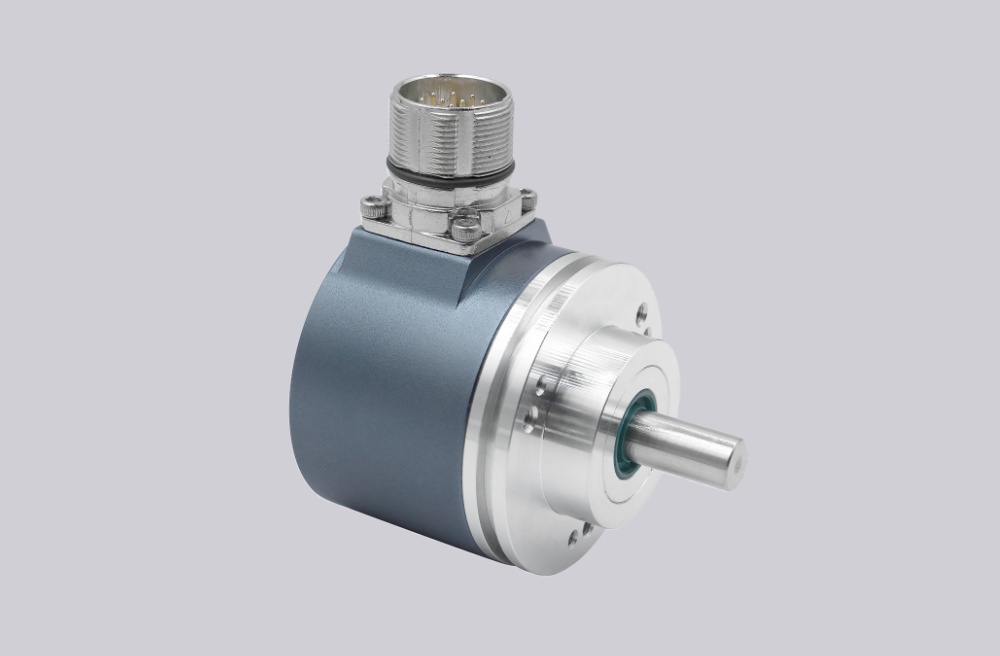
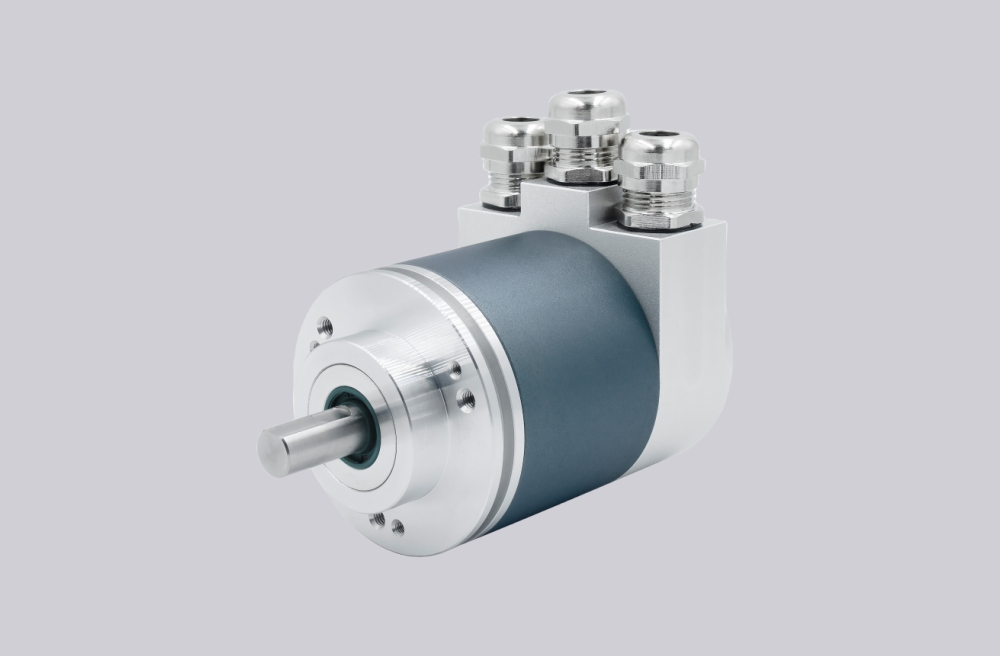
From an engineering perspective, SSI is often selected when system structure is relatively simple and the control logic only requires direct position transmission. It is commonly used in positioning units, lifting systems, and stand-alone motion applications where stable timing and simple signal interpretation are priorities. Because SSI does not depend on device addressing or network configuration, integration can be straightforward when controller compatibility is already confirmed.
By contrast, bus-based protocols are usually selected when system architecture requires multiple devices to communicate through a unified platform. In this case, the encoder is not only a signal source, but part of the control network. A bus-based solution may simplify overall wiring, improve diagnostics, and support more structured device management. However, it also introduces configuration requirements such as addressing, device description files, parameter mapping, and communication cycle management.
The selection difference becomes clearer during commissioning. SSI problems are often related to clock compatibility, signal timing, cable quality, grounding, or data interpretation. Communication may appear electrically stable while position data is still wrong because bit length or alignment does not match the controller. In bus systems, problems often shift from signal-level issues to network-level issues, such as addressing conflicts, configuration mismatch, device recognition failure, or incomplete parameter setup.
Wiring and installation strategy also influence the decision. SSI typically requires dedicated signal lines and careful control of transmission length, shielding, and noise resistance. In electrically noisy environments, stable SSI operation depends heavily on cable routing and grounding practice. Bus-based protocols may reduce point-to-point wiring complexity, but they place greater demands on network topology, connector quality, and communication configuration.
Maintenance considerations are equally important. SSI systems are often easier to understand at the signal level, but provide limited diagnostics. When troubleshooting, engineers usually rely on wiring verification, signal testing, and controller settings. Bus-based systems provide more structured diagnostics and device-level information, but may require more specialized configuration knowledge and software tools.
Another important consideration is replacement strategy. In existing equipment, the original control architecture usually determines the practical interface choice. If the controller already expects SSI data, changing to a bus interface may create unnecessary integration complexity. Likewise, if the machine is built around a fieldbus or Industrial Ethernet architecture, adding a point-to-point SSI encoder may not fit the system design. In many retrofit projects, communication compatibility matters more than protocol preference.
From a system-level perspective, SSI is not a simplified version of a bus protocol, and a bus protocol is not automatically a better replacement for SSI. They serve different application structures. SSI is often the correct choice when stable direct transmission and deterministic timing are required. Bus-based protocols are more suitable when distributed communication, structured diagnostics, and network-level coordination are necessary.
In practical industrial integration, the best interface is the one that matches the existing control system, wiring environment, commissioning capability, and long-term maintenance logic. Choosing the wrong communication structure often creates more problems than choosing a lower-specification encoder.
This article provides a practical comparison between SSI and bus-based encoder interfaces and explains how to select the most suitable communication method for real industrial applications.