



Hollow shaft encoders are widely used because they allow direct mounting onto existing shafts without requiring couplings. This simplifies installation and reduces mechanical complexity. However, proper installation is critical for long-term reliability, and many issues arise from mechanical factors rather than electrical ones.
The first key point is shaft fit. The encoder bore must match the shaft diameter accurately. Even when nominal sizes match, surface condition and tolerance should be checked. Dirt, corrosion, or damage can lead to poor clamping and unstable mounting.
Alignment is equally important. Hollow shaft encoders are often assumed to self-align, but improper installation can still introduce mechanical stress. This is especially critical in systems with vibration, reversing motion, or high acceleration.
A major installation requirement is torque support. The encoder housing must be prevented from rotating. This is typically achieved using a torque arm, anti-rotation pin, or similar structure. Without proper support, reaction torque may stress the housing and affect long-term performance.
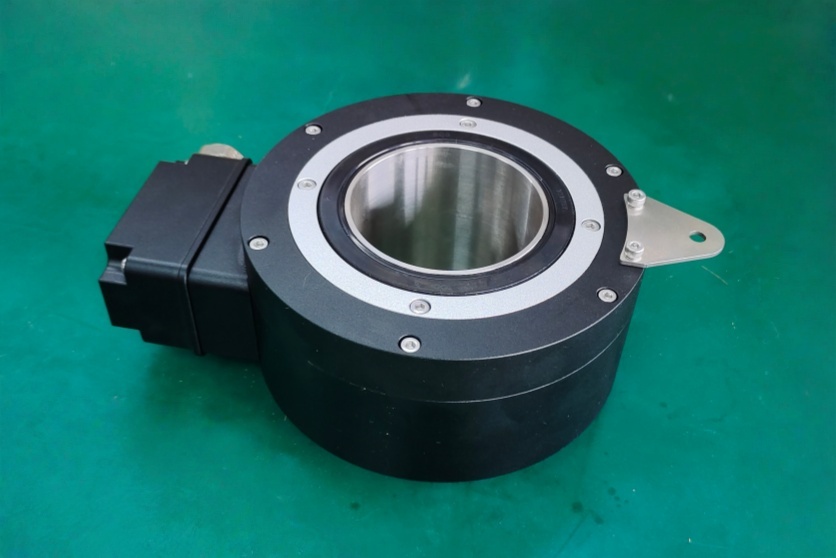
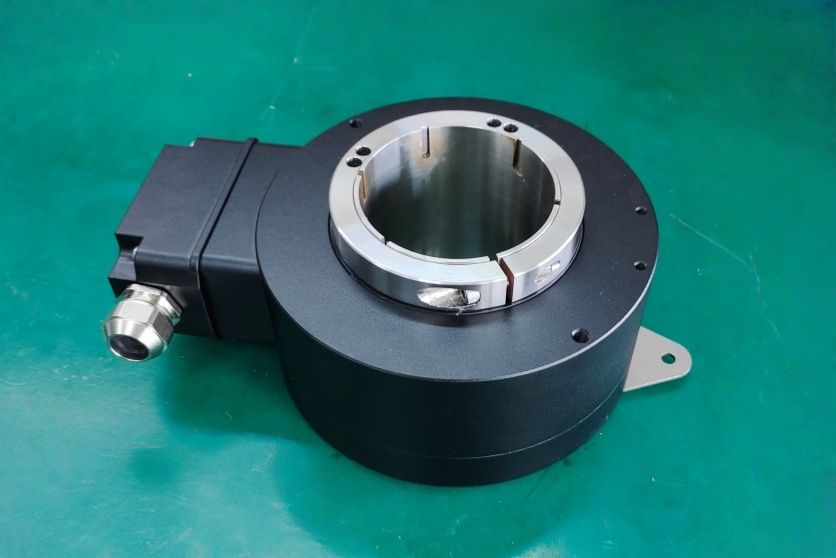
Clamping force must be controlled carefully. Excessive tightening can deform components, while insufficient tightening may cause shaft slip. Correct installation depends on the specific clamping design.
Cable routing is another practical factor. Poor routing can lead to cable fatigue, especially if the cable is repeatedly bent or exposed to vibration. In compact installations, choosing between axial and radial cable outlets can improve long-term reliability.
For through hollow shaft designs, shaft insertion depth and positioning should also be checked. Incorrect positioning may create axial stress or misalignment.
Environmental conditions further influence installation. Dust, moisture, vibration, and temperature all affect mounting strategy and component protection.
During commissioning, both mechanical and signal performance should be verified. If unstable signals appear, the cause may be mechanical rather than electrical.
In practice, reliable hollow shaft encoder operation depends on:
- correct shaft fit
- proper alignment
- stable torque support
- controlled clamping
- proper cable routing
When these factors are handled correctly, hollow shaft encoders provide a compact and reliable solution for industrial applications.