




Choosing between an absolute encoder and an incremental encoder is a common engineering decision in industrial motion systems. Both are used for rotation feedback, but they serve different control purposes. The correct choice depends on how the machine interprets motion, what happens after power loss, and whether the controller needs position value or pulse-based movement feedback.
An incremental encoder outputs pulses as the shaft rotates. The controller counts these pulses to determine movement, speed, and direction. This makes incremental encoders suitable for applications such as speed monitoring, conveyor tracking, motor feedback, and relative position measurement. They are widely used where the system only needs to know how far something has moved from a known reference point.
An absolute encoder works differently. Instead of only outputting pulses, it provides a defined position value. This means the controller can read the actual shaft position directly. In many systems, this allows position information to remain available after power loss, depending on the encoder type and system architecture. For applications where startup position must be known immediately, absolute feedback is often the better choice.
The first practical question is whether the machine must retain position after power interruption. If the answer is yes, an absolute encoder is usually more suitable. Positioning systems, lifting axes, indexing equipment, and machines with restart requirements often benefit from absolute feedback because the controller does not need to rebuild position only from pulse counting.
The second question is whether the application mainly needs speed and relative motion, or true position value. If the controller only needs pulses for motion tracking or speed control, an incremental encoder may be sufficient. If the machine depends on exact angular position, multiturn information, or direct position readout, an absolute encoder is generally the more appropriate solution.
Interface requirements also matter. Incremental encoders usually provide A, B, and optional Z pulse signals, which many drives and controllers can read directly. Absolute encoders may use SSI, RS485, CANopen, Profibus, EtherCAT, Profinet, analog, or other interfaces. This means the choice is not only between encoder types, but also between communication structures.
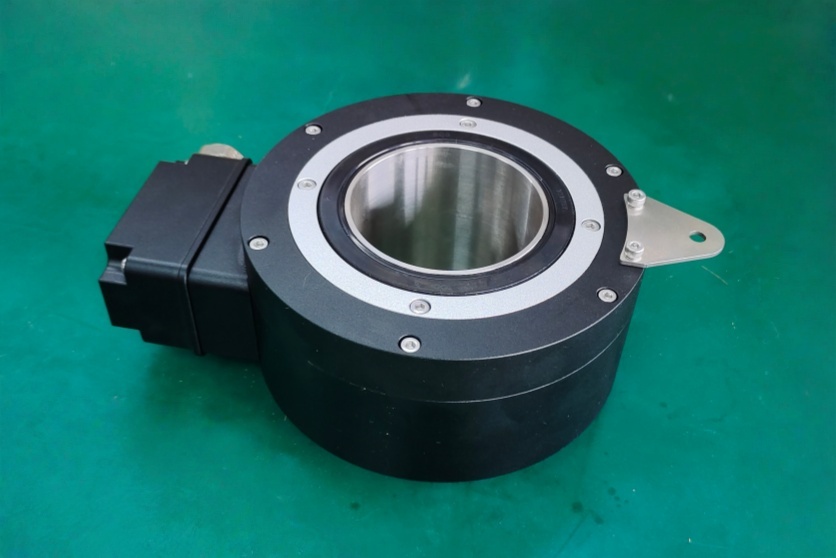
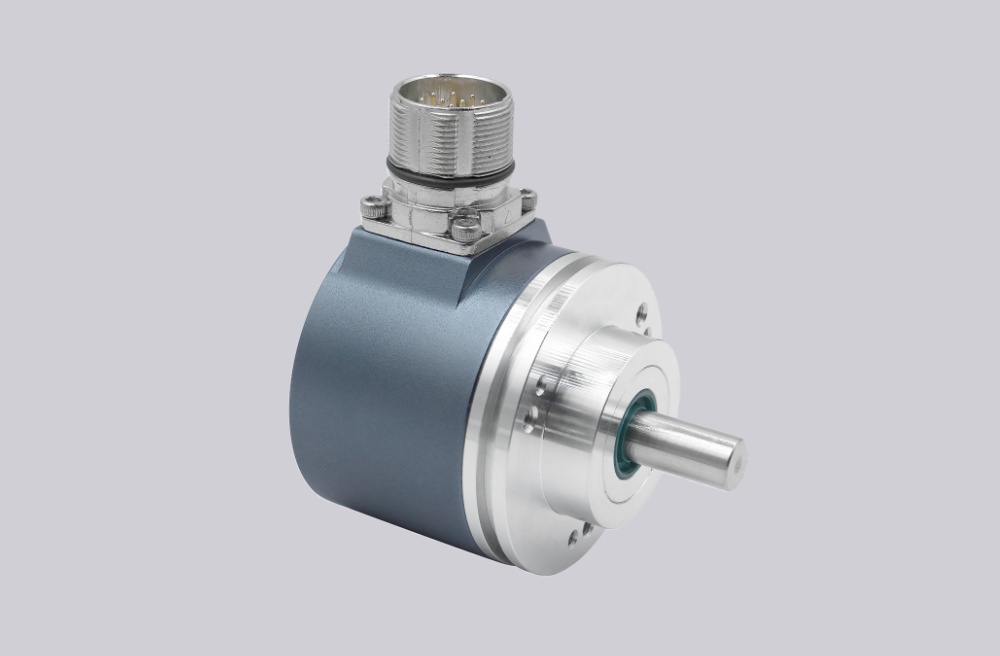
Mechanical design is another consideration, but it should not be the only factor. Both absolute and incremental encoders are available in solid shaft, hollow shaft, and heavy-duty versions. In many projects, the feedback logic should be decided first, and the mechanical form should then be matched to the installation.
Maintenance behavior is also different. Incremental systems can be simple and effective, but they rely on clean pulse transmission and correct counting. Noise, missed pulses, or incorrect wiring can affect position tracking. Absolute systems reduce dependence on pulse counting, but they may require more careful interface matching and parameter configuration during integration.
Cost is often discussed, but it should not be the first decision point. A lower-cost incremental encoder may increase total system complexity if the machine needs repeated homing or position recovery logic. A more advanced absolute encoder may reduce commissioning effort and improve restart behavior if true position is important.
In practical engineering terms, the selection logic can be simplified:
- choose incremental when pulse output, speed detection, and relative motion are enough
- choose absolute when position value, startup reference, or bus-based feedback is required
The best encoder choice is not based only on device category. It should match the machine’s control logic, startup behavior, and integration architecture.