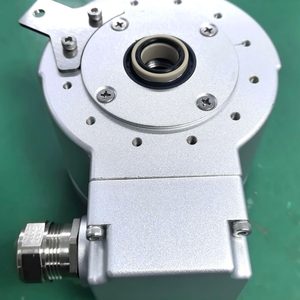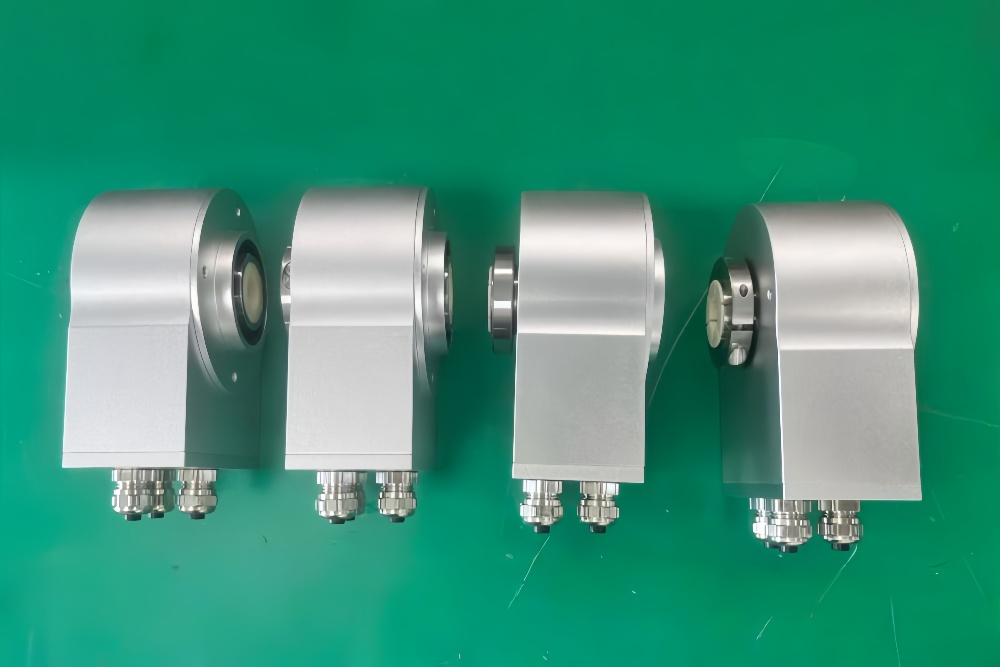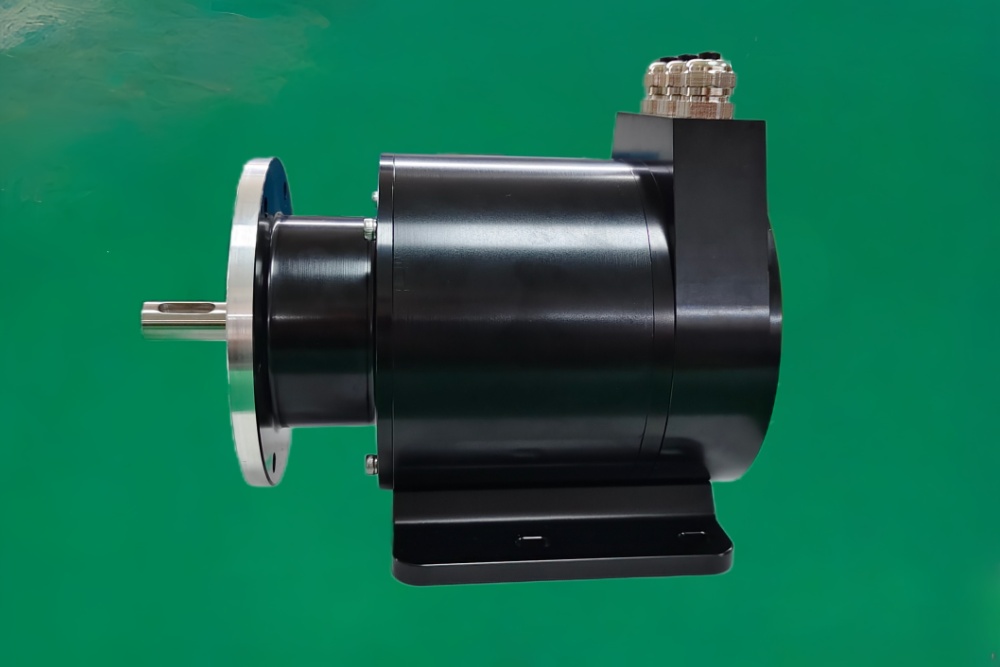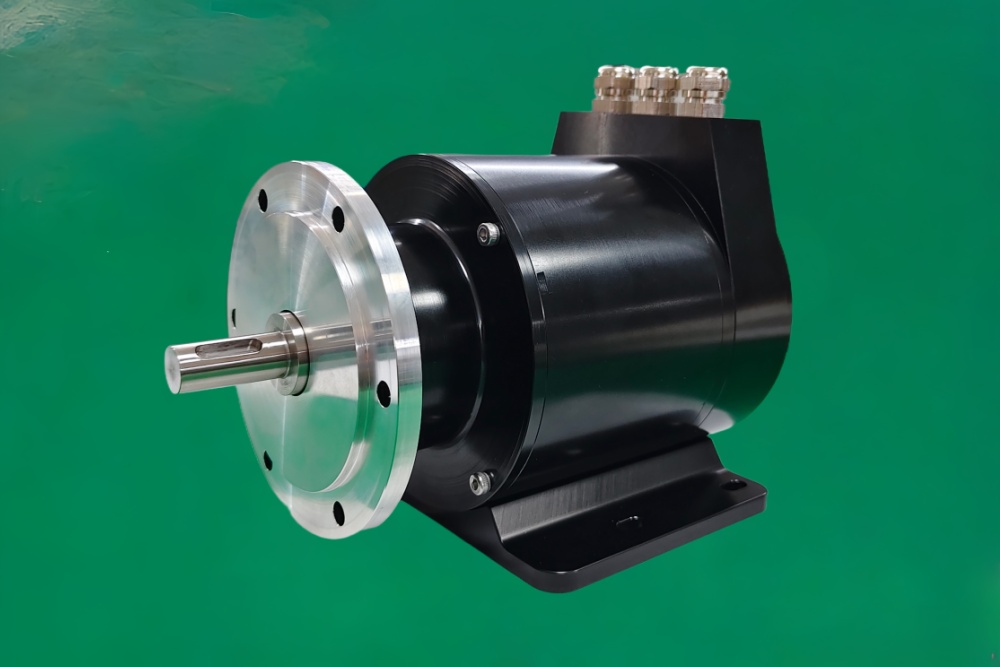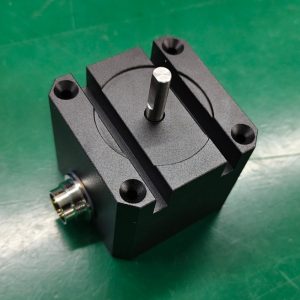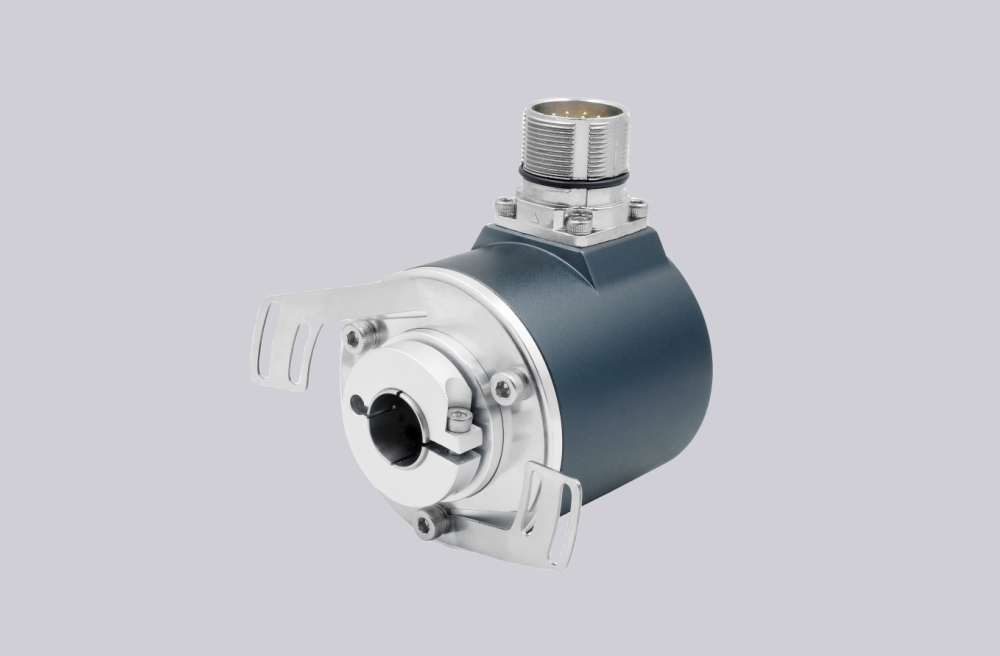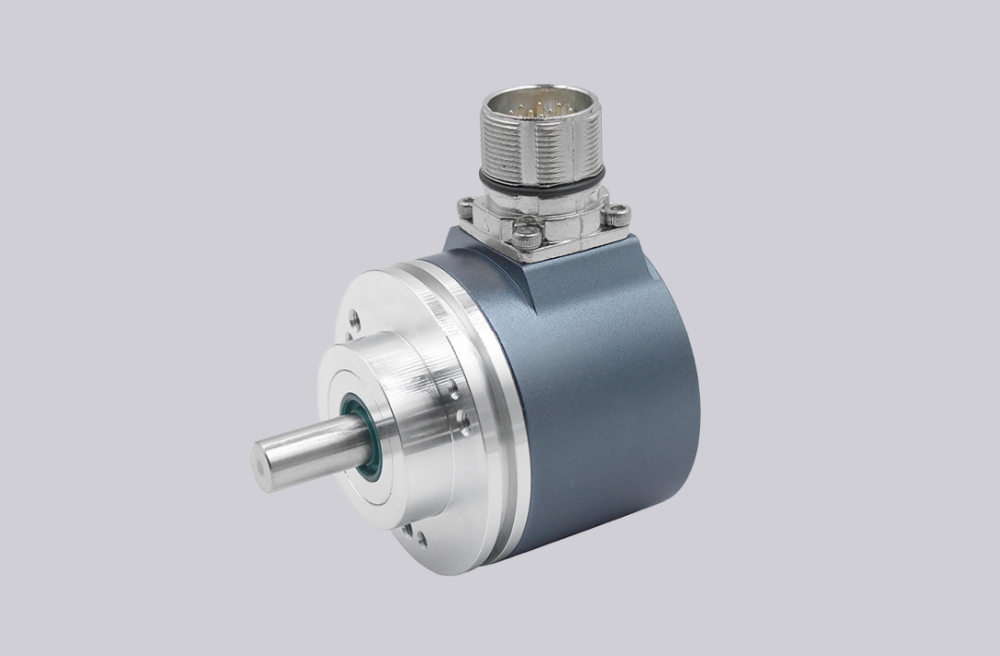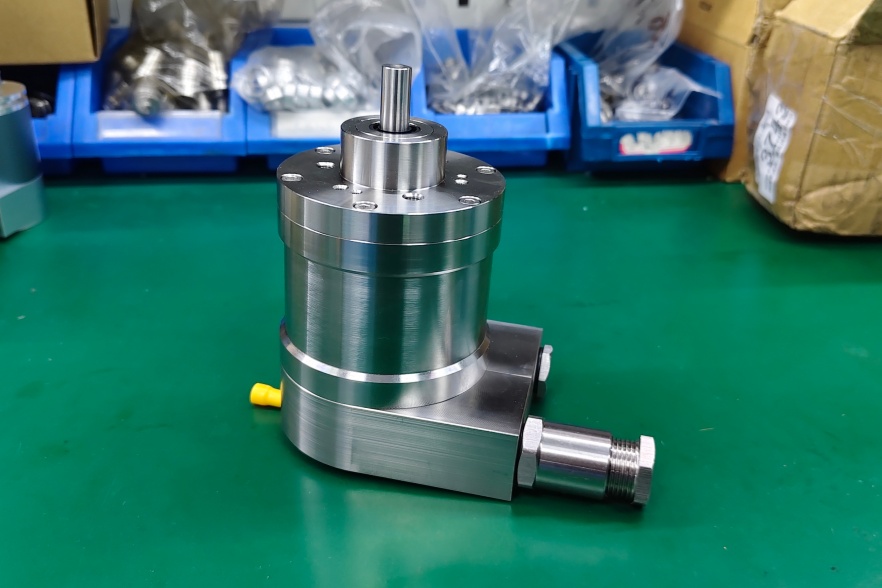

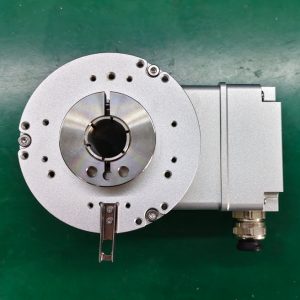



For 8.H120.4B5K.2048, EncoderWorks can provide a custom compatible replacement focused on 10–30 V push-pull receiver matching, 2048 PPR scaling, Ø16 mm blind hollow-shaft fit, and terminal-box wiring. This model should not be treated like a through-hollow-shaft or cable-output version. The blind-shaft center fastening, 150 mm torque arm, terminal assignment, and A/B/0 inverted-channel mapping must match the original installation.
The 8.H120.4B5K.2048 is a heavy-duty optical incremental hollow-shaft encoder configuration with 2048 PPR, push-pull output with inverted signals, 10–30 VDC supply, Ø16 mm blind hollow shaft with center fastening, 150 mm torque arm, and a rotatable terminal box with plug-in spring terminals. The controller must keep the same quadrature mode, reference-pulse logic, and 2048 PPR scaling.
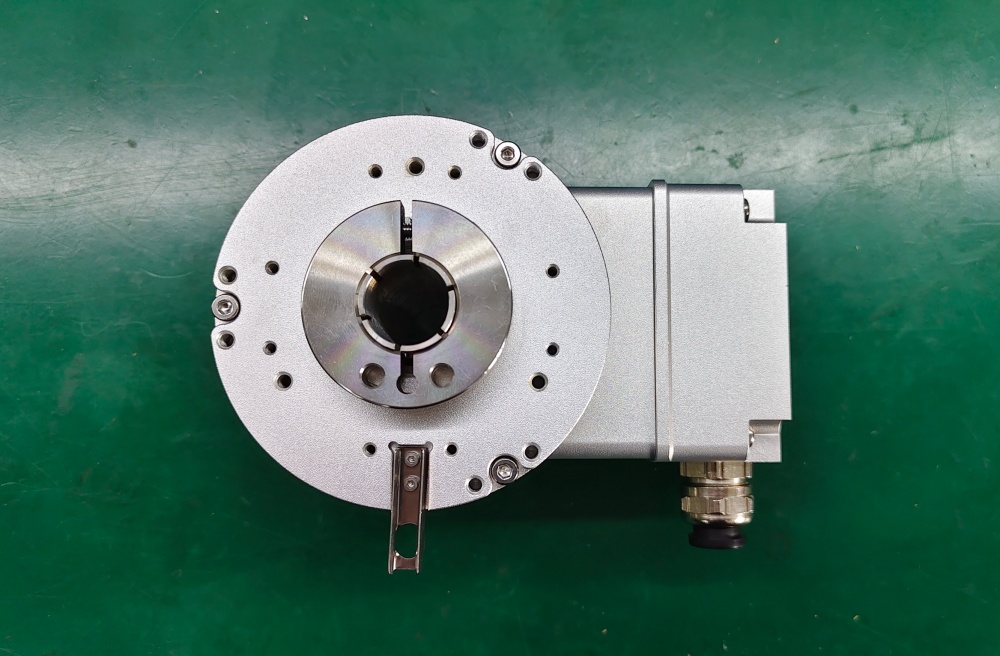
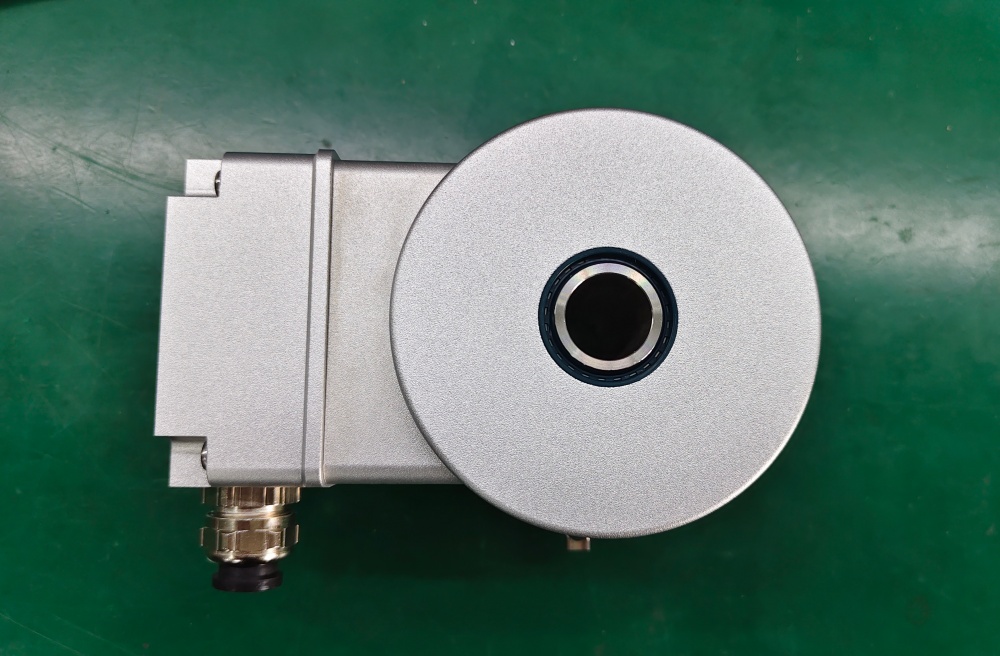
The first failure boundary is terminal signal mapping. A, B, 0 and inverted A/B/0 must be wired by function. If terminal assignment, receiver threshold, input filter, shield grounding, or reference-pulse handling is wrong, the drive may see switching signals while still losing counts, reading the wrong direction, or missing the zero pulse.
This replacement fails when A/B/0 signals are present, but the controller loses counts or reads the wrong motion value because push-pull output behavior, 2048 PPR scaling, terminal wiring, inverted-channel mapping, or reference-pulse handling does not match the original encoder.
The second boundary is blind hollow-shaft mechanics. The Ø16 mm blind bore, center-fastening screw, insertion depth, 150 mm torque arm, radial load, axial load, IP67 sealing, and terminal-box orientation must be checked together. The torque arm should prevent housing rotation without forcing radial or angular preload into the bearing system.
The replacement decision should first confirm 2048 PPR scaling, 10–30 V push-pull receiver compatibility, A/B/0 plus inverted channel mapping, 300 kHz frequency margin, terminal-box assignment, Ø16 mm blind hollow-shaft fit, center-fastening requirement, insertion depth, 150 mm torque-arm geometry, IP67 sealing, shield grounding, cable routing, and shaft-load limits. EncoderWorks treats 8.H120.4B5K.2048 as an industrial encoder custom compatible solution where terminal wiring accuracy and blind-shaft mechanics decide field reliability.
Typical production lead time: 15 working days.
Key Data
| Item | Data |
|---|---|
| Model | 8.H120.4B5K.2048 |
| Encoder type | Heavy-duty incremental hollow-shaft encoder |
| Detection type | Optical |
| Pulse count | 2048 PPR |
| Output circuit | Push-pull with inverted signals |
| Signal output | A, B, 0 and inverted A, B, 0 |
| Supply voltage | 10–30 VDC |
| Max pulse frequency | 300 kHz |
| Shaft type | Blind hollow shaft |
| Shaft size | Ø16 mm |
| Mounting | 150 mm torque arm |
| Connection | Rotatable terminal box |
| Protection class | IP67 |
| Main engineering anchor | Push-pull output and terminal box |
| Main failure boundary | Wrong terminal mapping, receiver mismatch, scaling error, blind-shaft preload |