



Encoder signal instability is a common problem in industrial systems, but the actual cause is often misunderstood. When position feedback becomes inconsistent, speed signals fluctuate, or communication drops intermittently, the first assumption is often that the encoder itself has failed. In practice, however, unstable encoder signals are frequently caused by wiring, installation, grounding, or configuration issues elsewhere in the system.
One major cause is poor cable quality or routing. Signal cables routed too close to motor power lines, inverter outputs, or switching power devices may pick up electrical interference. This is especially common in compact cabinets where signal and power wiring are forced into the same channel. Even a high-quality encoder can produce unstable feedback if the cable environment is poor.
Another common cause is incorrect grounding or shield handling. Signal shielding is intended to reduce interference, but inconsistent grounding can create new problems. Floating shields, poor cabinet grounding, or uncontrolled shield connections may reduce communication stability instead of improving it. In many field cases, random encoder faults disappear after cable shield treatment and grounding strategy are corrected.
Mechanical installation is another major factor. Misalignment, excessive shaft load, poor clamping, or unstable mounting structures can all create signal behavior that looks electrical at first. Hollow shaft encoders, for example, may show unstable output when clamping is loose or torque support is insufficient. Solid shaft encoders may be affected by coupling misalignment or mounting stress.
Signal type mismatch can also cause instability. The controller input must match the encoder output type, whether the signal is TTL, HTL, line driver, SSI, RS485, or another structure. If voltage levels or signal expectations are inconsistent, feedback may appear noisy, incomplete, or directionally incorrect.
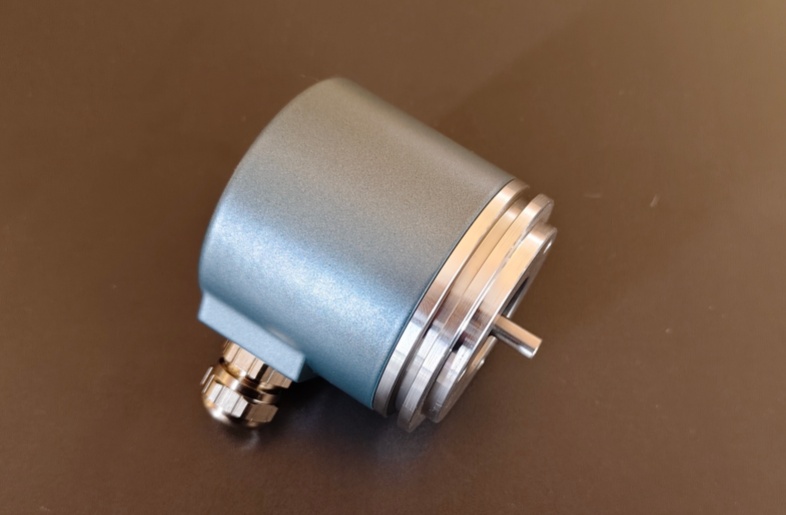
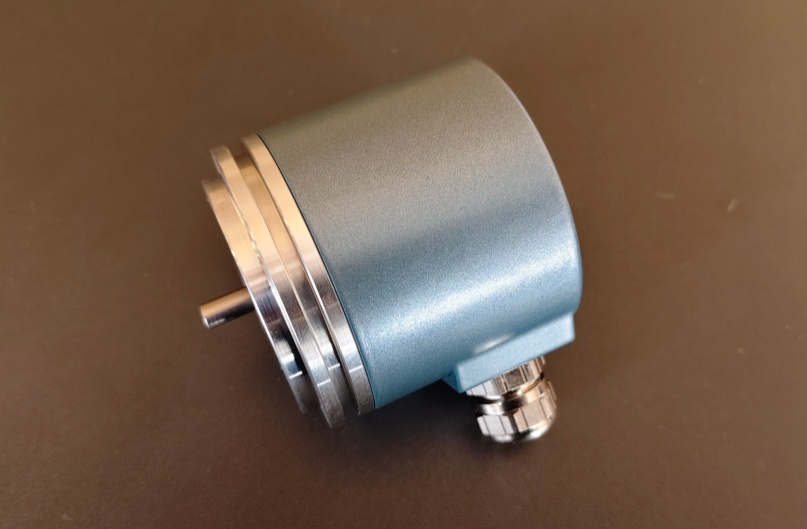
In bus-based systems, topology and termination are also important. RS485 or other multi-device communication lines may become unstable if the bus is wired as a star, if the last node lacks termination, or if addresses are configured incorrectly. In such cases, the problem is not unstable sensing, but unstable system communication.
Environmental conditions should not be ignored. High vibration, heat, dust, moisture, and repeated mechanical shock can all affect long-term encoder stability. In some applications, intermittent faults only appear under load or after thermal buildup, which makes them harder to reproduce during short inspection.
A practical troubleshooting approach should separate the system into three categories:
- electrical factors – cable, grounding, shielding, signal type
- mechanical factors – alignment, clamping, shaft load, mounting
- system factors – communication settings, topology, termination, controller logic
This prevents unnecessary hardware replacement and helps identify the real failure mechanism.
In many applications, the most effective first actions are:
- inspect cable routing and separation
- verify shield and grounding consistency
- check shaft alignment and mounting rigidity
- confirm signal type compatibility
- review controller settings and communication structure
Encoder signal instability is rarely solved by guesswork. A systematic review of wiring, installation, and system logic usually reveals the actual cause. When these factors are corrected, encoder feedback becomes stable and predictable even in demanding industrial environments.