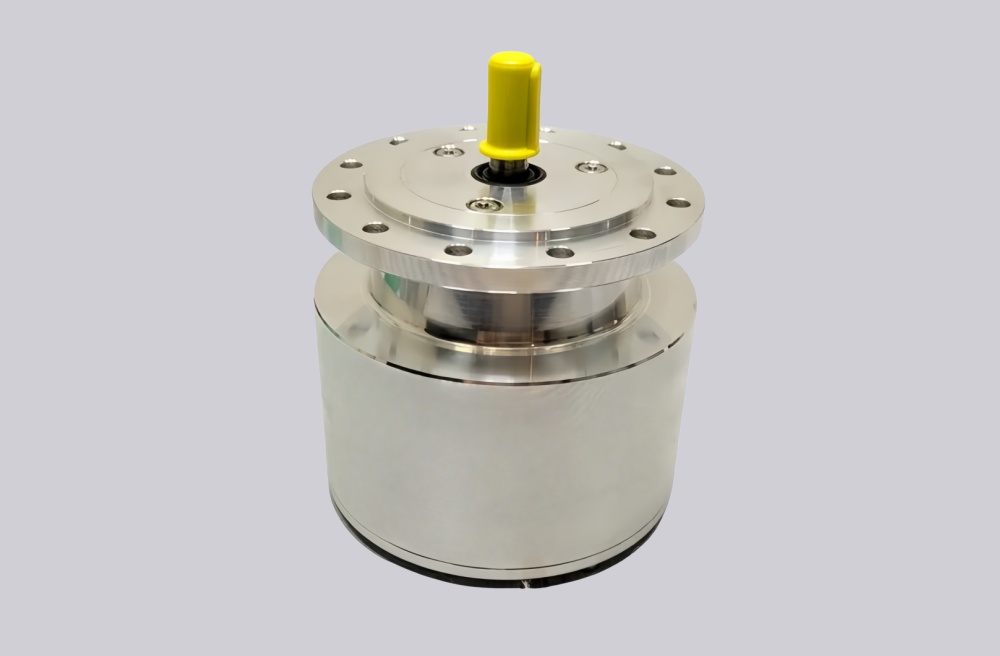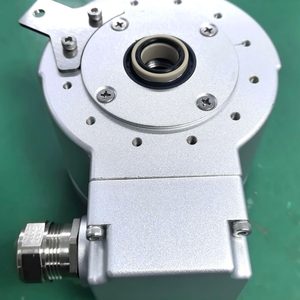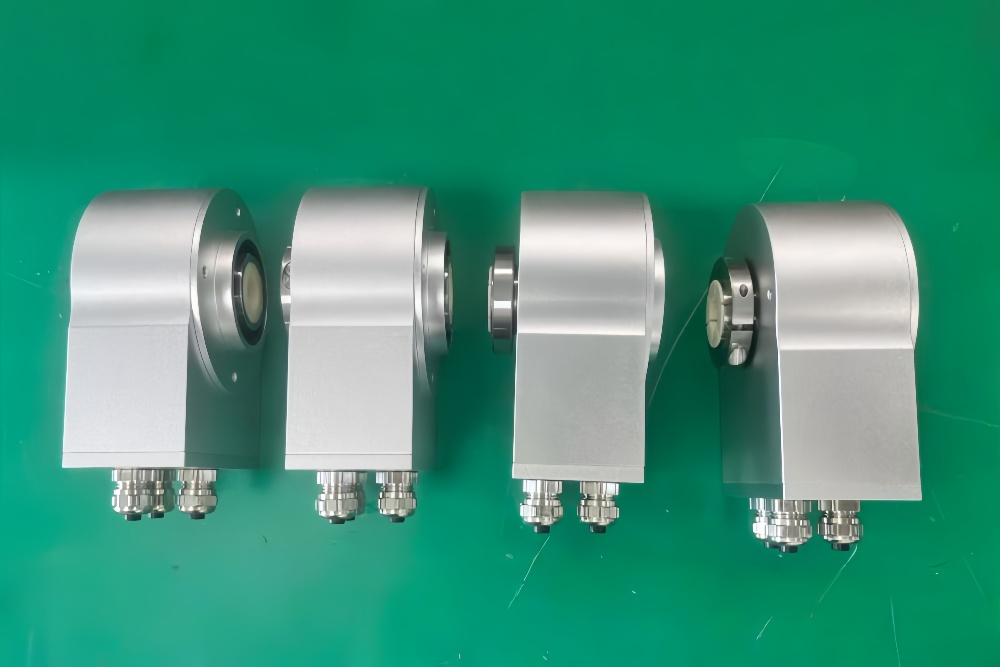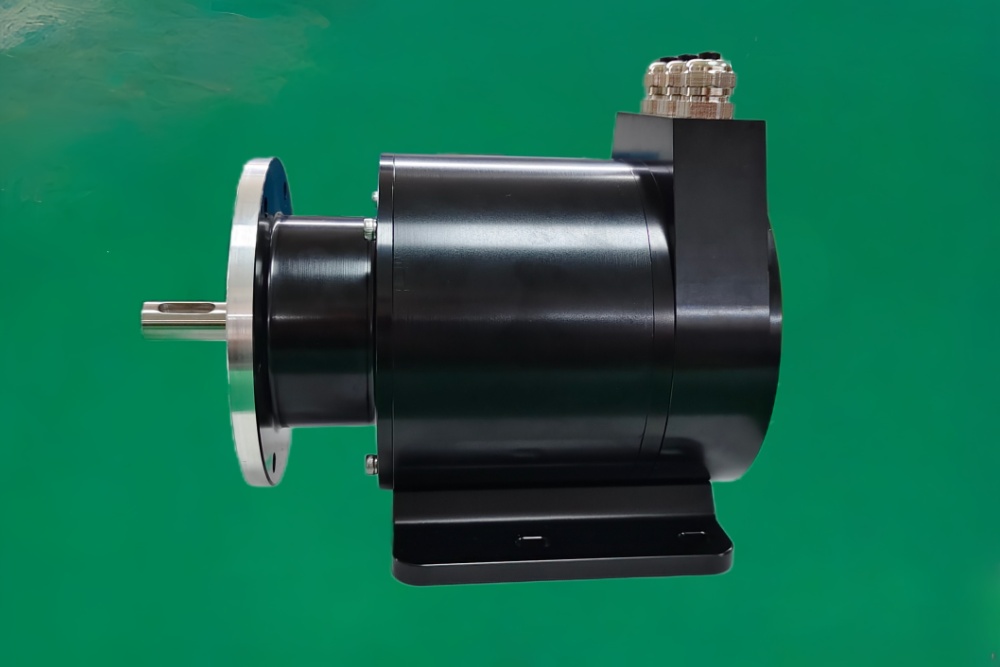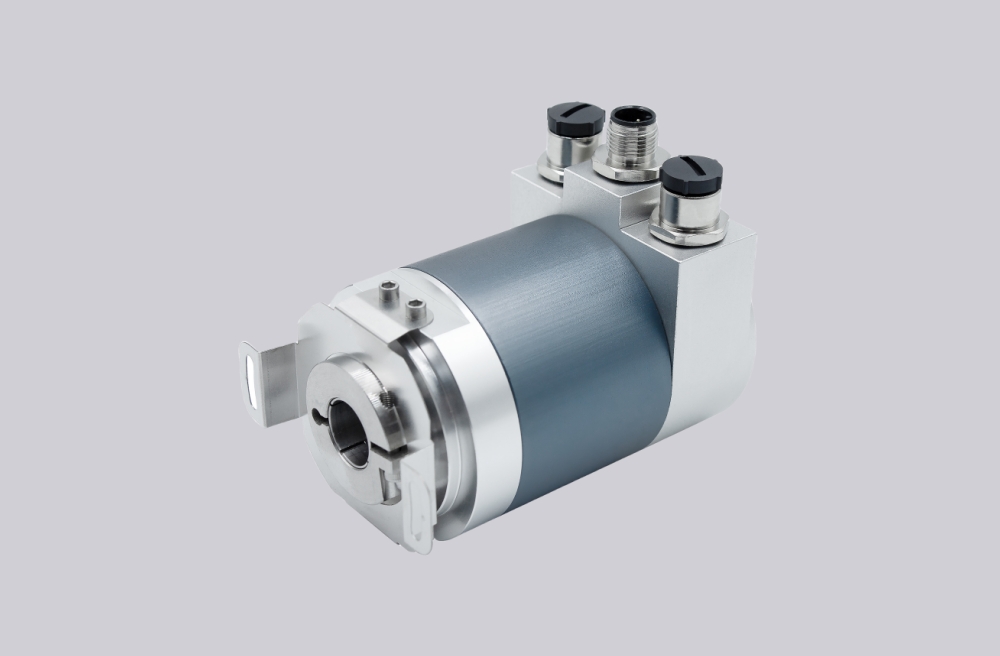




For FGHJ2AK-1024G-90G-NG/17C, EncoderWorks can provide a custom compatible replacement focused on conical hollow-shaft fit, NG reference pulse reliability, and HTL direction stability on standard heavy-industry drives. This model should not be judged only by its 1024 PPR value. The real replacement risk is whether the 17C conical shaft interface, torque bracket, and terminal-strip wiring reproduce the same mechanical and electrical behavior after installation.
The FGHJ2AK-1024G-90G-NG/17C is an incremental hollow-shaft encoder with 1024 pulses per revolution, G inverted signals, 90° quadrature, NG reference pulse with inverted signal, AK terminal-strip connection, and a 17C conical hollow-shaft bore. The FG 2 / FGHJ 2 series is positioned for standard drives in heavy industry, and the catalog defines FGHJ as the hollow-shaft version with insulated bearings for shaft-current protection. The same data set lists 600, 1024, and 2048 pulse rates, 12–30 VDC supply, HTL output approximately at supply voltage, and 200 kHz maximum frequency.
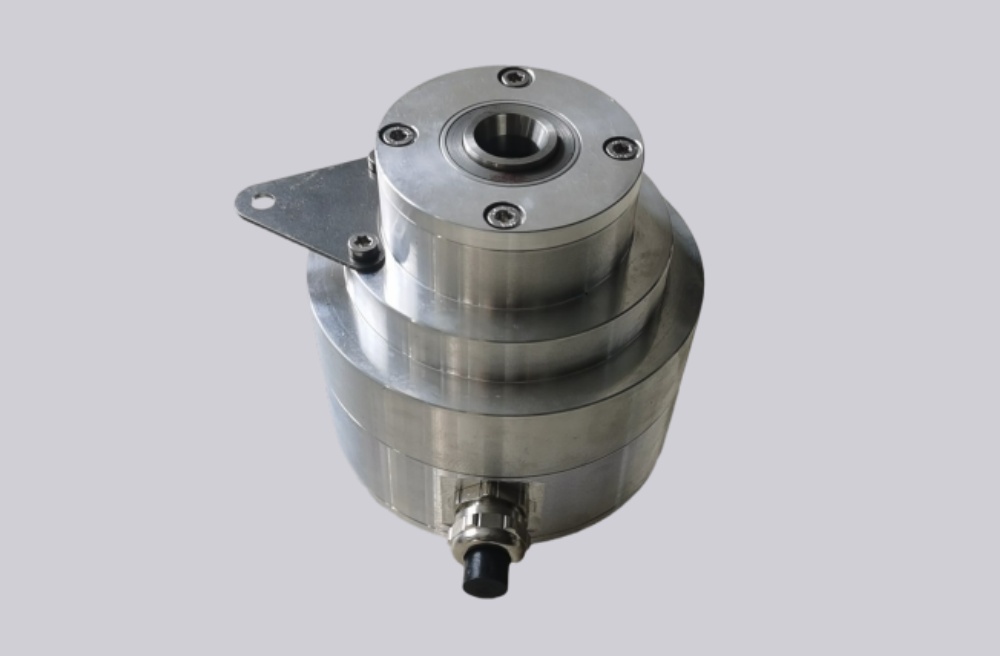
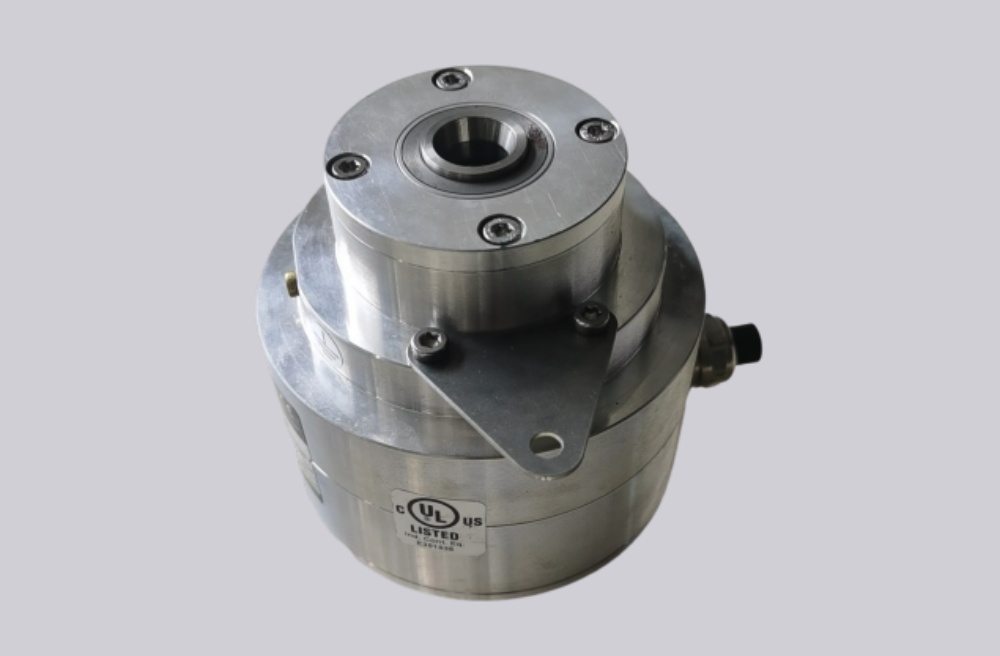
The first failure boundary is the 17C conical shaft fit. A conical bore is less forgiving than a cylindrical bore because the final seating position affects clamping force, concentricity, and bearing load. If the encoder is pulled too far onto the taper or stopped before full seating, the shaft may appear secure while the hollow-shaft bearing system carries uneven stress. The torque bracket should stop the housing from rotating, not compensate for taper misfit.
This replacement fails when the conical shaft looks mechanically locked, but the encoder body is carrying axial preload or radial stress from incorrect taper seating. In that condition, the electrical output may be correct at startup, while bearing noise, vibration, or intermittent edge instability appears after the drive warms up or changes speed.
The second boundary is NG reference behavior. NG is often used for homing, counter reset, or shaft position validation. It must be checked together with the 0° and 90° channels, not treated as a spare pulse. If NG or inverted NG is assigned to the wrong terminal, delayed by poor wiring, or affected by shield noise, the machine may count speed correctly but lose repeatable reference position.
The HTL signal margin is moderate at 1024 PPR, but it still depends on clean terminal-strip workmanship. AK connection means the installer must verify signal names directly: 0°, inverted 0°, 90°, inverted 90°, NG, inverted NG, supply, 0 V, and shield. Wiring by old cable color is risky because field retrofits often contain undocumented terminal changes. Direction must be confirmed at low speed before closed-loop operation.
The insulated-bearing function should also be preserved. The FGHJ2 hollow-shaft design is specified with insulated bearings to support long service life and shielding against shaft currents. That protection can be weakened by poor grounding, an uncontrolled shield path, or bracket hardware that creates a new current route through the encoder body.
The replacement decision should first confirm 17C taper seating, torque-bracket freedom, insulated-bearing behavior, NG and inverted NG assignment, A/B phase order, and HTL counter margin. EncoderWorks treats FGHJ2AK-1024G-90G-NG/17C as an industrial encoder custom compatible solution where conical shaft fit and reference pulse accuracy decide whether the replacement is safe.
Typical production lead time: 15 working days.
Key Data
| Item | Data |
|---|---|
| Model | FGHJ2AK-1024G-90G-NG/17C |
| Encoder type | Incremental hollow-shaft encoder |
| Series | FGHJ 2 |
| Bearing execution | Insulated hollow-shaft bearing design |
| Pulse rate | 1024 PPR |
| Signal format | G output with 90° quadrature |
| Reference pulse | NG, with inverted signal |
| Output type | HTL, approx. as supply voltage |
| Supply voltage | 12–30 VDC |
| Max frequency | 200 kHz |
| Connection | AK terminal strip |
| Hollow shaft | 17C conical bore |
| Main engineering anchor | Conical shaft fit and NG reference |
| Main failure boundary | Taper seating error, torque-bracket preload, wrong NG assignment |