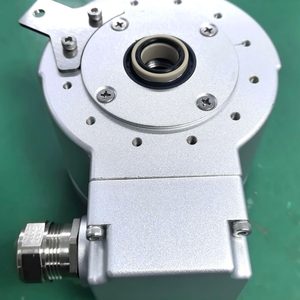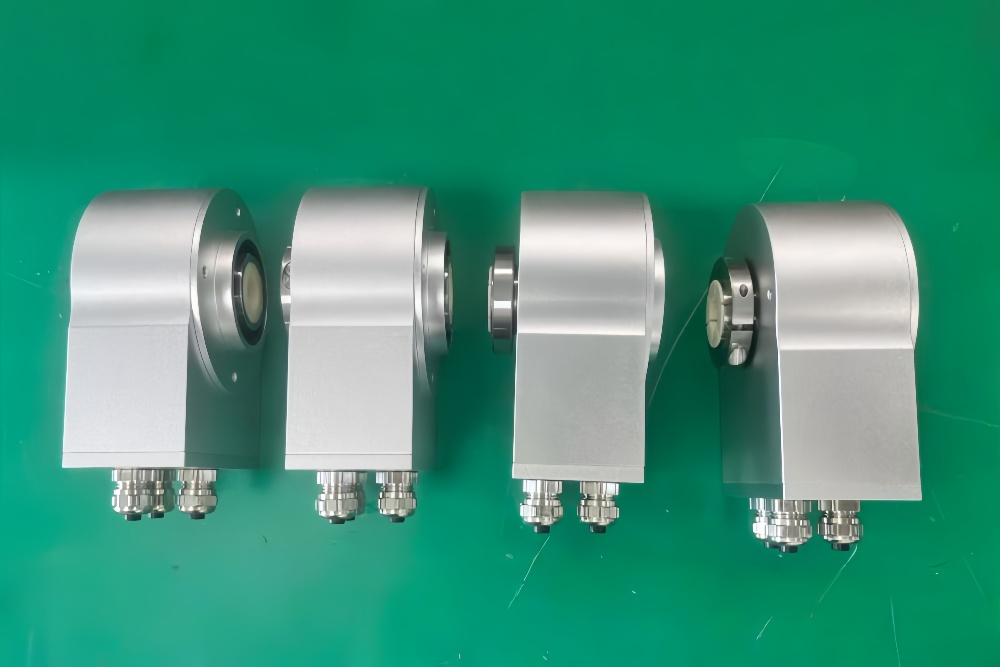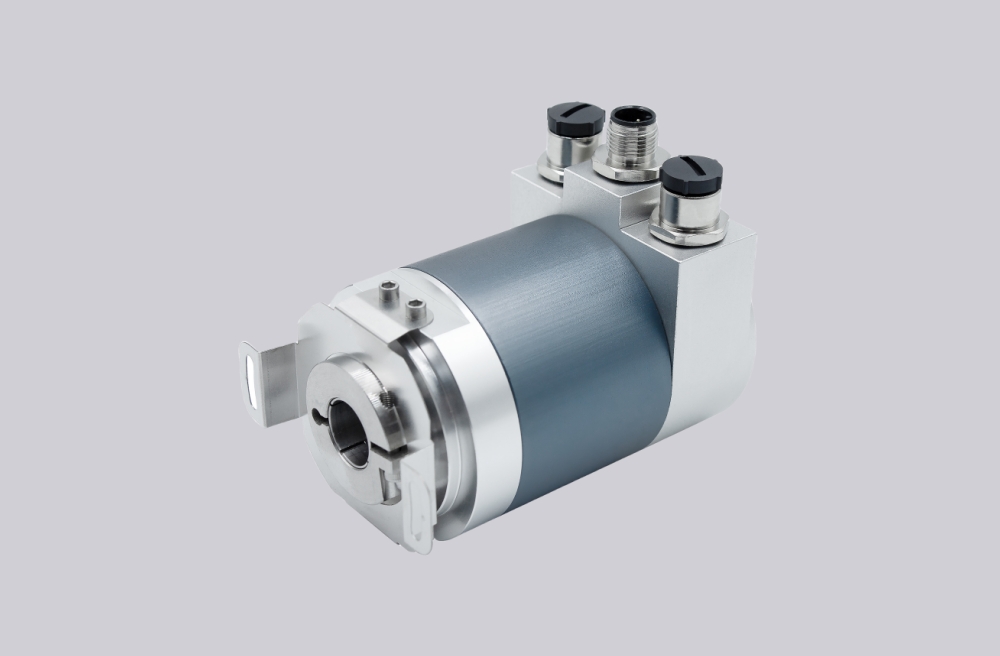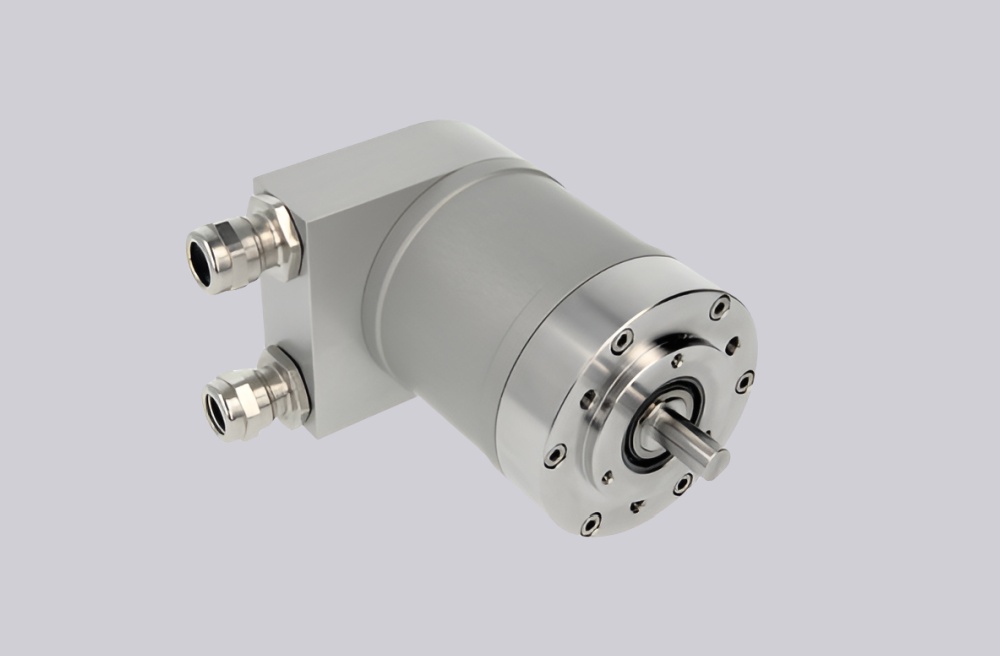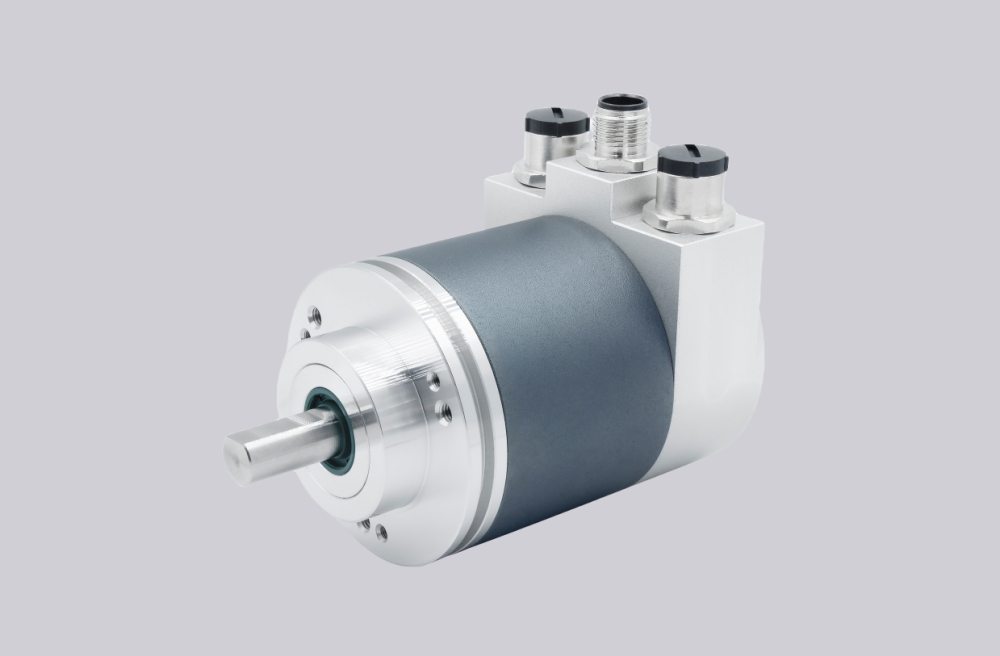




For FGHJ2AK-2048G-90G-NG/16K, EncoderWorks can develop a custom compatible replacement where the main decision is 2048 PPR edge margin, 16K cylindrical hollow-shaft fit, and NG reference stability. This model should not be treated as only a higher-pulse version of the 1024 PPR unit. The real field risk is that the mechanical installation may look normal, while the receiving counter is already close to its frequency, cable, or EMC limit.
The FGHJ2AK-2048G-90G-NG/16K is an incremental hollow-shaft encoder with 2048 pulses per revolution, G inverted signals, 90° quadrature, NG reference pulse with inverted signal, AK terminal-strip connection, and a 16K cylindrical hollow-shaft bore. The FG 2 / FGHJ 2 series is positioned for standard drives in heavy industry, with FGHJ 2 defined as the hollow-shaft version. The catalog lists 600, 1024, and 2048 pulse rates, 12–30 VDC supply, HTL signal amplitude approximately equal to supply voltage, and a 200 kHz maximum frequency.
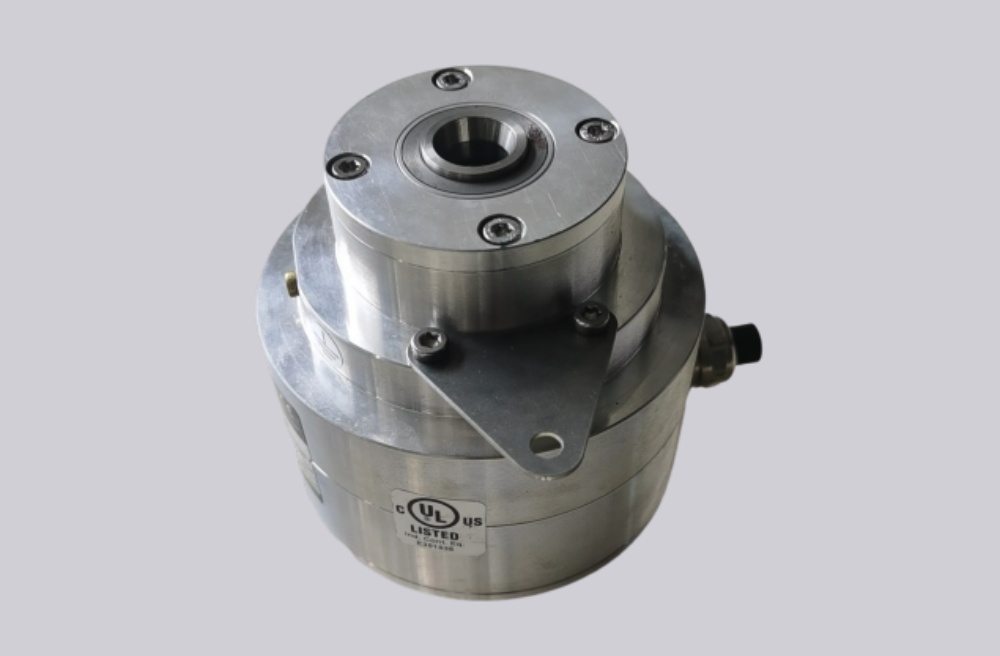
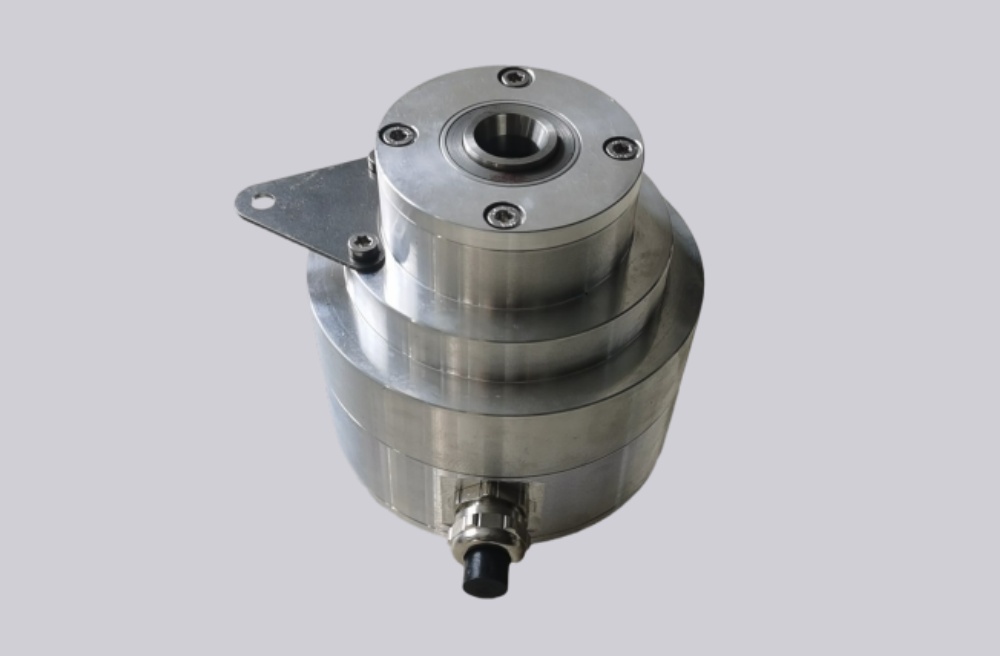
The first failure boundary is counter headroom. At 2048 PPR, the receiving device sees twice the pulse density of a 1024 PPR unit at the same shaft speed. The encoder may still produce clean HTL pulses, but the system can fail if the PLC high-speed counter, drive input, cable capacitance, or input filter cannot preserve a clean edge window at operating speed. A low-speed rotation check is not enough for approval.
This replacement fails when the 2048 PPR waveform looks acceptable near the encoder, but the drive or PLC misses edges at speed because the cable route, shield bonding, or counter input margin is weaker than the encoder output stage. In that case, replacing the encoder alone does not solve the real system bottleneck.
The 16K cylindrical bore is the second practical checkpoint. It is more forgiving than a conical bore, but it still requires a clean shaft surface, correct seating, and a torque bracket that is free from preload. If the encoder is pushed over burrs, corrosion, or a damaged shaft section, the hollow-shaft bearing system can be loaded before startup. Mechanical vibration then becomes more visible because the 2048 PPR signal gives the controller more edges to misread.
The NG reference pulse must be tested as part of the same signal chain. NG and inverted NG are often used for homing, reset, or reference validation. If the reference pulse is wired to the wrong terminal, disturbed by shield current, or not aligned with the expected A/B direction sequence, the machine may run in speed mode but fail during restart or position confirmation.
AK terminal-strip wiring should be checked by signal function, not by old wire color. The 0° channel, inverted 0°, 90° channel, inverted 90°, NG, inverted NG, supply, 0 V, and shield must be verified before closed-loop operation. In heavy-industry standard drives, many failures come from old cabinet wiring rather than the new encoder body.
The replacement decision should first confirm 2048 PPR counter margin at real speed, 16K shaft fit, torque-bracket freedom, insulated-bearing behavior, NG assignment, A/B phase order, and shield grounding. EncoderWorks treats FGHJ2AK-2048G-90G-NG/16K as an industrial encoder custom compatible solution where the weakest point is usually the combination of higher edge density and installation workmanship.
Typical production lead time: 15 working days.
Key Data
| Item | Data |
|---|---|
| Model | FGHJ2AK-2048G-90G-NG/16K |
| Encoder type | Incremental hollow-shaft encoder |
| Series | FGHJ 2 |
| Bearing execution | Insulated hollow-shaft bearing design |
| Pulse rate | 2048 PPR |
| Signal format | G output with 90° quadrature |
| Reference pulse | NG, with inverted signal |
| Output type | HTL, approx. as supply voltage |
| Supply voltage | 12–30 VDC |
| Max frequency | 200 kHz |
| Connection | AK terminal strip |
| Hollow shaft | 16K cylindrical bore |
| Main engineering anchor | 200 kHz edge margin and 16K shaft fit |
| Main failure boundary | Missed counter edges, bracket preload, unstable NG reference |