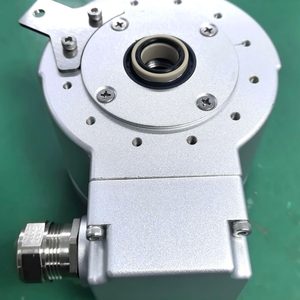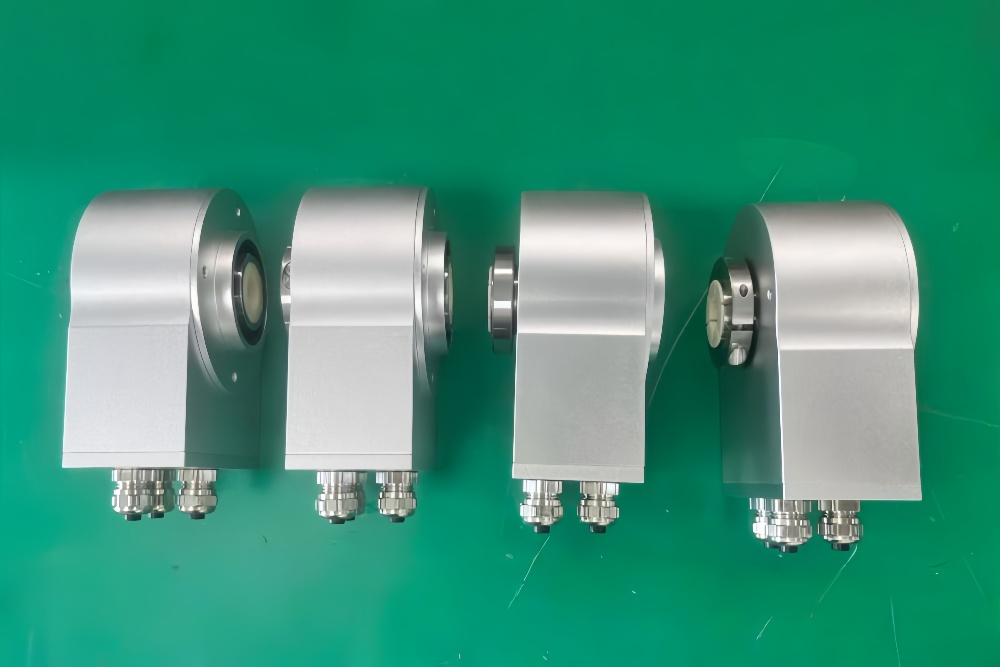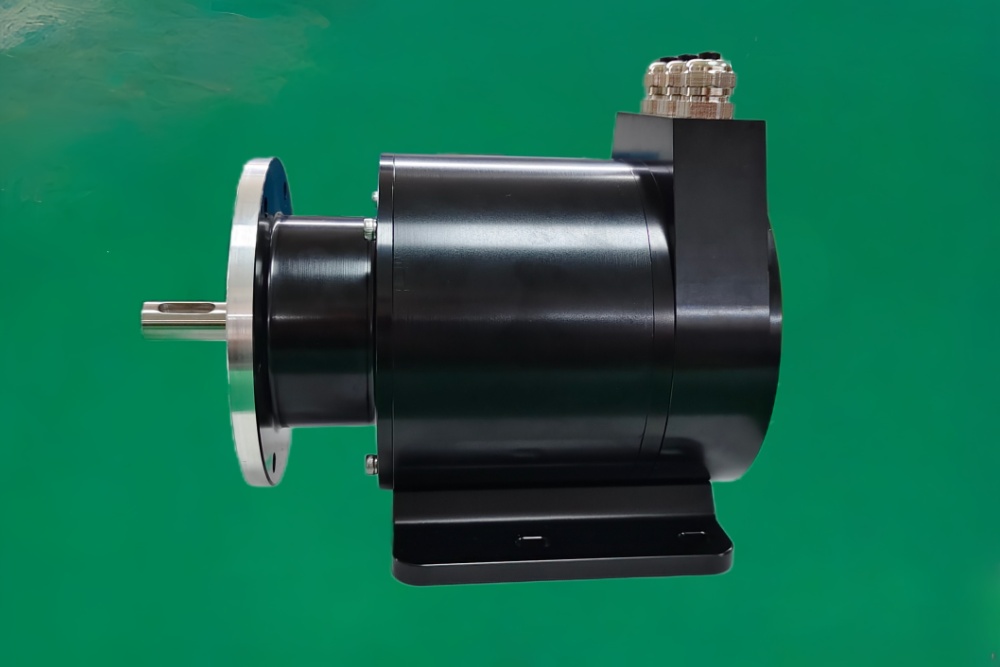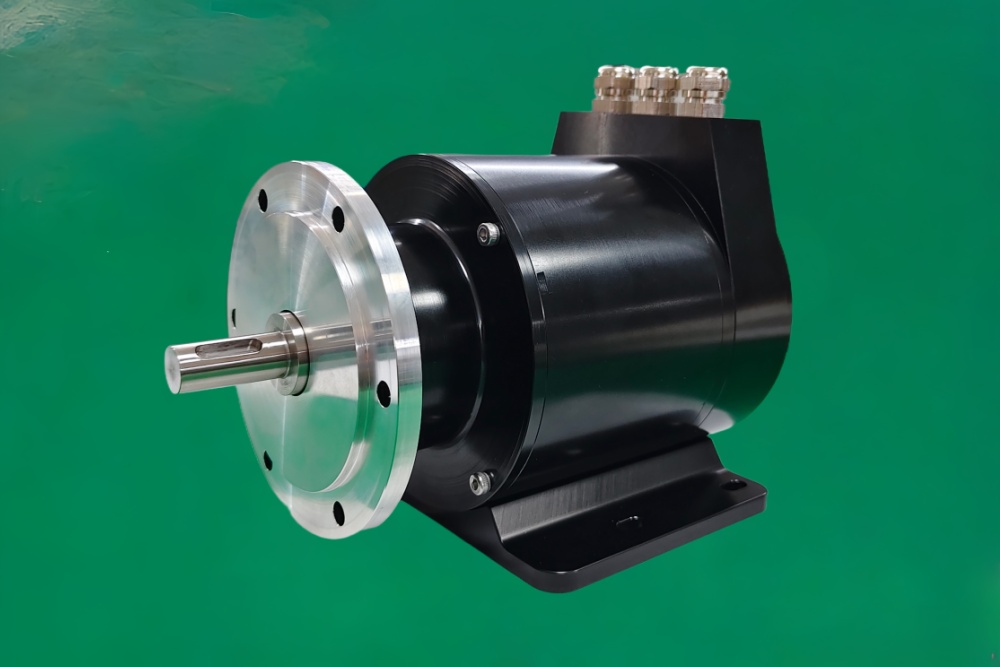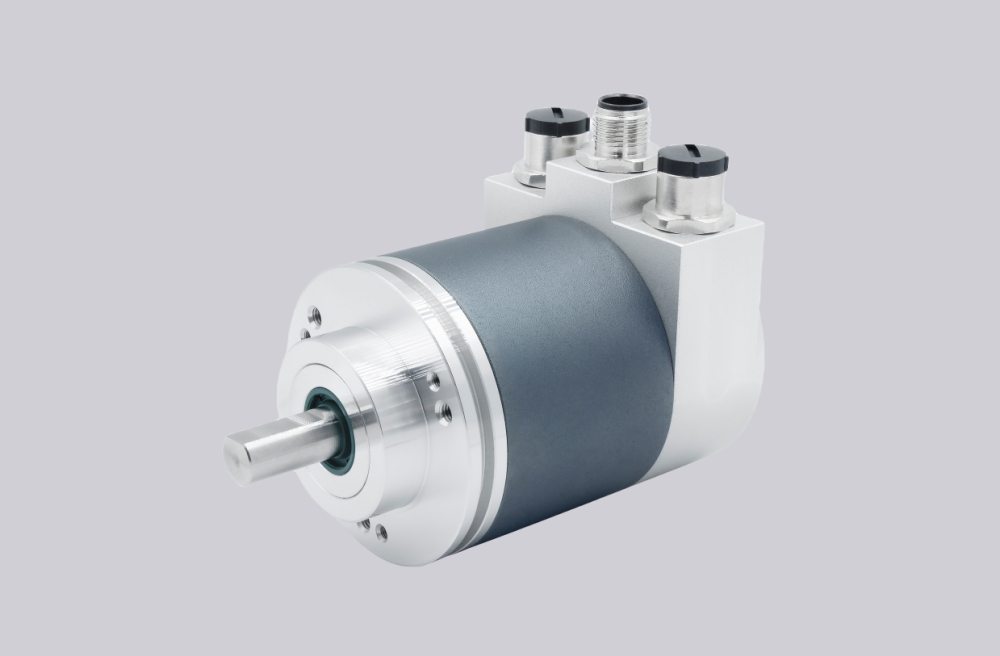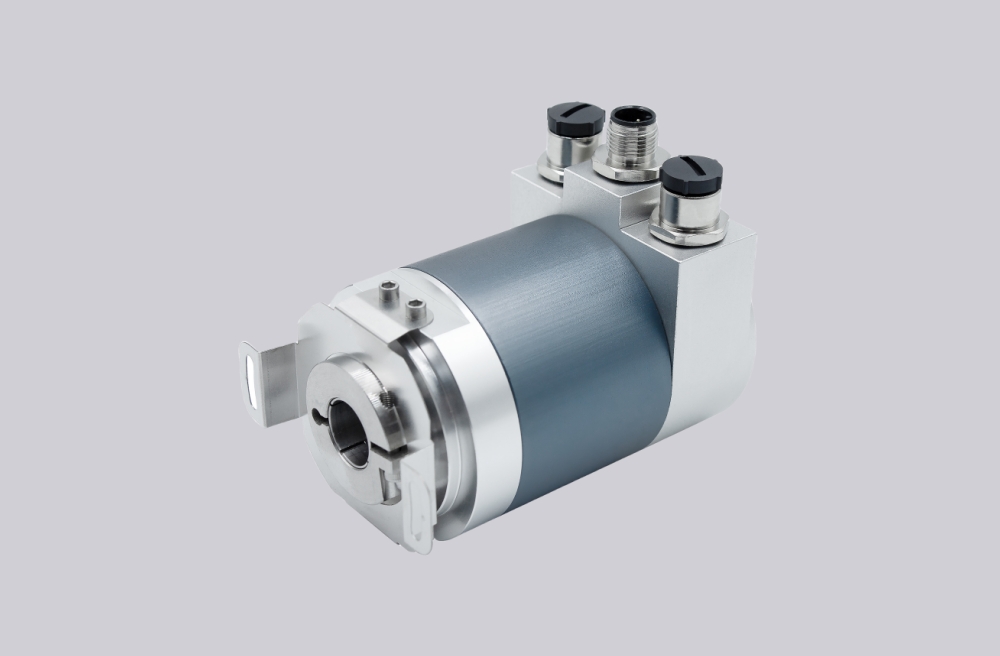




For 8.A222.68C2.C212, EncoderWorks can provide a custom compatible replacement solution for large-shaft PROFINET absolute encoder systems where the key checks are ø20 mm H7 bore fit, torque-arm-side locking-ring access, 70 mm torque-arm preload, PROFINET device configuration, and three-M12 connector wiring. This model should not be treated like the ø45 mm encoder-side locking-ring version, because both the bore size and clamp-side orientation change the AX mechanical replacement boundary. Typical production lead time: 15 working days.
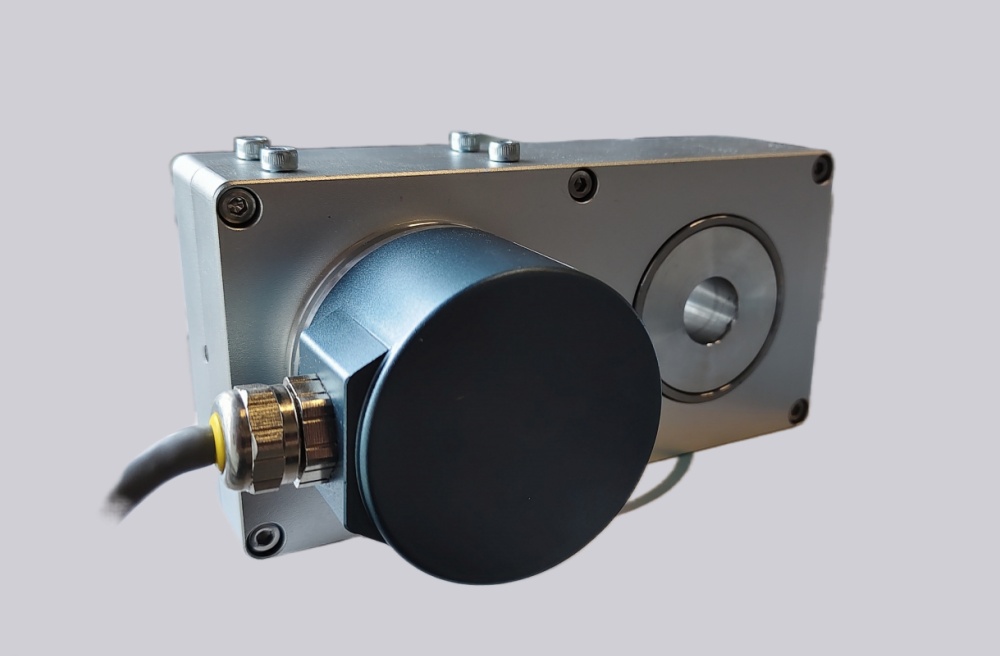
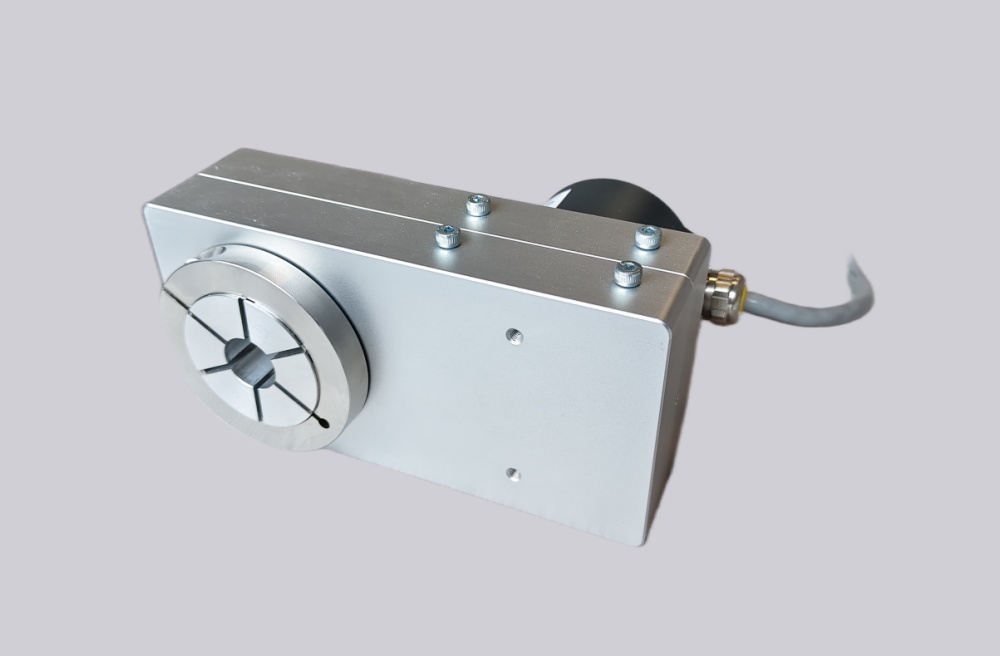
This configuration combines a Kübler AX hollow-shaft adapter with a Sendix 5868 absolute multiturn encoder. The AX section provides the ø20 mm hollow-shaft bore, locking ring on the torque-arm side, and 70 mm torque arm, while the encoder body provides PROFINET IO absolute position feedback through three radial M12 connectors. Replacement work should focus on shaft fit, locking-ring access, clamping torque, torque-arm alignment, device name, IP assignment, GSDML file matching, scaling parameters, preset behavior, network diagnostics, and shield grounding.
System Limits
The first system limit is AX mechanical installation. The ø20 mm shaft must match the H7 adapter bore without forcing the clamp, and the locking ring must remain accessible from the torque-arm side after installation. Shaft runout, excessive clamp force, or torque-arm preload can create bearing load, housing movement, or repeatability drift.
The second limit is PROFINET commissioning. The controller must preserve the original device name, IP setting, GSDML version, encoder protocol behavior, scaling, preset value, counting direction, and diagnostic response. If the encoder appears online but the profile or scaling differs, the PLC may receive stable position data while converting it into the wrong mechanical value.
The third limit is the AX operating envelope. The adapter is rated IP64 and has temperature-dependent speed limits. High shaft speed, high ambient temperature, or bracket stress can become the practical failure boundary before the PROFINET interface itself becomes unstable.
Wiring & Installation
Before replacement, record the PROFINET device name, IP address, GSDML file, scaling parameters, preset value, counting direction, alarm handling, and diagnostic behavior from the controller project. Also record the three radial M12 connector assignments for PROFINET ports, supply voltage, ground, and shield connection.
During installation, confirm the ø20 mm H7 shaft fit, keep the locking ring on the torque-arm side, and align the 70 mm torque arm without preload. Route PROFINET and power cables away from inverter output wiring, maintain shield continuity through the M12 connectors, and avoid ground loops between the encoder housing, machine frame, and cabinet earth. After startup, verify device recognition, actual position value, direction, preset response, diagnostics, torque-arm movement, and repeatability over several machine cycles.
Custom Compatible Solution
EncoderWorks can configure the replacement around the installed shaft and PROFINET control system:
- Match the AX ø20 mm hollow-shaft adapter, torque-arm-side locking ring, 70 mm torque arm, and mounting envelope
- Preserve Sendix 5868 PROFINET IO encoder protocol behavior, GSDML setup, scaling, preset, and direction response
- Adapt the three radial M12 connector layout, 10–30 VDC supply range, Ethernet wiring, and shield grounding
- Review clamp torque, shaft fit, torque-arm preload, IP64 installation limits, network diagnostics, and temperature-speed operating margin
Key Data
| Item | Data |
|---|---|
| Model | 8.A222.68C2.C212 |
| Encoder type | Absolute multiturn encoder with AX hollow-shaft adapter |
| Encoder body | Sendix 5868 |
| Interface | PROFINET IO |
| Protocol | PROFINET encoder protocol version 4.1 |
| Supply voltage | 10–30 VDC |
| Bore | ø20 mm H7 hollow-shaft adapter |
| Locking ring position | Torque-arm side |
| Torque arm | 70 mm |
| Connection | 3× radial M12 connectors |
| Adapter protection | IP64 |
| Adapter weight | Approx. 3.5 kg |
| Starting torque | Max. 0.15 Nm at 23°C |