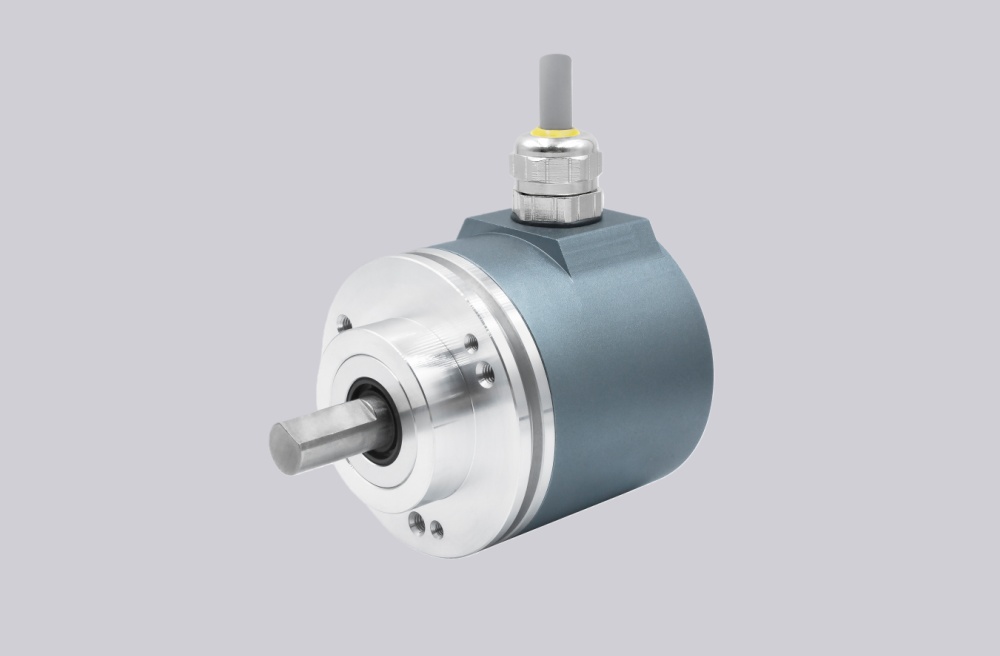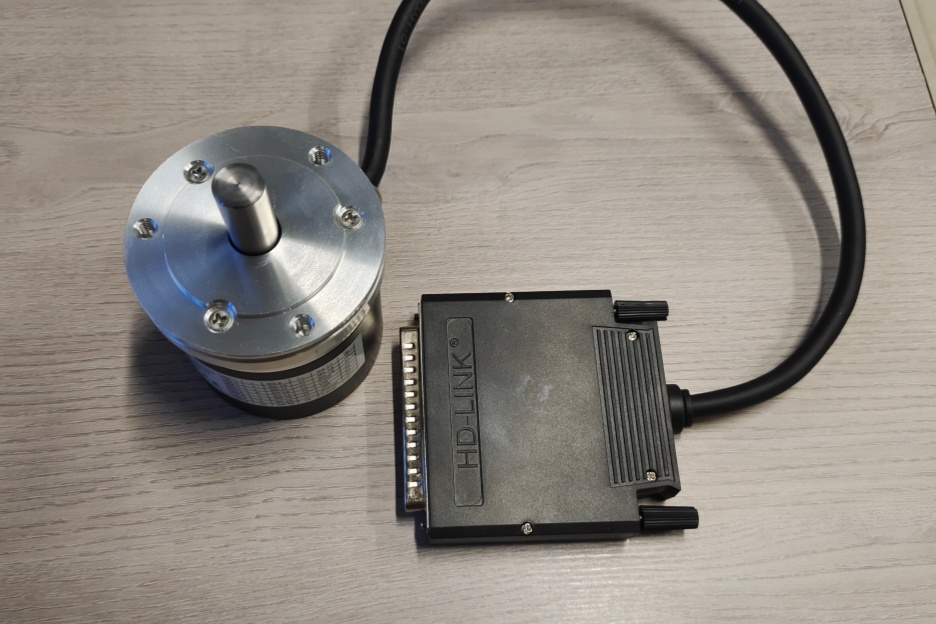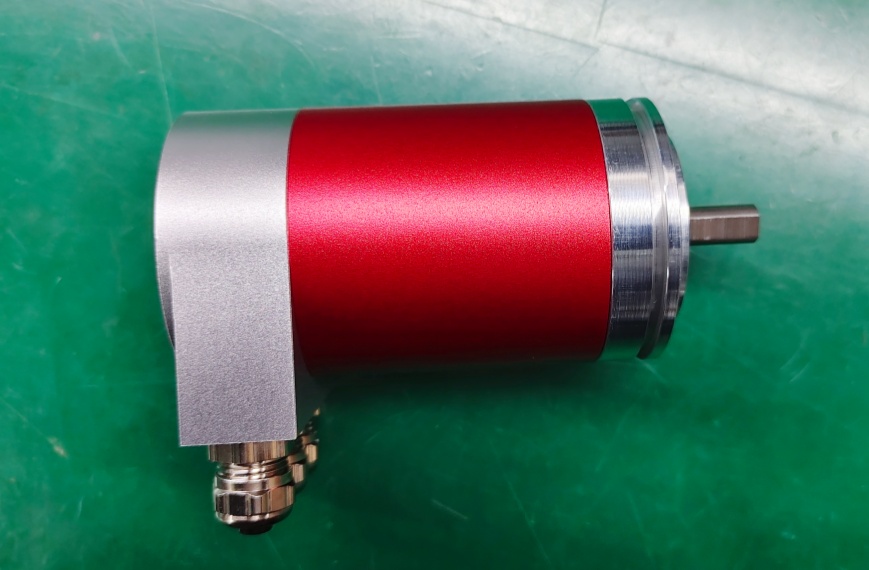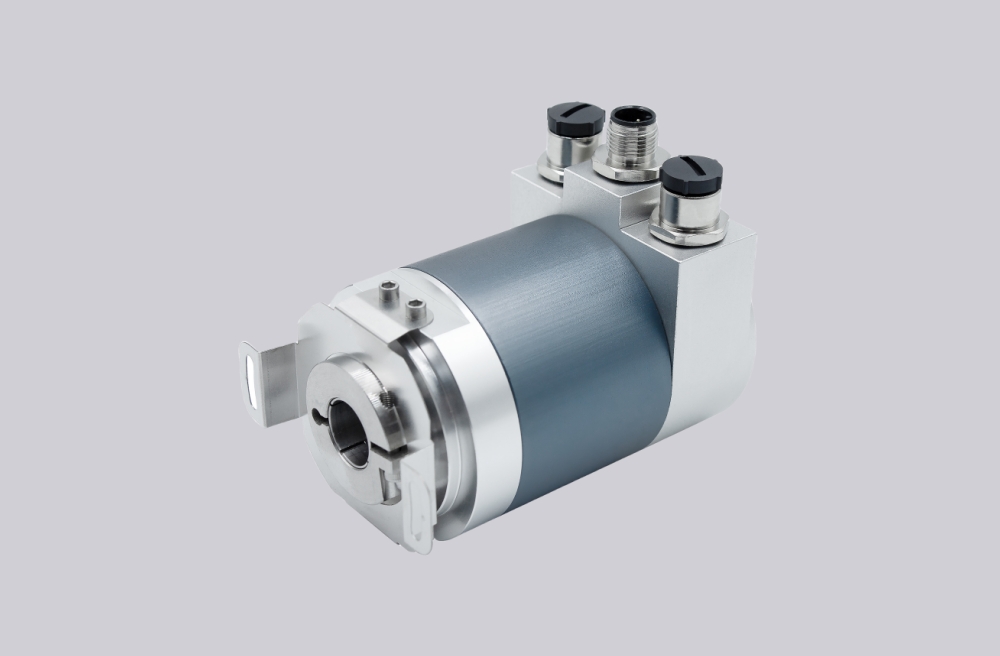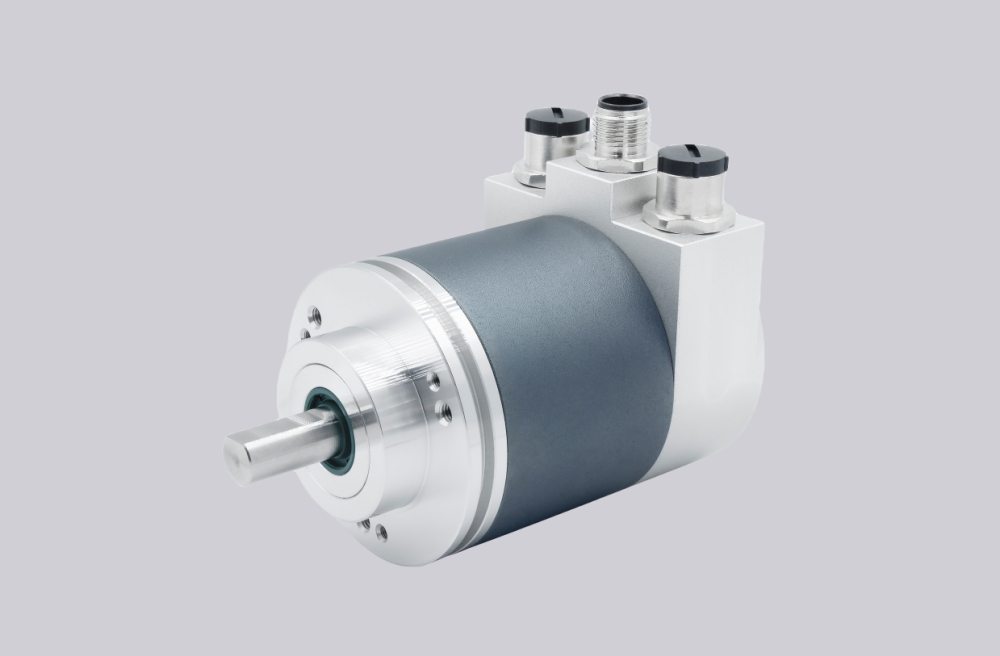




We have developed a custom solution for model OCD-PPA1G-0016-B140-CAW, based on a compact 58 mm hollow-shaft platform with Ø14 mm blind hollow shaft and a parallel push-pull multiturn output structure. This configuration is intended for installations where absolute position must be captured directly at the controller level without using serial communication, while still accommodating through-shaft mounting. The encoder provides 16-bit singleturn absolute feedback with multiturn capability, using Gray-code output for stable bit-level acquisition. Typical production lead time: 15 working days.
Technical Key Parameters
- Interface: Parallel (push-pull)
- Resolution: 16 bit singleturn + multiturn
- Mounting: Ø58 mm hollow shaft (blind, Ø14 mm)
- Shaft type: Blind hollow shaft
- Supply voltage: 10–30 VDC
Custom Solution Photos
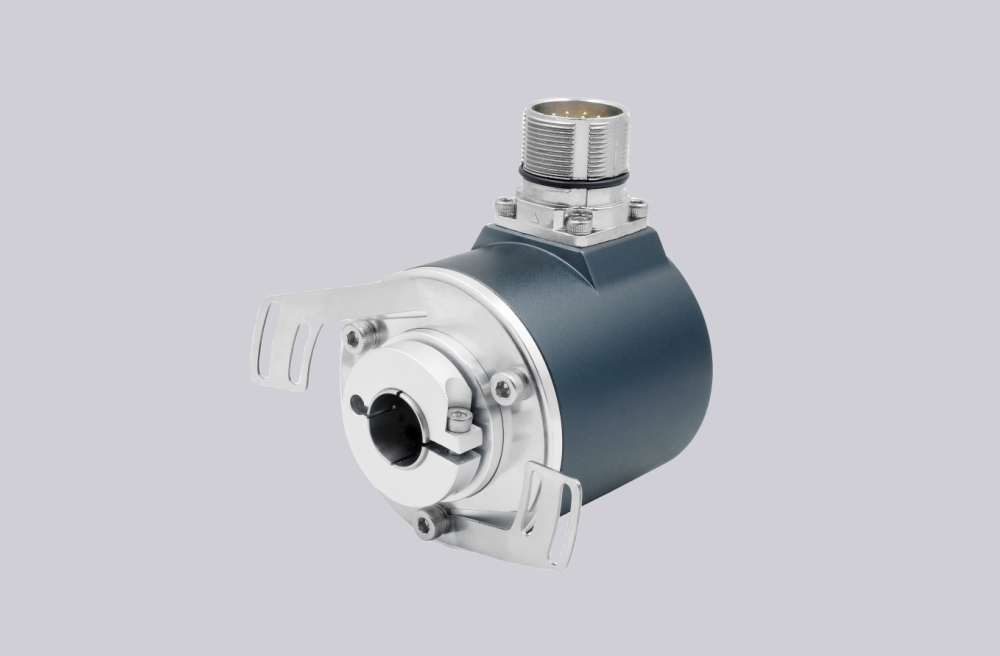
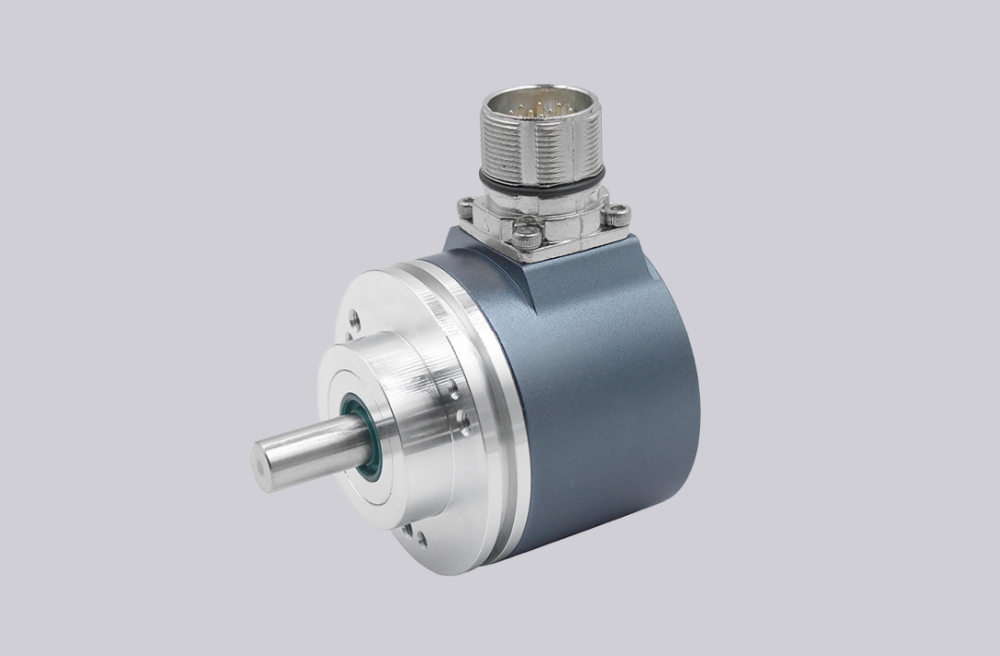
The configuration reflects a hollow-shaft encoder design with axial cable outlet and direct parallel bit output for controller-side integration.
Wiring and Installation Notes
This model uses a parallel push-pull multiturn output, so signal stability depends primarily on correct wiring of multiple data lines rather than communication protocol settings. In practice, incorrect bit mapping, inconsistent grounding, or improper cable routing are more common causes of position errors than sensor faults. The wiring structure includes multiple data bits, power supply, direction input, and control signals, which increases the risk of stable but incorrect readings if signal assignment is not verified carefully during commissioning.
Unlike SSI or fieldbus encoders, there is no serial validation mechanism, so errors do not always appear as communication faults. Instead, they often show up as consistent but incorrect position values. For this reason, it is recommended to confirm bit order, direction logic, and signal reference before system calibration.
Mechanically, the Ø14 mm blind hollow shaft allows direct shaft mounting, but installation must avoid radial stress and excessive clamping force. In compact mechanical layouts, misalignment between shaft and housing is typically a more common issue than electrical mismatch. The clamping system should secure the encoder without deforming the hollow shaft interface, and installation tolerance should be absorbed by the shaft system rather than the encoder.
Application and Integration Notes
This configuration is typically used in hollow-shaft installations, compact rotary assemblies, and systems requiring direct parallel absolute position output without serial communication. Its main advantage is combining multiturn capability with direct controller-level bit acquisition, which simplifies integration in control systems that already rely on parallel input structures.
Compared with serial interfaces, this model avoids protocol configuration and reduces communication dependency, but increases the importance of wiring accuracy and I/O organization. In practice, it is selected when the mechanical design requires a hollow shaft solution and when the control system benefits from direct bit-level position input rather than serial data handling. It is less suitable for long-distance signal transmission or environments where reducing cable complexity is a priority.
Custom Encoder Solution
- Compact 58 mm hollow-shaft encoder structure for through-shaft installations
- 16-bit singleturn + multiturn absolute feedback for extended position tracking
- Ø14 mm blind hollow shaft for direct shaft mounting
- Parallel push-pull output for direct controller-side integration
Lead Time and Custom Development
This model is configured based on confirmed hollow-shaft geometry, multiturn requirements, and parallel output integration. Typical production lead time: 15 working days.
Key Technical Data
| Item | Specification |
|---|---|
| Interface | Parallel, push-pull |
| Resolution | 16 bit + multiturn |
| Supply voltage | 10–30 VDC |
| Mounting | Ø58 mm hollow shaft |
| Shaft type | Blind hollow shaft Ø14 mm |
| Connection | Axial cable outlet |
| Max speed | 6000 rpm |
| Protection | IP65 |
Technical Summary
The engineering value of OCD-PPA1G-0016-B140-CAW lies in its combination of a compact hollow-shaft structure, multiturn absolute feedback, and parallel push-pull output. It is best suited for installations where through-shaft mounting is required and where the control system operates on direct bit-level position input. In practical applications, this type of encoder is selected when serial communication would add unnecessary complexity, while parallel output still provides sufficient integration simplicity within the control architecture.