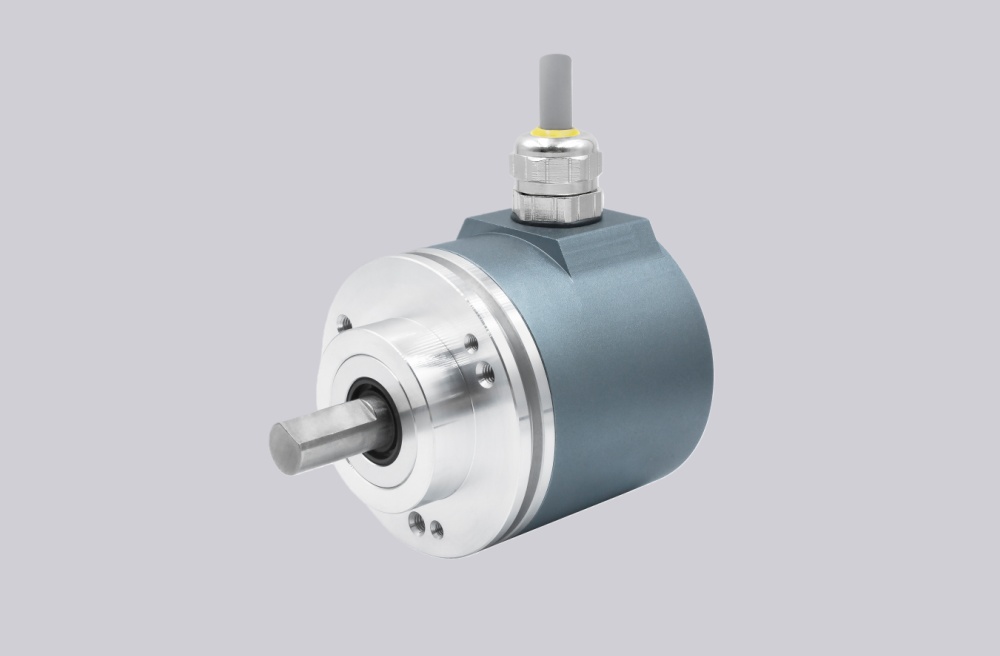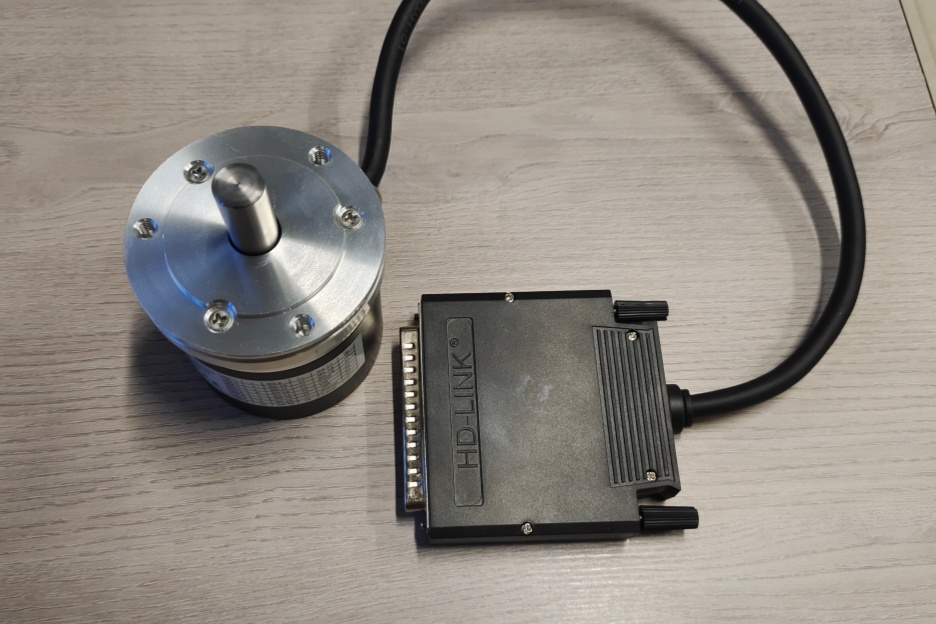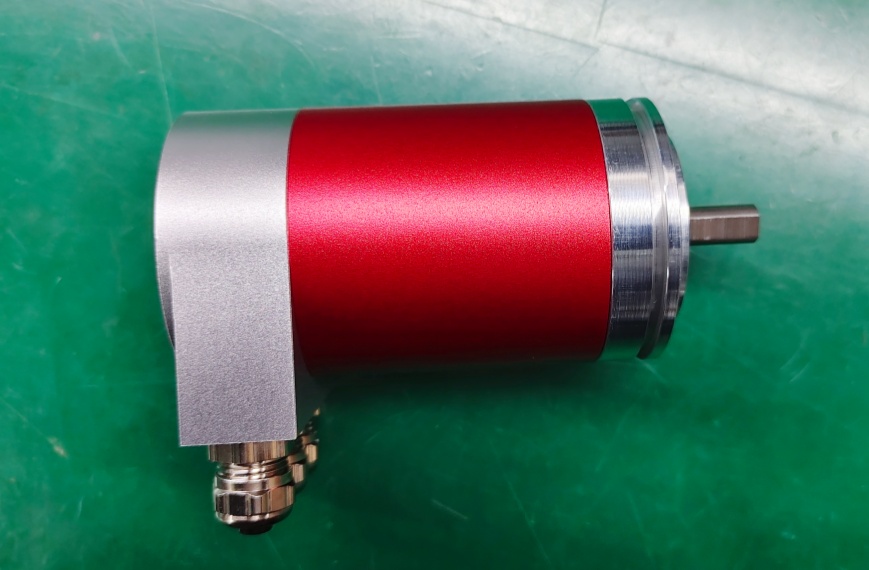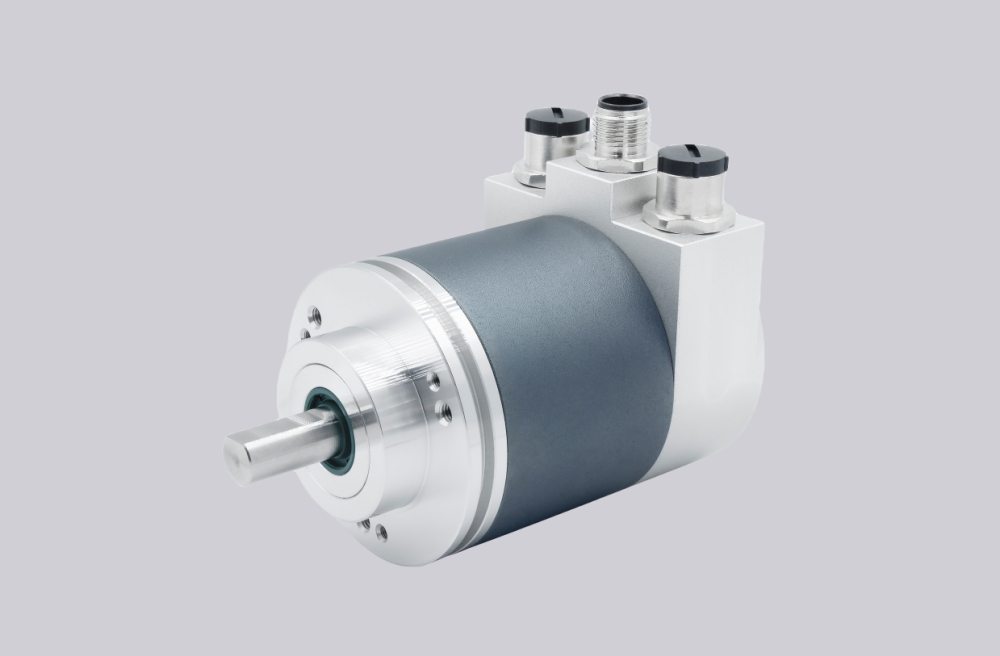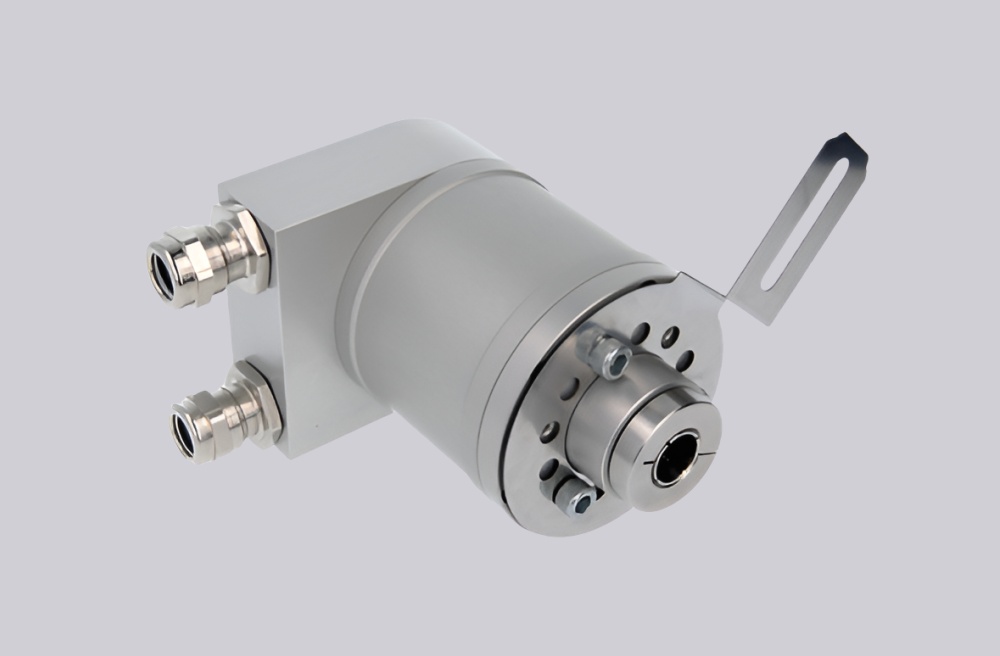




We have developed a custom solution for model OCD-PPA1B-00AA-B150-2AW, built around a compact 58 mm blind hollow-shaft platform with a Ø15 mm shaft bore, parallel push-pull singleturn output, and axial 2 m cable connection. This configuration is intended for control systems that still acquire position through direct bit-level inputs rather than serial communication, while also requiring hollow-shaft mounting for simplified mechanical integration. The encoder provides 9-bit singleturn absolute feedback with binary output and cable-side direction setting. Typical production lead time: 15 working days.
Technical Key Parameters
- Interface: Parallel (push-pull)
- Resolution: 9 bit singleturn
- Mounting: Ø58 mm blind hollow shaft
- Shaft type: Ø15 mm blind hollow shaft, 30 mm depth
- Supply voltage: 10–30 VDC
Custom Solution Photos
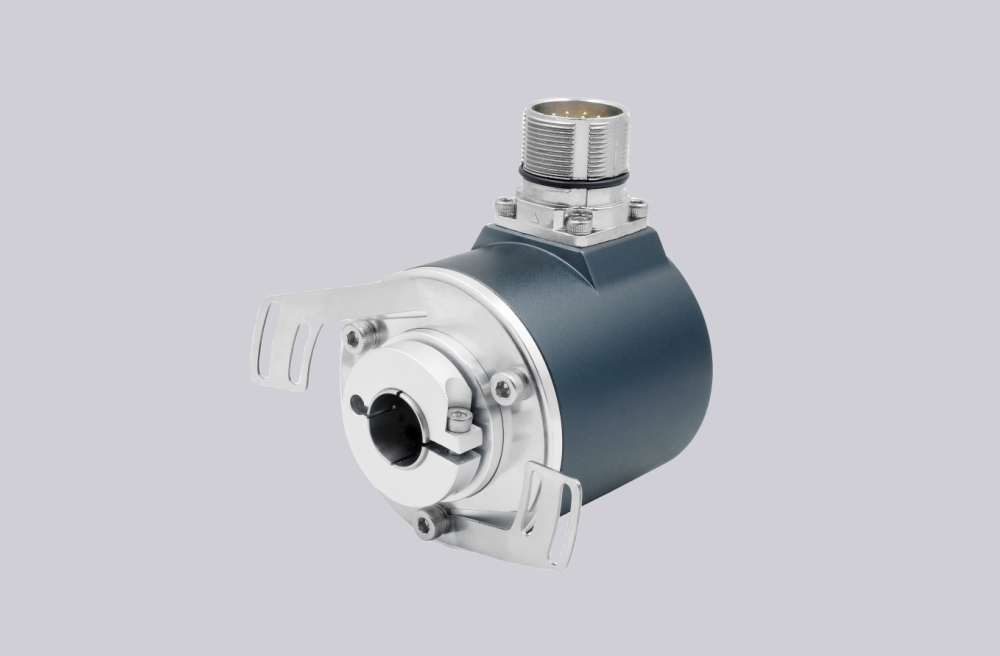
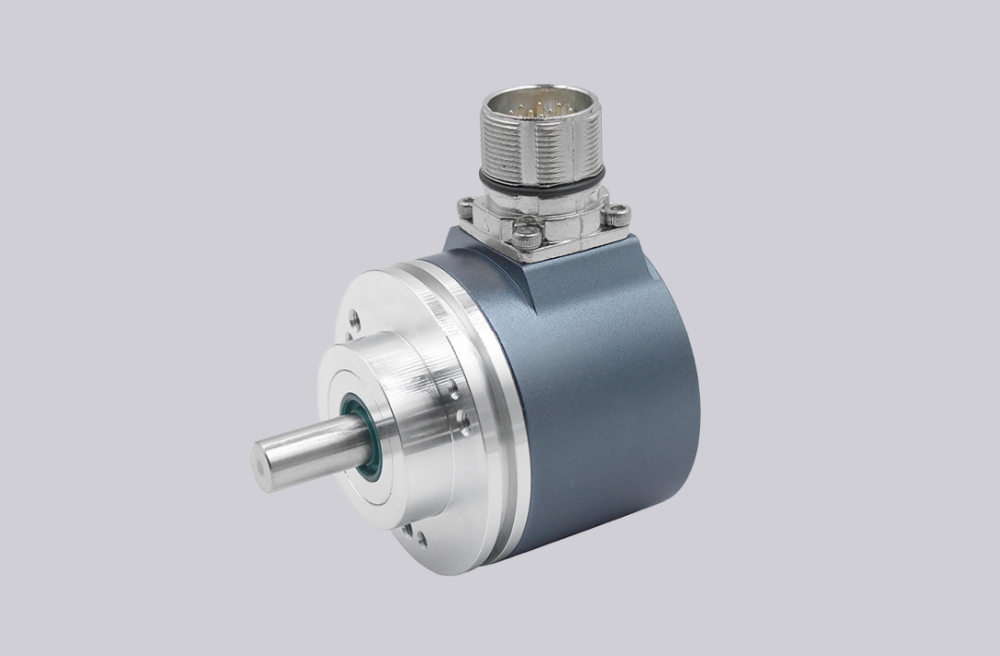
The configuration reflects a compact hollow-shaft encoder structure with axial cable outlet and direct parallel bit output for controller-side position acquisition.
Wiring and Installation Notes
This model uses a parallel push-pull output, so long-term stability depends primarily on wiring accuracy across multiple conductors rather than on protocol settings. In practice, stable but incorrect position values are more often caused by bit-order mistakes, undefined control lines, or inconsistent ground reference than by encoder failure. The cable assignment includes Bit 1 to Bit 9, plus Latch, DIR, Power Supply, and GND, so commissioning should verify signal order before controller-side scaling or logic is finalized. On this type of interface, incorrect direction logic often looks like a mechanical installation error, so the DIR function should be checked first whenever the count direction appears reversed.
The encoder is supplied with a 2 m axial PVC cable, and the specified minimum bending radius of 150 mm should be respected from the start. In compact cabinets, cable stress and tight bends are a more common source of long-term instability than the sensing element itself. Because this is a hollow-shaft structure, installation quality also depends heavily on correct shaft seating and controlled clamping. Excessive radial stress, uneven support, or over-tight fastening can reduce bearing life and affect signal consistency. In practical installations, hollow-shaft encoders usually tolerate less mounting abuse than users expect, especially when the assembly space is tight and alignment is done after cable routing.
Application and Integration Notes
This configuration is typically used in compact rotary assemblies, shaft-mounted automation modules, and control systems that still use direct parallel absolute inputs instead of SSI or fieldbus communication. Its main practical value lies in combining hollow-shaft mounting with simple controller-side bit acquisition, which avoids serial configuration while keeping absolute position available immediately after power-up.
Compared with SSI or industrial Ethernet encoders, this model reduces protocol complexity but increases the importance of cable organization and I/O discipline. In practice, it is selected when the control architecture already supports parallel position inputs and where a Ø15 mm blind hollow-shaft arrangement simplifies installation more than a solid-shaft coupling would. It is less suitable for long, noise-prone cable routes or for systems where minimizing conductor count is more important than keeping direct bit-level logic.
Custom Encoder Solution
- Compact 58 mm hollow-shaft structure for direct shaft-mounted installations
- 9-bit singleturn binary output for direct controller-side position reading
- Ø15 mm blind hollow shaft for compact mechanical integration
- Suitable for systems using Latch / DIR logic instead of serial communication
Lead Time and Custom Development
This model is configured based on confirmed hollow-shaft geometry, singleturn resolution, and parallel output integration requirements. Typical production lead time: 15 working days.
Key Technical Data
| Item | Specification |
|---|---|
| Interface | Parallel, push-pull |
| Resolution | 9 bit singleturn |
| Supply voltage | 10–30 VDC |
| Mounting | Ø58 mm blind hollow shaft |
| Shaft type | Ø15 mm blind hollow shaft, 30 mm depth |
| Connection | Axial cable, 2 m PVC |
| Max speed | 12000 rpm |
| Protection | IP65 |
Technical Summary
The engineering value of OCD-PPA1B-00AA-B150-2AW lies in its combination of a compact 58 mm hollow-shaft structure, 9-bit singleturn absolute output, and a direct parallel push-pull interface on a simple electrical architecture. It is best suited for shaft-mounted systems where the controller already works with parallel position inputs and where serial communication would add unnecessary integration overhead. In practical applications, the main success factors are correct bit assignment, stable direction logic, controlled cable routing, and careful hollow-shaft installation.