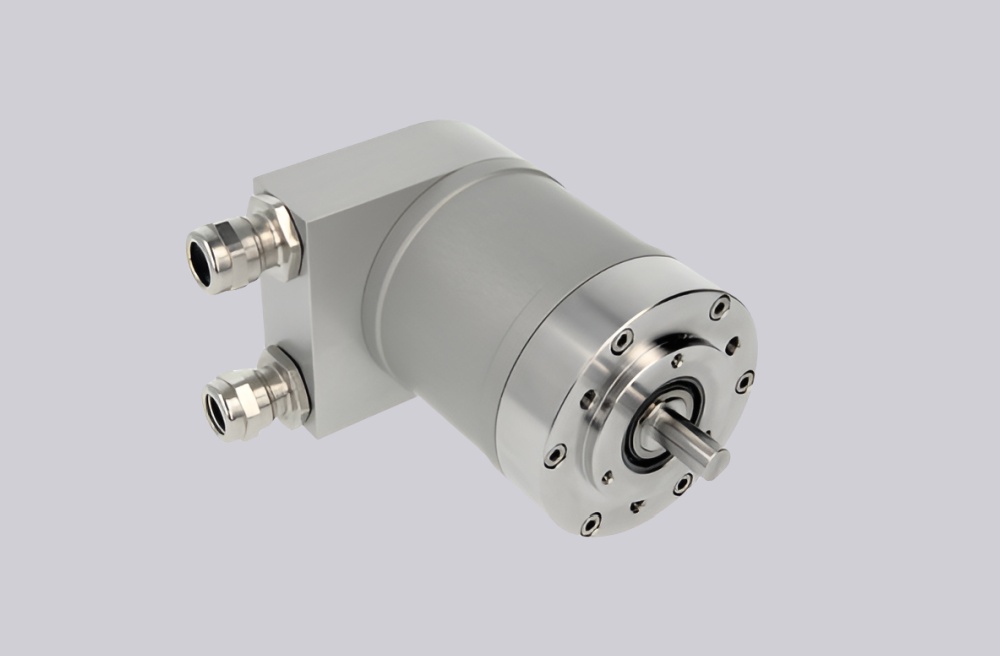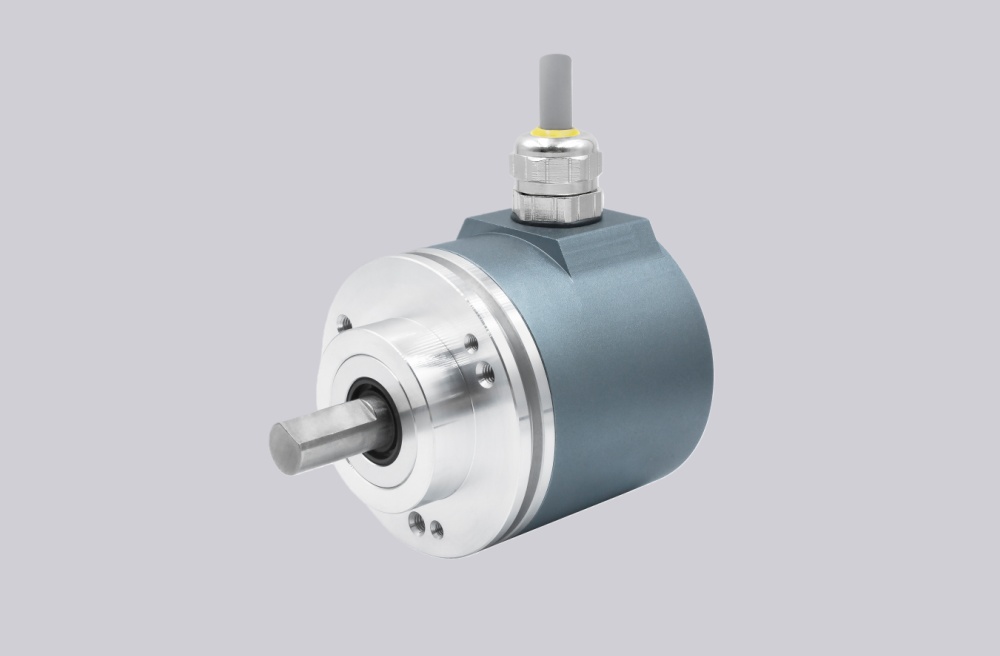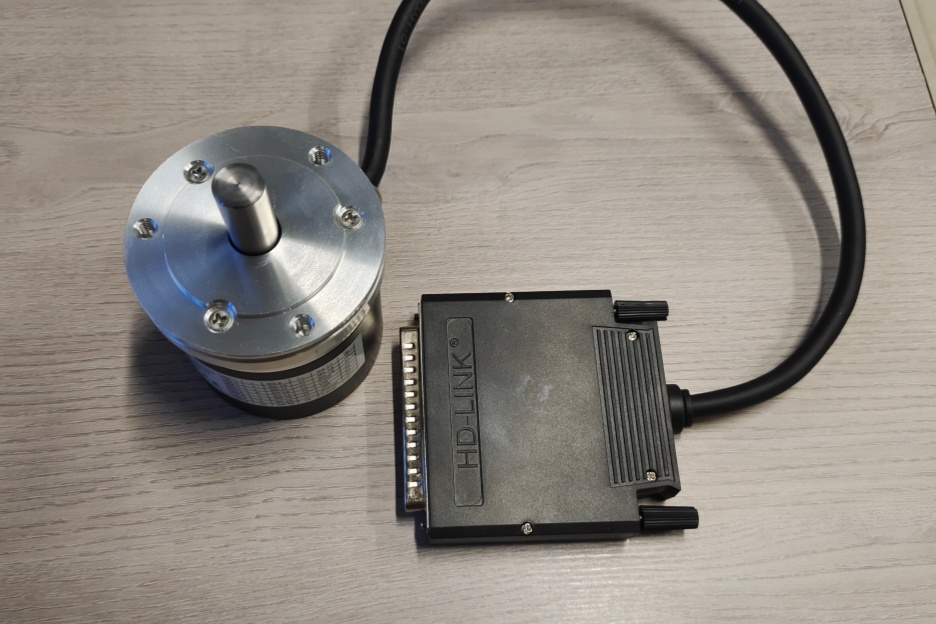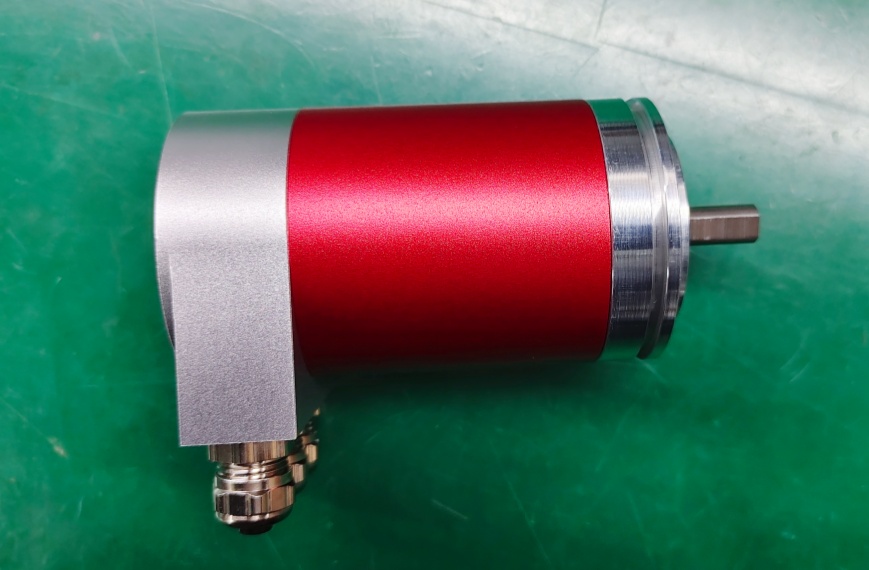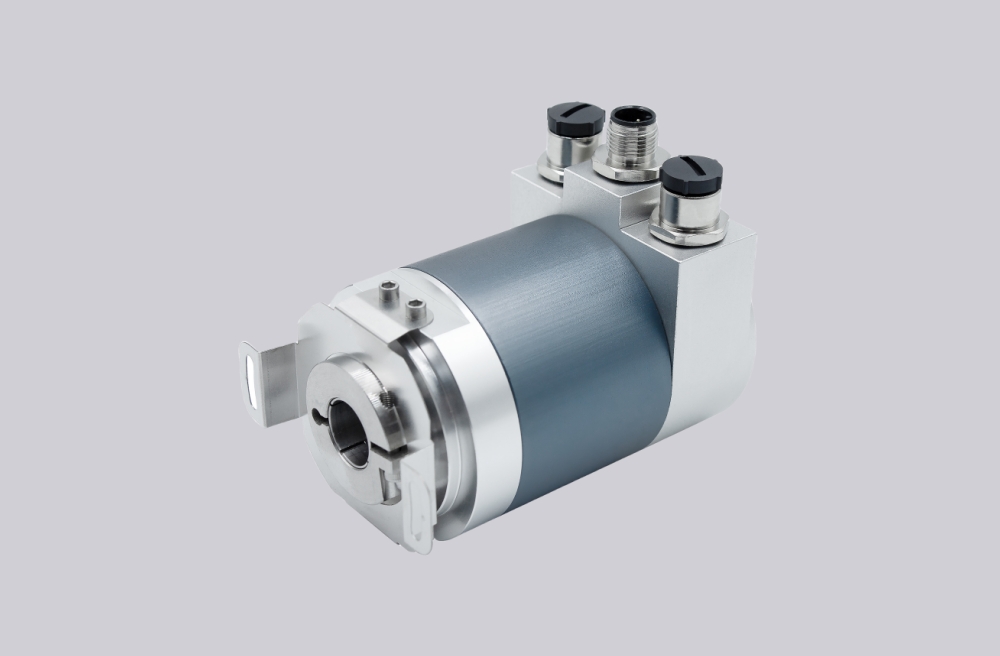




A custom compatible encoder solution can be provided for OCM-CAA1B-1413-W10W-HFZ in maintenance, retrofit, replacement, and upgrade projects. This model is a CANopen absolute encoder built on a solid shaft platform with a Ø10 mm shaft, synchro flange, and hazardous-duty mechanical construction for Zone 1 and 21 mining installations. Typical production lead time: 15 working days. The engineering objective is to preserve the original CANopen node behavior, shaft-side installation fit, and hazardous-area field continuity so that replacement can remain stable and practical.
Technical Overview of the OCM-CAA1B-1413-W10W-HFZ Encoder
The OCM-CAA1B-1413-W10W-HFZ belongs to an absolute rotary encoder platform using CANopen communication with DS-406 profile support. This coded version uses a 13-bit singleturn structure together with a 14-bit multiturn structure and binary code output. The sensor technology is optical, while the multiturn function is based on mechanical gearing without a battery. These features make the model suitable for applications where absolute position continuity over multiple revolutions must be preserved together with established CANopen communication behavior.
From the electrical side, the encoder operates on 10–30 VDC, with current consumption up to 230 mA at 10 VDC and up to 100 mA at 24 VDC. It supports transmission rates from 20 kBaud to 1 MBaud, interface cycle time of at least 1 ms, and programmable functions including resolution, preset, 2 limit switches, 8 CAMS, baud rate, CAN-Identifier, bootloader, and transmission modes such as polled, cyclic, and sync. The output driver is an ISO 11898 transceiver with galvanic isolation through opto-couplers.
Mechanically, this version uses a solid shaft with single flat, 20 mm shaft length, and Ø10 mm shaft diameter. The flange is a synchro type with Ø78 mm platform, and the housing, flange, and connection cap are all stainless steel V4A construction. The encoder is rated IP66/IP67 on both shaft and housing sides, with operating temperature from -40 °C to +70 °C and maximum permissible mechanical speed up to 3000 rpm.
Industrial Integration Considerations
For this model, the most important compatibility factor is the combination of CANopen node behavior and hazardous-duty mechanical continuity. In many retrofit projects, the control system is already configured around a defined baud rate, preset logic, transmission mode, and CAN-Identifier behavior. Replacing the encoder with a mechanically similar unit but different node-side behavior can create unnecessary commissioning work. For that reason, the original communication profile and programmable functions should be preserved together with the shaft and flange dimensions.
The mechanical platform also deserves careful review. This version uses a Ø10 mm solid shaft and a Ø78 mm synchro flange in a stainless-steel housing. In field applications, especially in mining-duty installations, preserving shaft-side fit, flange reference, and enclosure durability is usually as important as maintaining the communication interface. The hazardous-area approval basis and IP66/IP67 sealing should therefore remain aligned with the original installation concept during replacement planning.
Field Installation and Wiring Notes
For this version, the CANopen connection arrangement should be checked carefully during replacement. The product page specifies manual functions for an address selector switch from 0 to 99 and a terminal resistor integrated with the connection cap. This means node addressing and termination logic are part of the original field configuration and should remain consistent during commissioning.
The connection plan shows power supply, ground, CAN High, CAN Low, and CAN GND continuity through the radial connection arrangement. In field replacement work, bus polarity, termination role, and shield/ground continuity should be checked directly against the installed wiring before startup. Because this version is used in hazardous-duty environments, sealing integrity around the blind plugs and cable-entry arrangement should also remain aligned with the original field practice.
Custom Compatible Encoder Solution
A custom compatible encoder solution for OCM-CAA1B-1413-W10W-HFZ should preserve five engineering points: Ø10 mm solid shaft geometry, Ø78 mm synchro flange installation reference, CANopen DS-406 communication behavior, 13-bit singleturn plus 14-bit multiturn structure, and the original hazardous-duty enclosure concept. This combination matters because successful field replacement depends not only on nominal mounting dimensions, but also on whether the encoder remains aligned with the installed node addressing, preset, transmission mode, and termination logic.
From the electrical side, the compatible solution should remain aligned with the original 10–30 VDC supply range, galvanically isolated CANopen output stage, and configured node behavior. From the mechanical side, it should preserve shaft dimensions, flange type, stainless-steel construction, and radial connection layout. Where the original machine already uses preset functions, CAM switching, or configured transmission modes, those items should be confirmed during engineering review before final release.
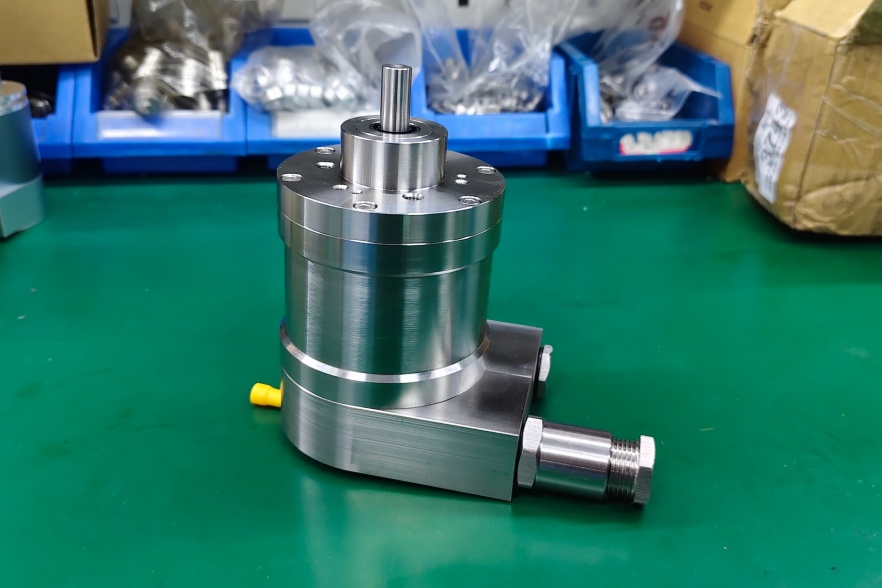
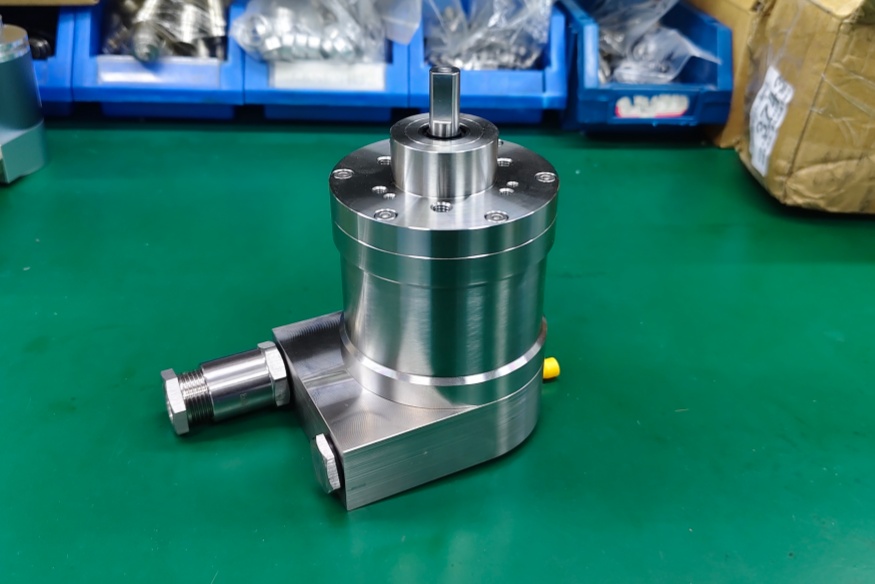
Custom Solution Photos
Lead Time and Custom Development
Typical production lead time: 15 working days.
For custom development, the main checkpoints should include shaft diameter, shaft length, flange reference, CANopen node address handling, termination logic, baud rate, transmission mode, and hazardous-area installation continuity. The final coded configuration should be reviewed from both the mechanical and network integration sides so that the compatible solution remains aligned with the original field configuration.
Typical Technical Parameters
| Parameter | Specification |
|---|---|
| Encoder Type | Absolute rotary encoder |
| Model | OCM-CAA1B-1413-W10W-HFZ |
| Interface | CANopen |
| Profile | DS-406 |
| Manual Functions | Address selector switch 0-99 and terminal resistor with connection cap |
| Transmission Rate | 20 kBaud to 1 MBaud |
| Interface Cycle Time | ≥ 1 ms |
| Programming Functions | Resolution, preset, 2 limit switches, 8 CAMS, baud rate, CAN-Identifier, bootloader, transmission modes: polled, cyclic, sync |
| Output Driver | Transceiver (ISO 11898), galvanically isolated by opto-couplers |
| Supply Voltage | 10 – 30 VDC |
| Current Consumption | ≤ 230 mA @ 10 VDC, ≤ 100 mA @ 24 VDC |
| Power Consumption | ≤ 2.5 W |
| Start-Up Time | < 1 s |
| Reverse Polarity Protection | Yes |
| Short Circuit Protection | Yes |
| Sensing Principle | Optical |
| Singleturn Resolution | 13 bit |
| Multiturn Resolution | 14 bit |
| Multiturn Technology | Mechanical gearing, no battery |
| Code Type | Binary |
| Accuracy (INL) | ±0.0220° (14–16 bit), ±0.0439° (≤13 bit) |
| Shaft Type | Solid, single flat |
| Shaft Length | 20 mm |
| Shaft Diameter | Ø10 mm |
| Flange Type | Synchro, Ø78 mm |
| Max. Shaft Load | 50 N axial, 50 N radial |
| Rotor Inertia | ≤ 35 gcm² |
| Friction Torque | ≤ 3 Ncm @ 20 °C |
| Max. Speed | ≤ 3000 rpm |
| Protection Rating | IP66/IP67 |
| Operating Temperature | -40 °C to +70 °C |
| Storage Temperature | -40 °C to +85 °C |
| Humidity | 98% RH, no condensation |
| Connection Orientation | Radial |
| Connection Type | 2 x Blind Plug, Radial |
| Housing Material | Stainless Steel V4A |
| Flange Material | Stainless Steel V4A |
| Connection Cap Material | Stainless Steel V4A |
| Shock Resistance | ≤ 100 g |
| Vibration Resistance | ≤ 10 g |
| Approval | CE + ATEX Zone 1 & 21 (Mining) |