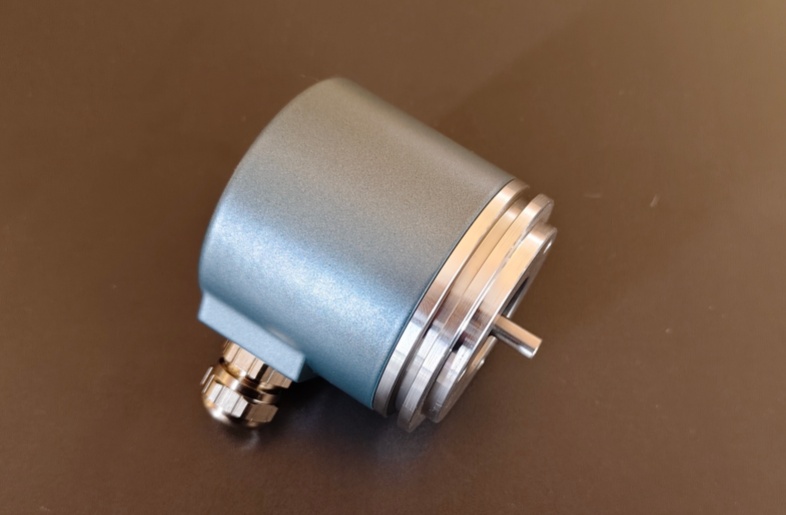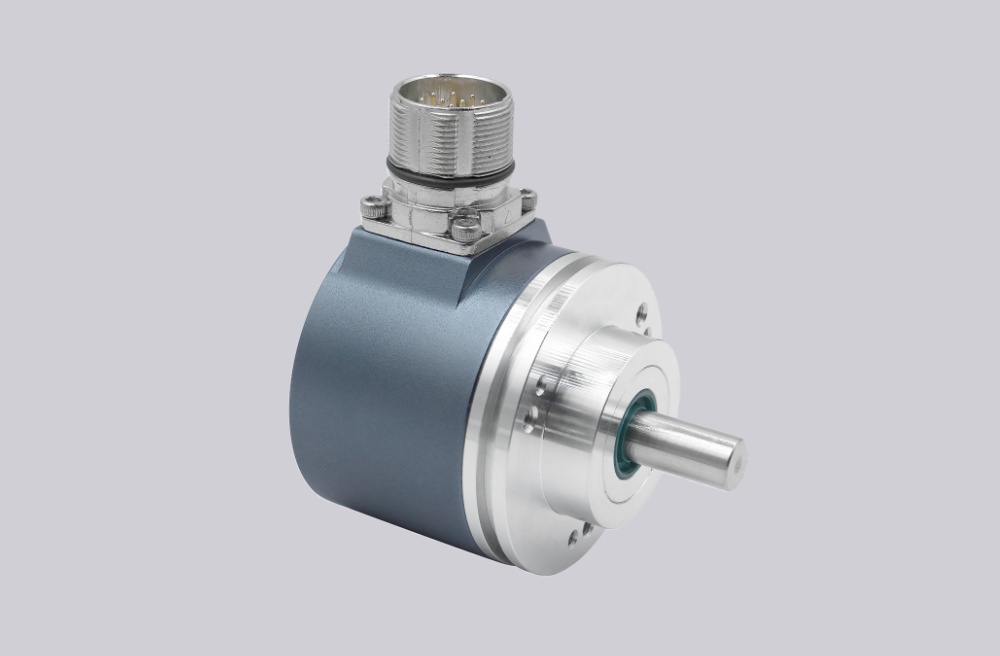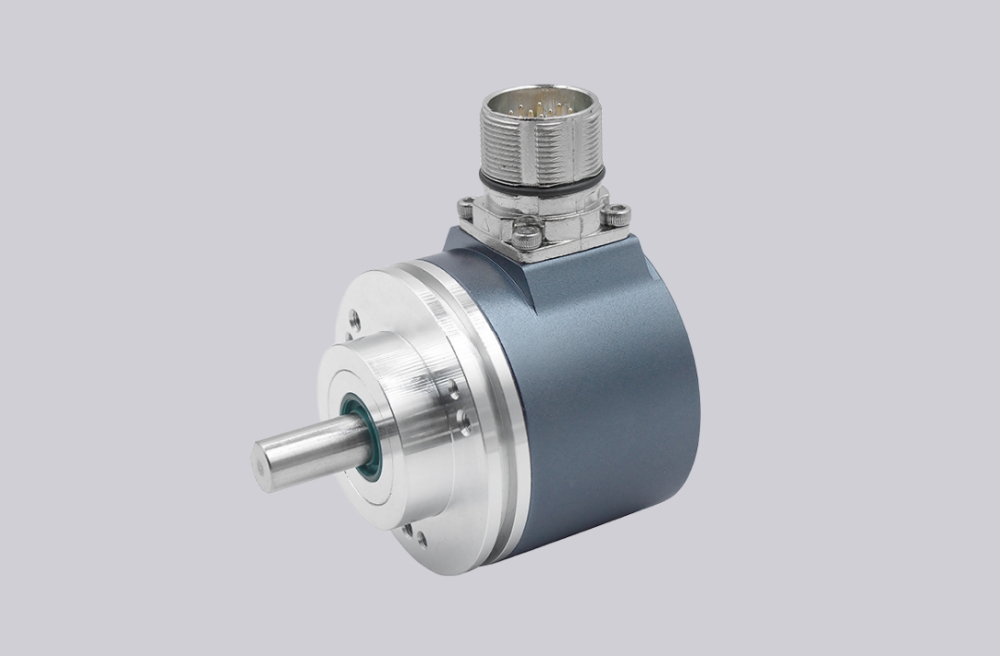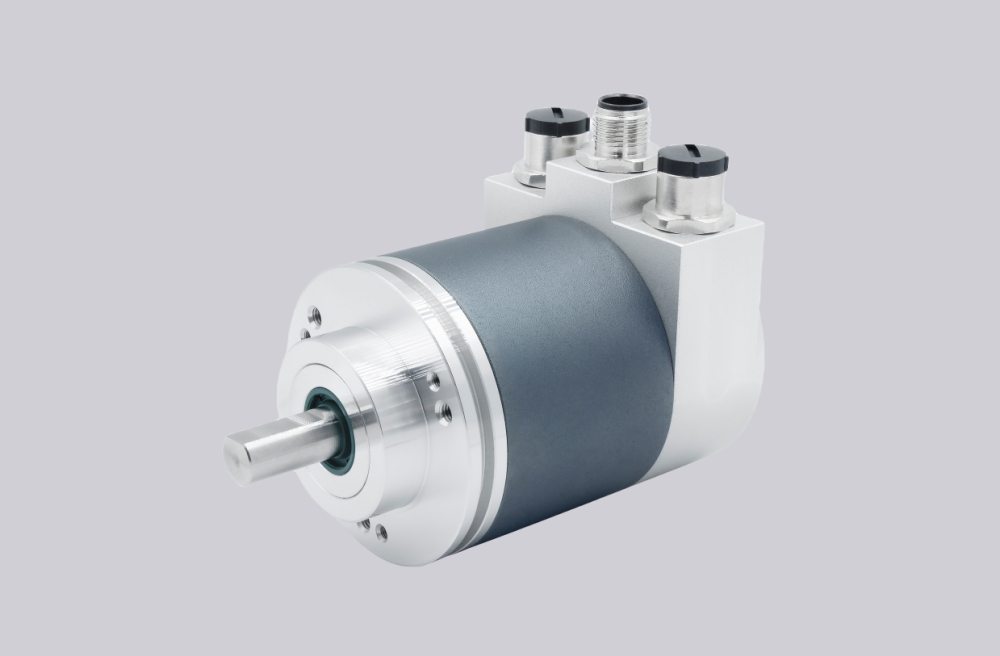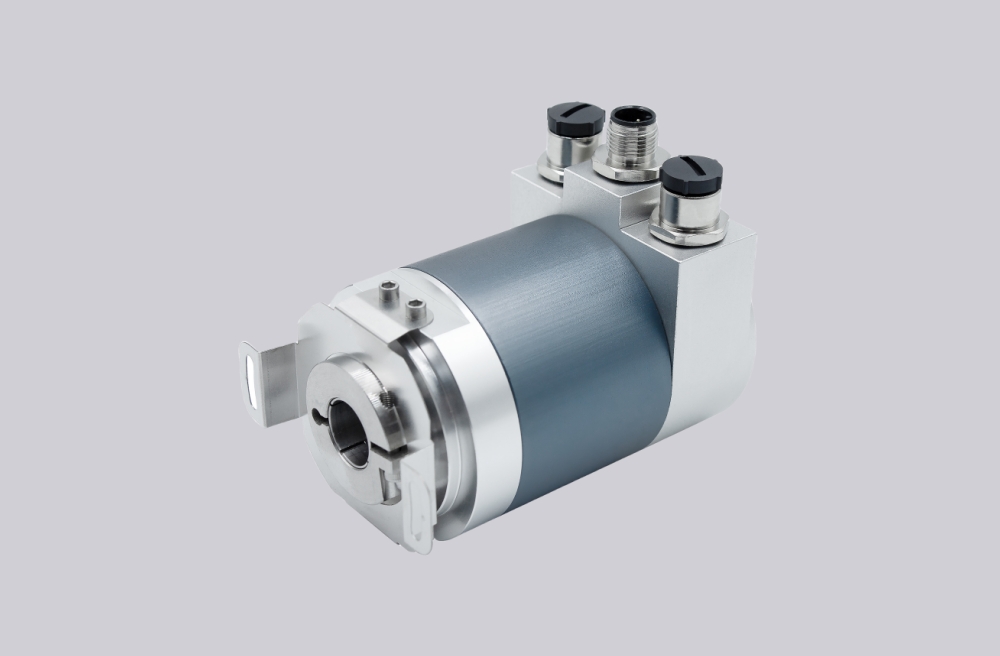




FSM58I-F3AK2A3BN-1213 can be supported by EncoderWorks with a custom compatible replacement focused on Inox housing protection, binary parallel data timing, and Ø15 mm recessed hollow-shaft fit. This model should not be treated as a simple stainless-steel version of an aluminum FSM58. The real field risk is that the 25-bit binary word may be present at the cabinet, but the controller does not read the same stable data word because LATCH timing, cable mapping, V/R state, or PRESET wiring has changed.
The FSM58I-F3AK2A3BN-1213 is a multiturn absolute encoder with fast parallel push-pull output, Inox stainless-steel housing, F3A Ø15 mm recessed hollow shaft, K2 cable output, axial exit direction, binary code, and V/R, LATCH, PRESET inputs. The FSM58 series is built for direct high-speed position readout, using short-circuit-protected push-pull outputs, 25-bit multiturn data, and a code change frequency up to 400 kHz.
The first failure boundary is binary read timing. Binary code can change multiple bits at one position transition, so the controller needs a stable read window. If the original machine used LATCH and the replacement wiring leaves it free-running, the cabinet may sample a mixed word during motion. The encoder is still producing data, but the accepted position value is wrong.
This replacement fails when all 25 binary outputs switch correctly, but the PLC reads unstable or shifted position values because LATCH timing, conductor mapping, or bit order does not match the original installation. That is a data-acceptance fault, not an encoder output failure.
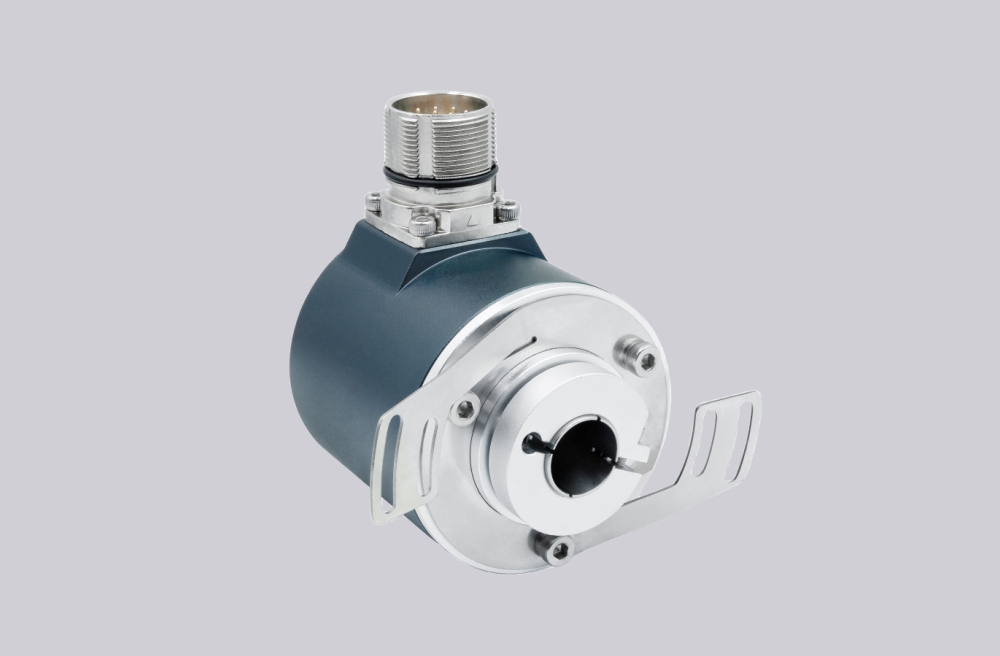
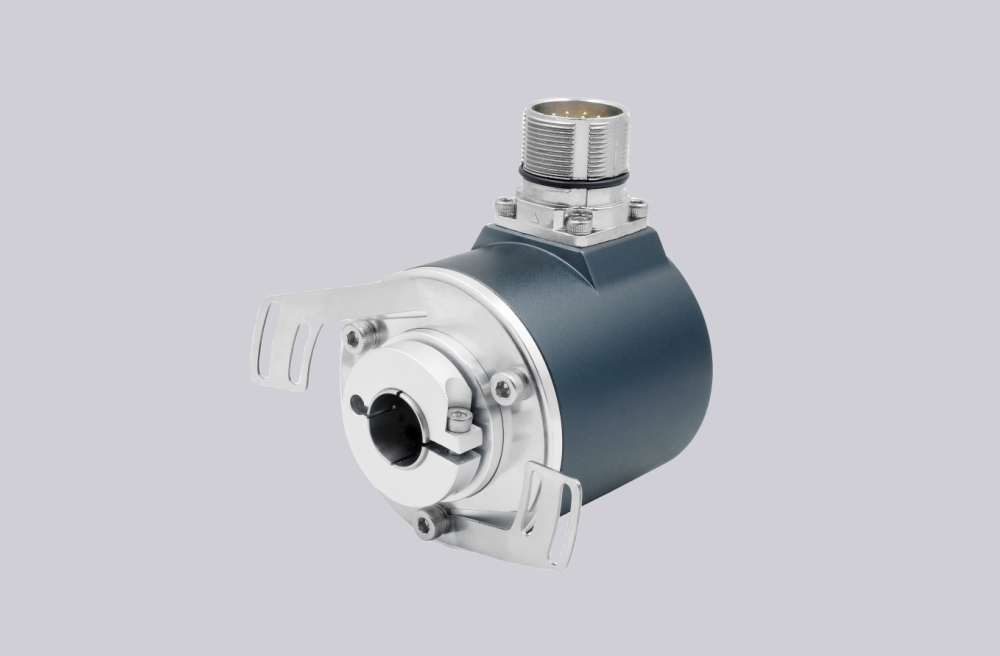
The second boundary is cable mapping. Data bits, Ub, GND, V/R, LATCH, and PRESET must be identified by signal function, not by conductor color alone. Previous cable extensions, junction-box repairs, or cabinet rewiring can shift the actual data order. The FSM58 documentation separates V/R, LATCH, and PRESET from the parallel data outputs, so these lines must be treated as control inputs, not spare conductors.
V/R changes the counting direction, while PRESET sets the electrical zero. A wrong V/R state reverses the machine position logic. A wrong PRESET signal can create a false zero point. Both faults can look like software or scaling problems, although the real issue is input-state control.
The Inox housing helps in wet, corrosive, washdown, or exposed industrial areas, but it does not correct cable strain, shield problems, or torque-rest preload. The Ø15 mm recessed hollow shaft must mount cleanly, and the axial cable exit needs enough bend radius so mechanical stress is not mistaken for data instability.
The replacement decision should first confirm Inox housing requirement, F3A Ø15 mm shaft fit, torque-rest freedom, axial cable routing, 25-bit binary bit order, LATCH pulse timing, V/R direction logic, PRESET behavior, supply voltage, shielding, and controller input thresholds. EncoderWorks treats FSM58I-F3AK2A3BN-1213 as an industrial encoder custom compatible solution where binary data timing and shaft mechanics must be verified together.
Typical production lead time: 15 working days.
Key Data
| Item | Data |
|---|---|
| Model | FSM58I-F3AK2A3BN-1213 |
| Encoder type | Multiturn absolute encoder |
| Interface | Fast parallel push-pull |
| Housing | Ø58 mm Inox stainless-steel housing |
| Shaft type | Recessed hollow shaft |
| Shaft size | F3A, Ø15 mm x 30 mm |
| Connection | K2 cable output |
| Exit direction | Axial |
| Output code | Binary |
| Resolution | 13-bit singleturn + 12-bit multiturn / 25 bit total |
| Operating voltage | 10–30 VDC |
| Code change frequency | Up to 400 kHz |
| Inputs | V/R, LATCH, PRESET |
| Main engineering anchor | Inox binary output and Ø15 shaft fit |
| Main failure boundary | Mixed binary read, wrong cable mapping, PRESET error, torque-rest preload |