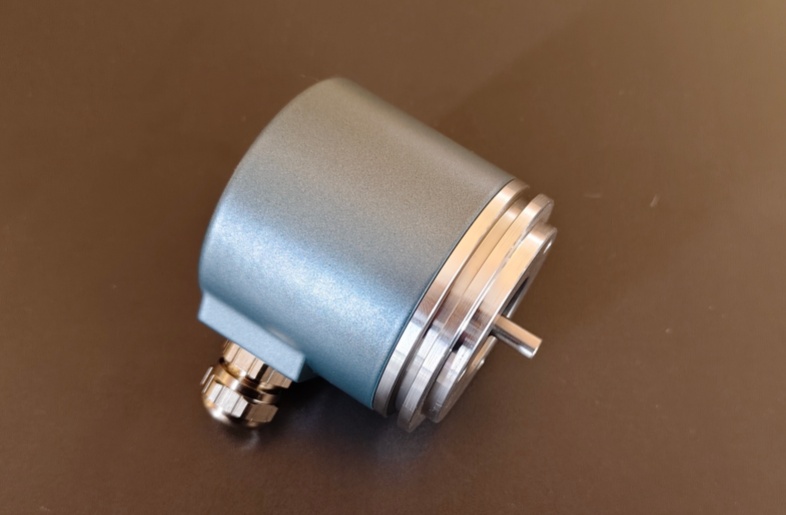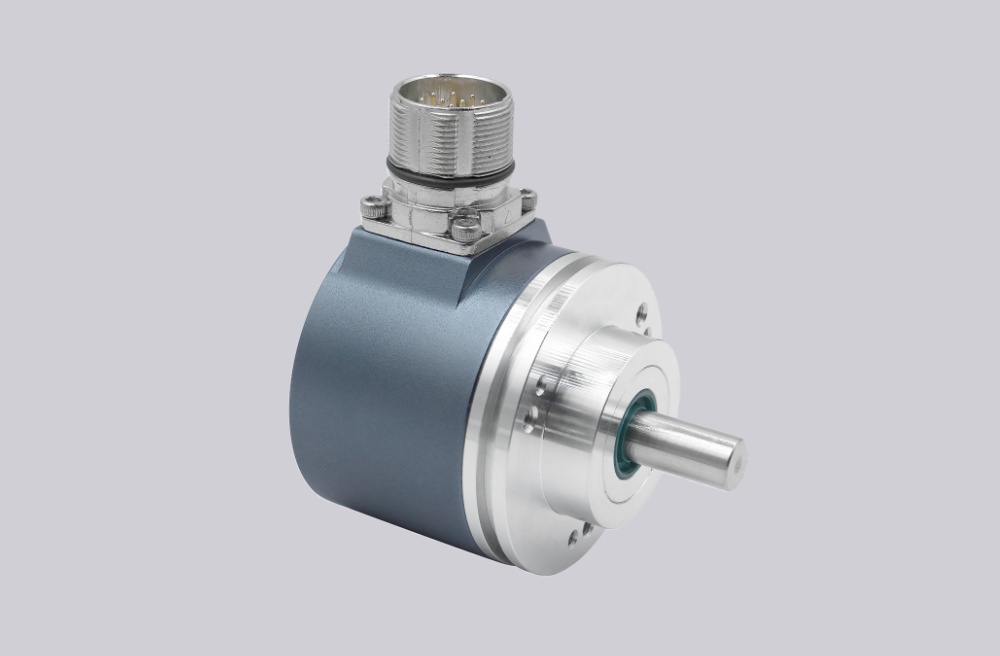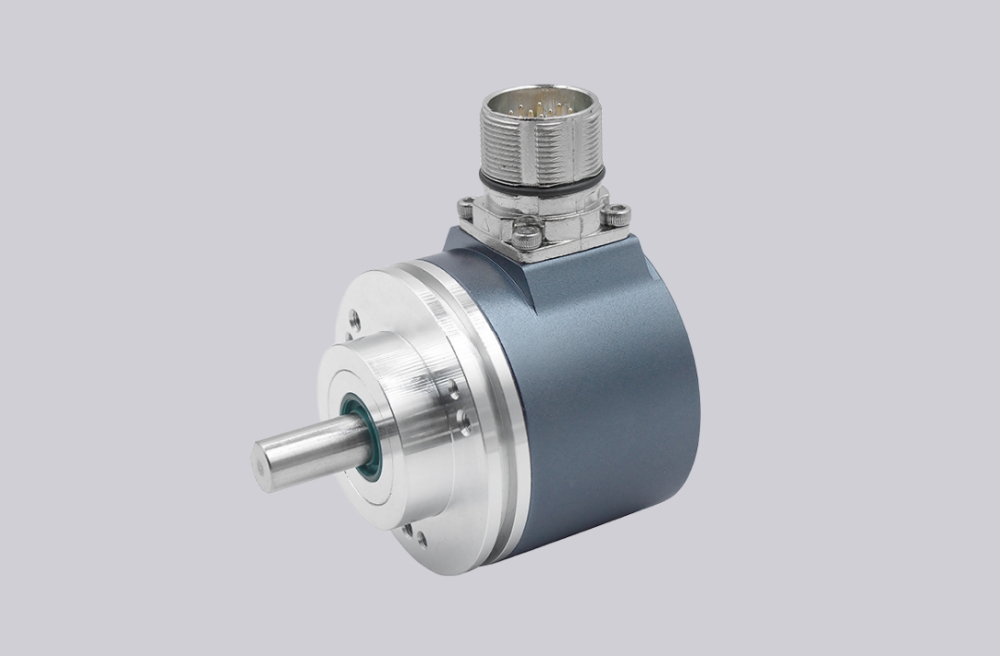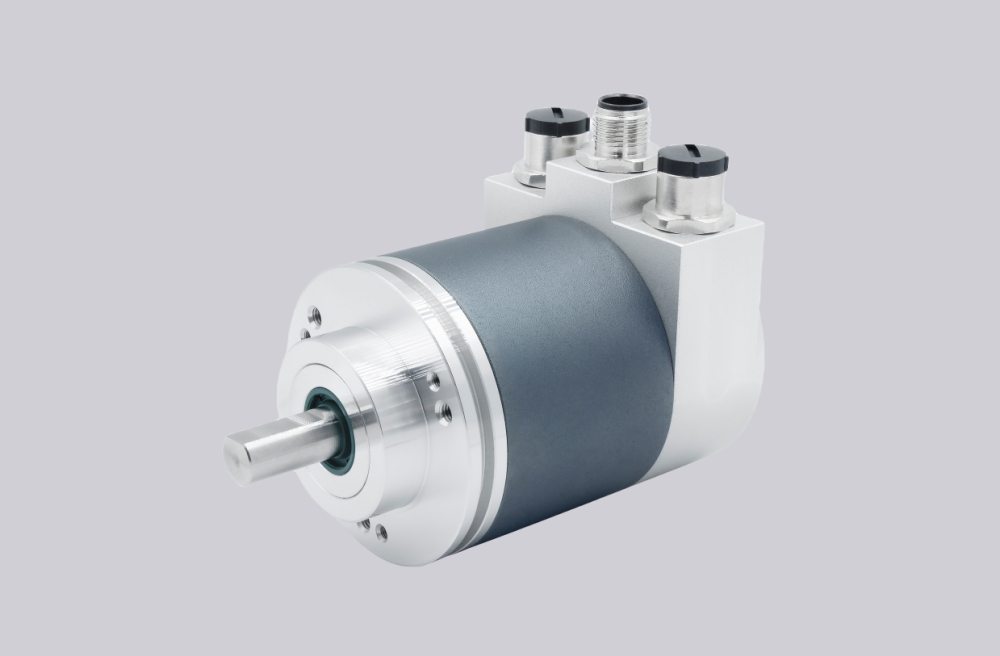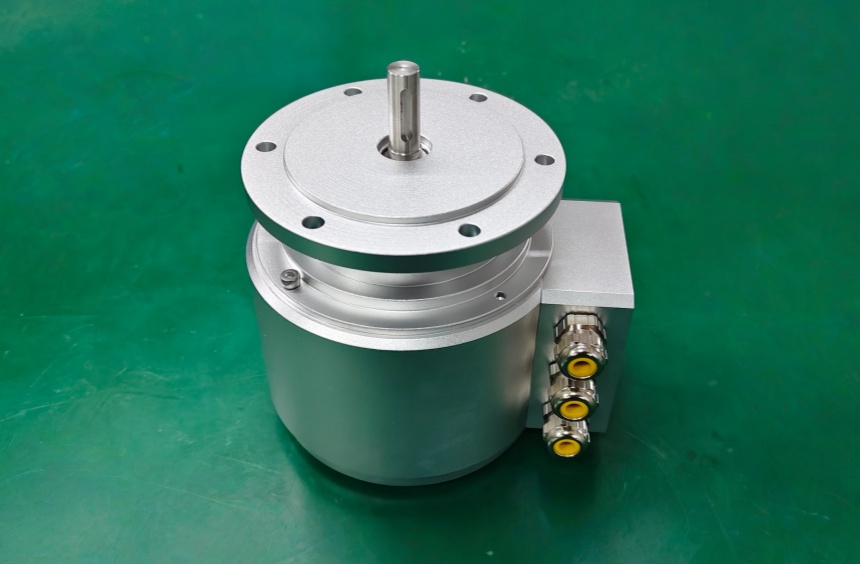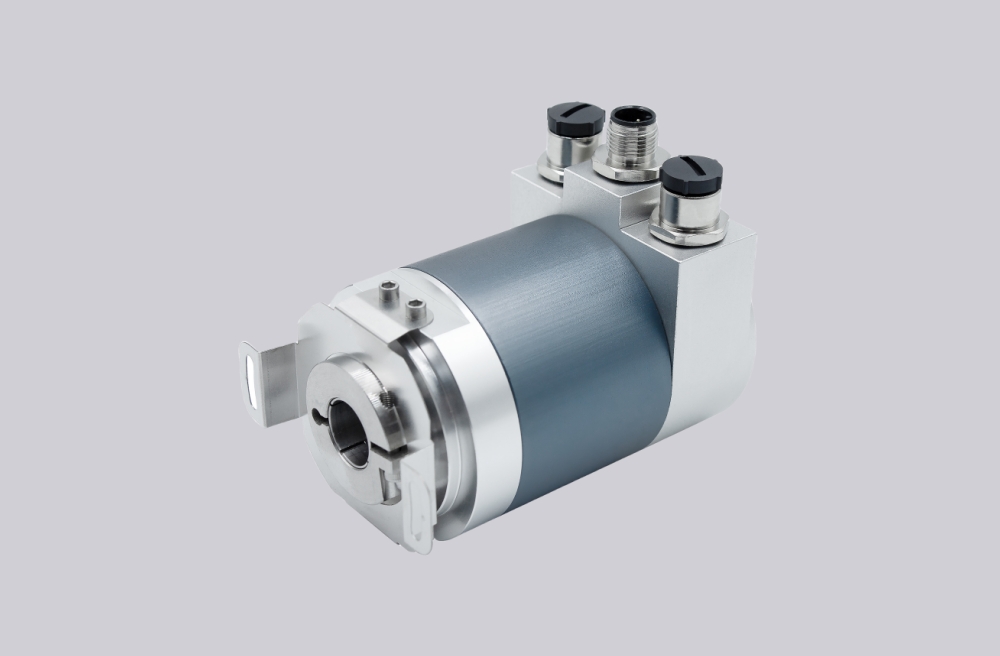




For FSM58I-F1AKAA3GN-1213, EncoderWorks can supply a custom compatible replacement focused on Inox housing protection, axial cable mapping, and Ø10 mm recessed hollow-shaft fit. This model should not be handled like an aluminum cable-output version. The stainless-steel housing may solve the environmental side, but the replacement still fails if the 25-bit Gray word, V/R input, LATCH control, or PRESET line is not reproduced exactly.
The FSM58I-F1AKAA3GN-1213 is a multiturn absolute encoder with fast parallel push-pull output, Inox stainless-steel housing, F1A Ø10 mm recessed hollow shaft, K cable-style output, axial exit direction, Gray code, and V/R, LATCH, PRESET inputs. The FSM58 series is designed for rapid parallel data transfer, with direct position readout, 25-bit multiturn resolution, short-circuit-protected push-pull outputs, and code change frequency up to 400 kHz.
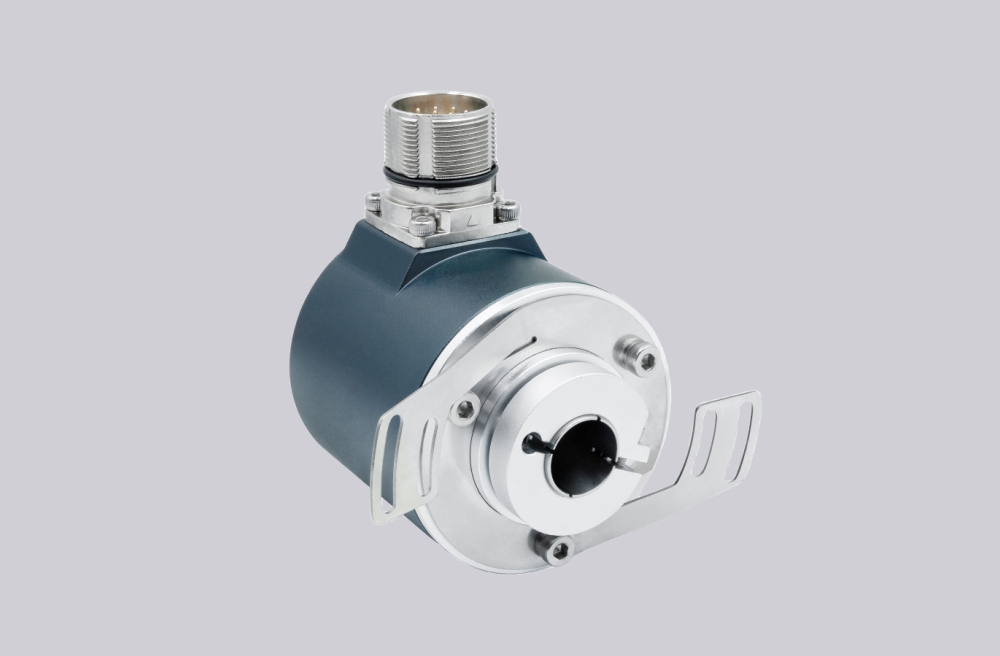
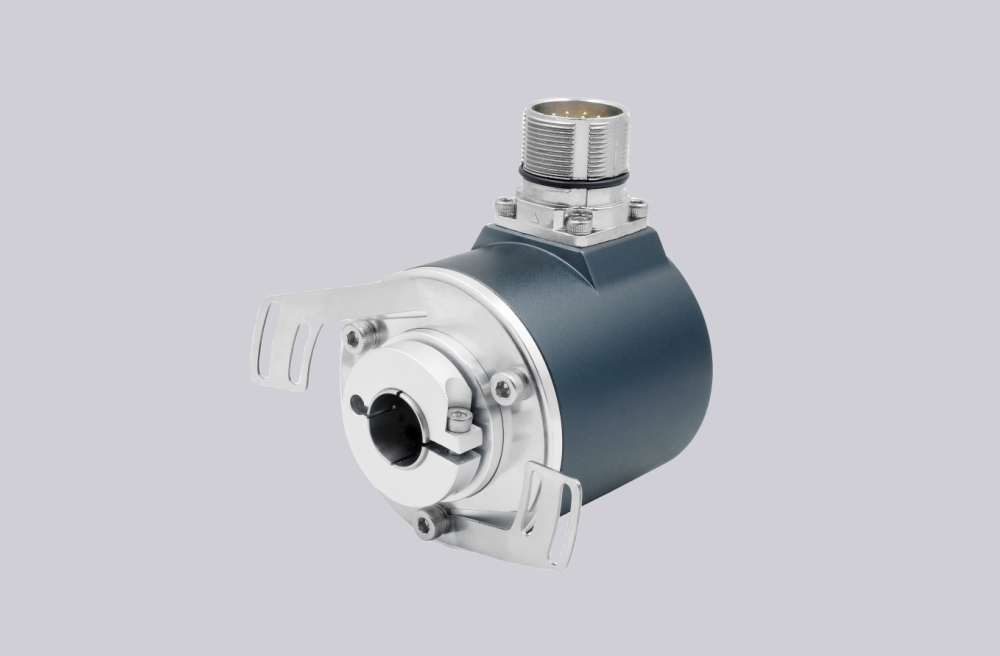
The first failure boundary is the small shaft interface. A Ø10 mm recessed hollow shaft has less tolerance for burrs, shaft eccentricity, or torque-rest preload than larger shaft versions. If the torque rest is used to pull the encoder body into position, the encoder may still output a valid Gray-code word, but the mechanical stress can later appear as unstable position feedback under vibration or speed change.
This replacement fails when the 25-bit Gray outputs are electrically active, but the machine position becomes unreliable because the Ø10 mm shaft fit, axial cable strain, or torque-rest geometry is mechanically loading the encoder. The fault may look like a data issue while the first failure is mechanical.
The second boundary is cable mapping. Data bit 1 through Data bit 25, Ub, GND, V/R, LATCH, and PRESET must be checked by signal function. Gray code reduces transition ambiguity, but it does not protect against shifted bit order or a wrong data-word alignment. If the controller expects a specific Gray bit sequence and one conductor is moved, the decoded position becomes wrong without a dead-output alarm.
LATCH and PRESET must be protected during commissioning. LATCH freezes the parallel position word for stable reading, while PRESET sets the electrical zero. V/R changes counting direction. The FSM58 documentation separates these inputs from the data outputs, so they should not be treated as spare conductors during replacement.
The Inox housing is useful in wet, corrosive, washdown, or exposed industrial areas, but it also makes grounding and shield handling worth checking. A stainless body does not correct poor cable routing or uncontrolled shield current. Axial cable exit should leave enough bend radius so the cable does not pull the encoder housing.
The replacement decision should first confirm Inox housing requirement, F1A Ø10 mm shaft fit, torque-rest freedom, axial cable routing, 25-bit Gray data order, V/R direction logic, LATCH timing, PRESET behavior, supply voltage, shielding, and controller input thresholds. EncoderWorks treats FSM58I-F1AKAA3GN-1213 as an industrial encoder custom compatible solution where small-bore mechanics and Gray cable mapping must be verified together.
Typical production lead time: 15 working days.
Key Data
| Item | Data |
|---|---|
| Model | FSM58I-F1AKAA3GN-1213 |
| Encoder type | Multiturn absolute encoder |
| Interface | Fast parallel push-pull |
| Housing | Ø58 mm Inox stainless-steel housing |
| Shaft type | Recessed hollow shaft |
| Shaft size | F1A, Ø10 mm x 30 mm |
| Connection | Cable output |
| Exit direction | Axial |
| Output code | Gray code |
| Resolution | 13-bit singleturn + 12-bit multiturn / 25 bit total |
| Operating voltage | 10–30 VDC |
| Code change frequency | Up to 400 kHz |
| Inputs | V/R, LATCH, PRESET |
| Main engineering anchor | Inox Gray cable mapping and Ø10 shaft fit |
| Main failure boundary | Small-bore shaft stress, wrong Gray mapping, PRESET error, cable strain |