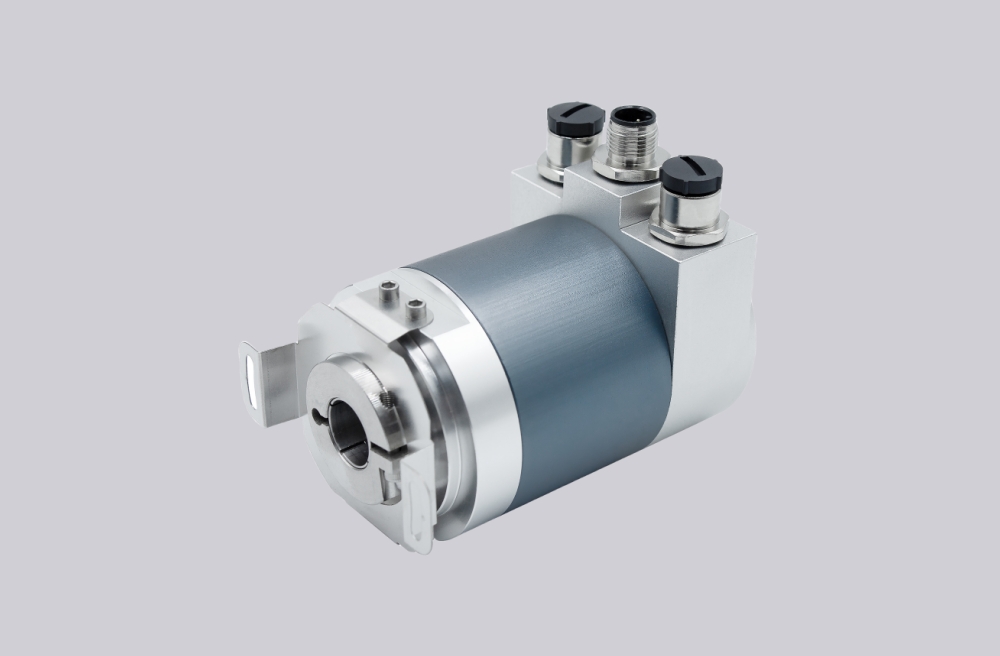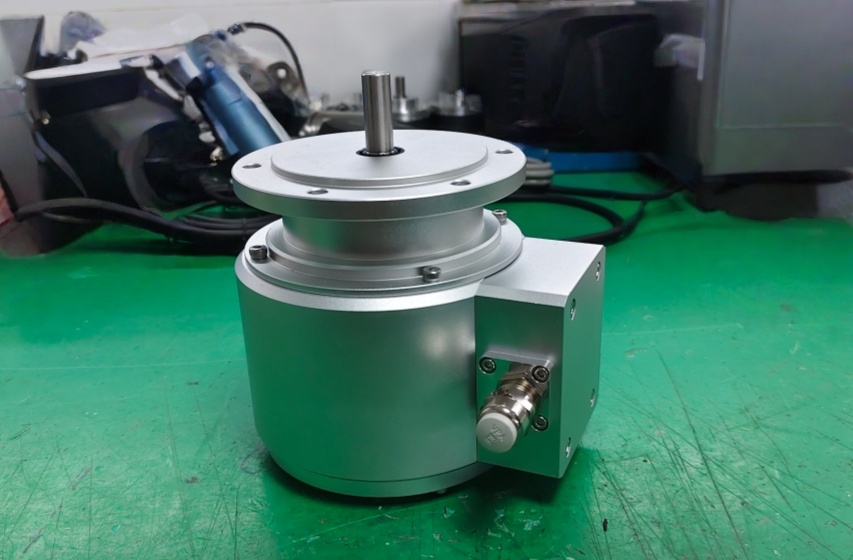




For the CEV65M-00439 encoder, we provide a custom compatible solution focused on parallel bit mapping, latch timing, Preset1 handling, and axial 26-pin CONTACT connector reliability. The main failure boundary is not the absolute encoder core. It is whether the controller can read O_D0–O_D18 cleanly without bit shift, latch error, connector strain, or direction-logic mismatch. Typical production lead time: 15 working days.
This is a parallel push-pull absolute encoder, not SSI, Profibus, PROFINET, CANopen, analog, or incremental feedback. The position value is exposed as multiple output lines. One unstable bit can corrupt the position value while the encoder still looks powered, connected, and mechanically normal.
Where the System Fails First
The pinout defines O_D0 to O_D18 as data outputs, plus Preset1_IN, Direction IN, I_Latch, RS485 programming lines, supply voltage, and ground. That means the controller-side wiring is the real checkpoint. If the parallel word is not mapped and sampled correctly, replacement alone will not solve the fault.
The weak points are direct:
- Wrong O_D0–O_D18 mapping → corrupted absolute position
- Latch timing error → unstable sampled value
- Wrong Direction input → reversed position logic
- Preset1 wiring error → false reference value
- RS485 programming pair mixed with data wiring → commissioning fault
- Axial connector strain → intermittent bit errors
The document lists F/R, Latch, Preset 1, and Programmable options. These functions decide how the controller reads, reverses, freezes, presets, and interprets the absolute position word. They should be checked before treating the encoder body as the first failure point.
Connector and Mechanical Boundary
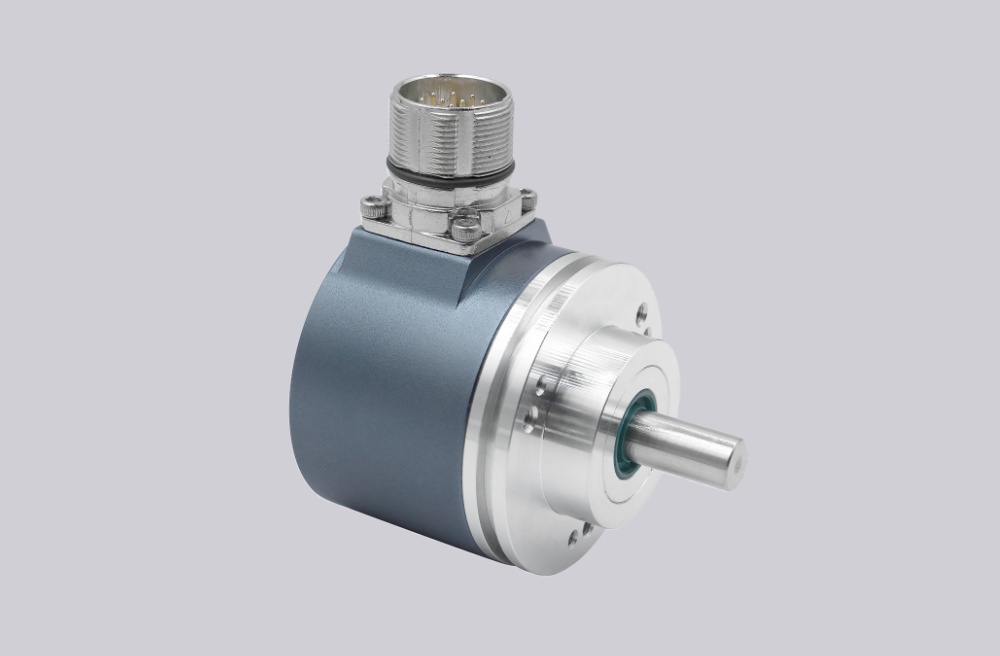
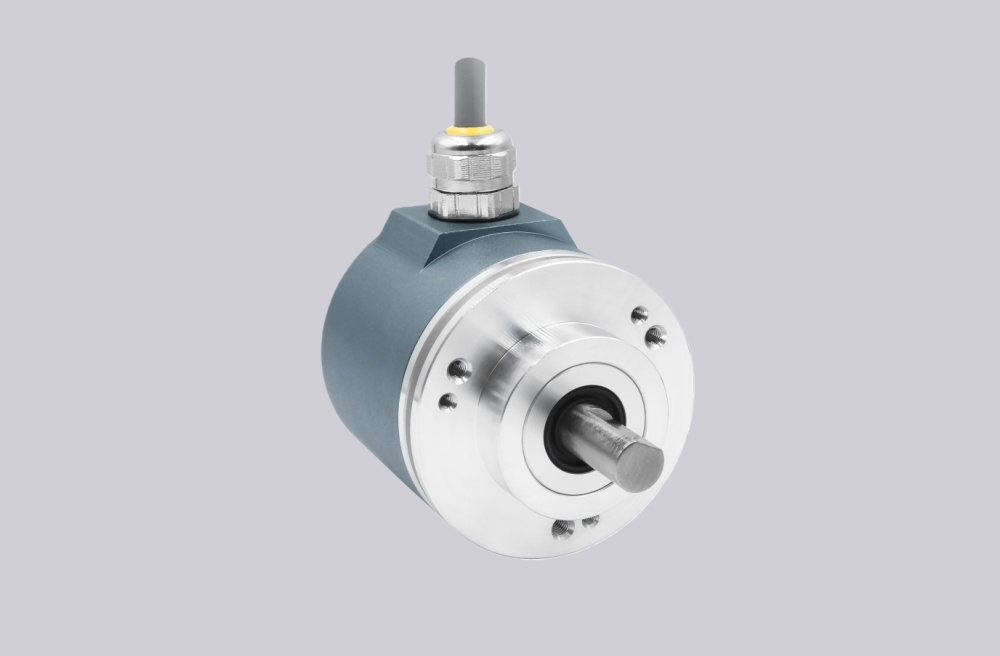
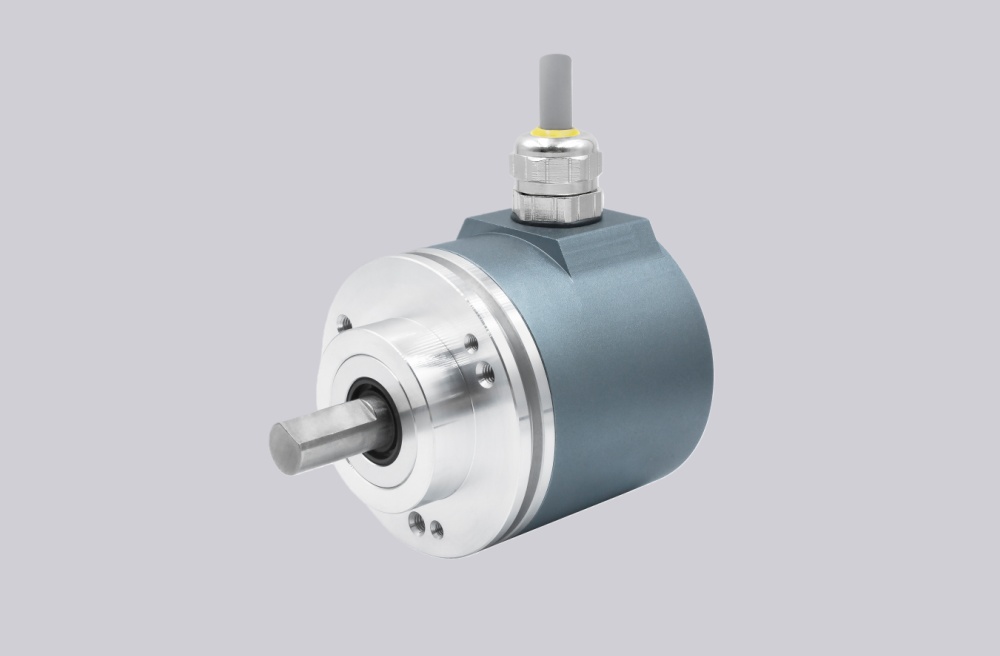
The drawing shows a ZB36 flange, 10FL / 19.5 shaft, and an axial 26-pin CONTACT connector extending from the rear side of the encoder body. This is different from the 90° angled version. The axial connector reduces side-exit cable conflict, but it increases rear-clearance and cable-pull sensitivity. If the cabinet or machine frame pushes the connector backward, bit-level faults can appear before any visible encoder damage.
Mechanically, the shaft and flange are straightforward. The practical risk is still electrical: parallel output stability depends on connector contact quality, shielding, input reference, and correct latch timing.
Installation Notes
- Keep the model format as CEV65M-00439
- Map O_D0–O_D18 before replacing the encoder
- Confirm latch timing at the controller input
- Verify Direction and Preset1 logic before startup
- Keep RS485 programming wires separate from parallel data lines
- Protect the axial 26-pin CONTACT connector from rear cable pull
- Keep connector shielding and strain relief stable
- De-energize the system before wiring or connector work
Key Data
- Model: CEV65M-00439
- Type: Absolute rotary encoder
- Interface: Parallel push-pull
- Code: Programmable
- Resolution: 4096 steps / revolution
- Multiturn range: 4096 revolutions
- Supply voltage: 11–27 VDC
- Output level: 11–27 VDC
- Flange: ZB36
- Shaft: 10FL / 19.5
- Connector: 26-pin CONTACT
- Connector position: Axial
- Protection: IP65
- Operating temperature: -20 °C to +70 °C
- Options: F/R, Latch, Preset 1, Programmable
- Pinout: ST193C
- Parameter file: CEV65M-00439_265
- Firmware: 437865