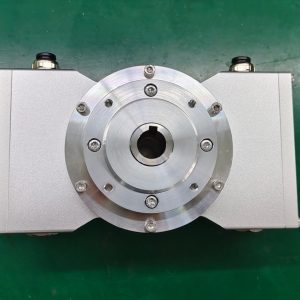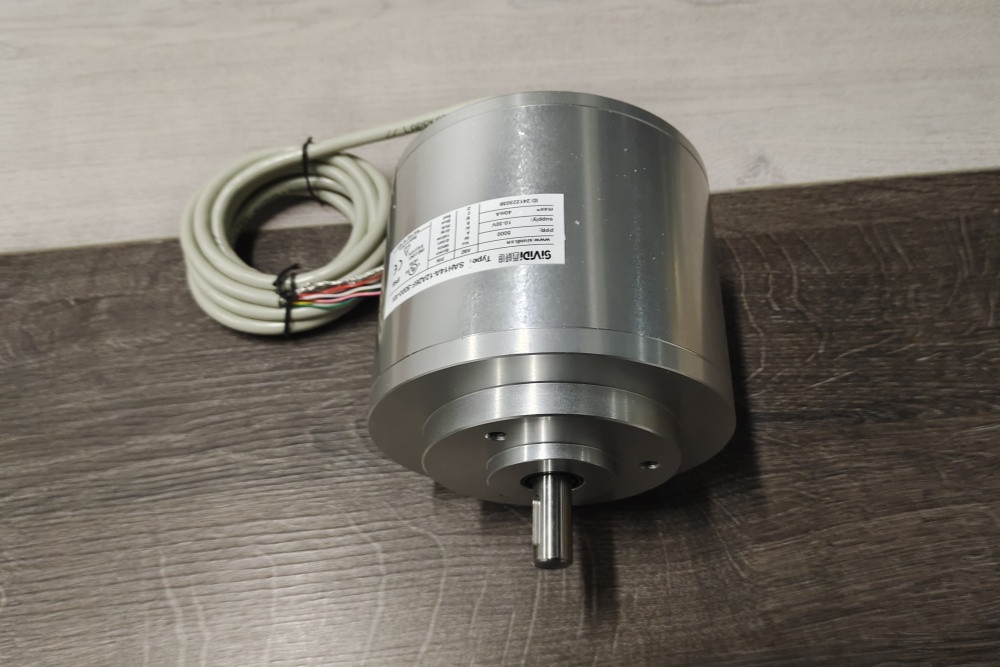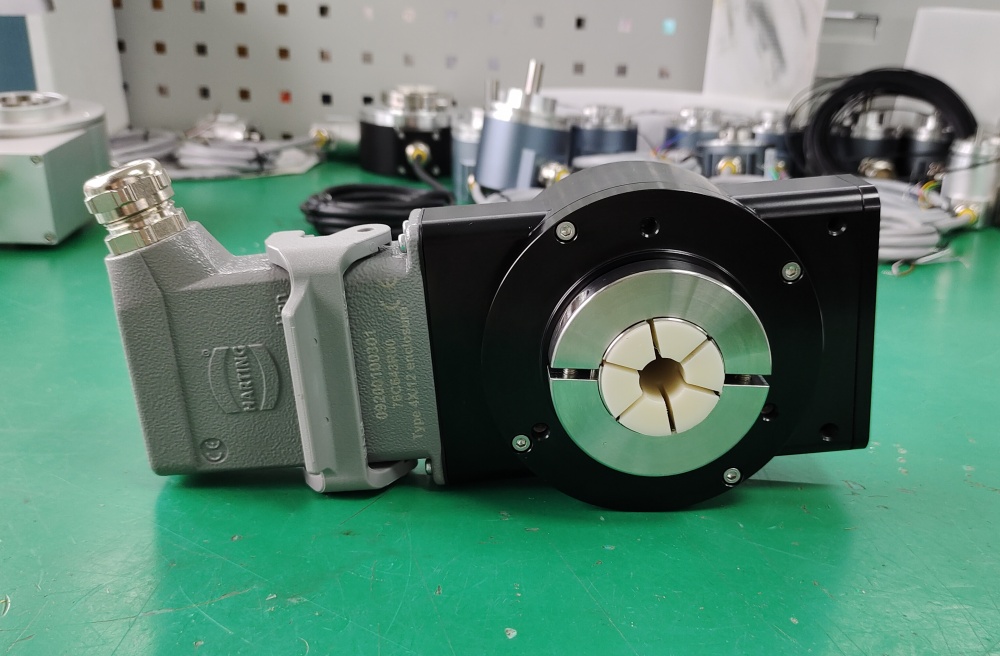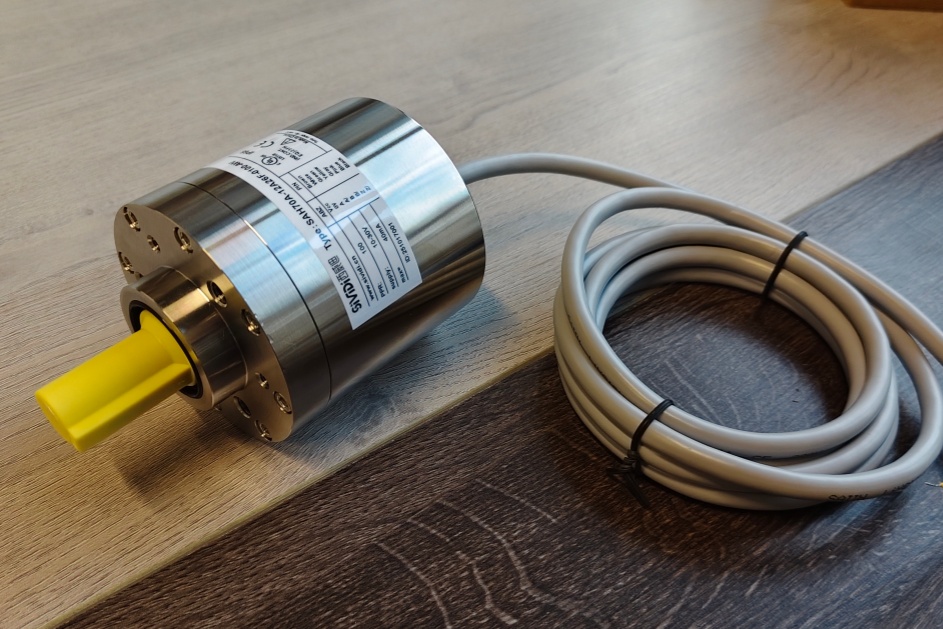




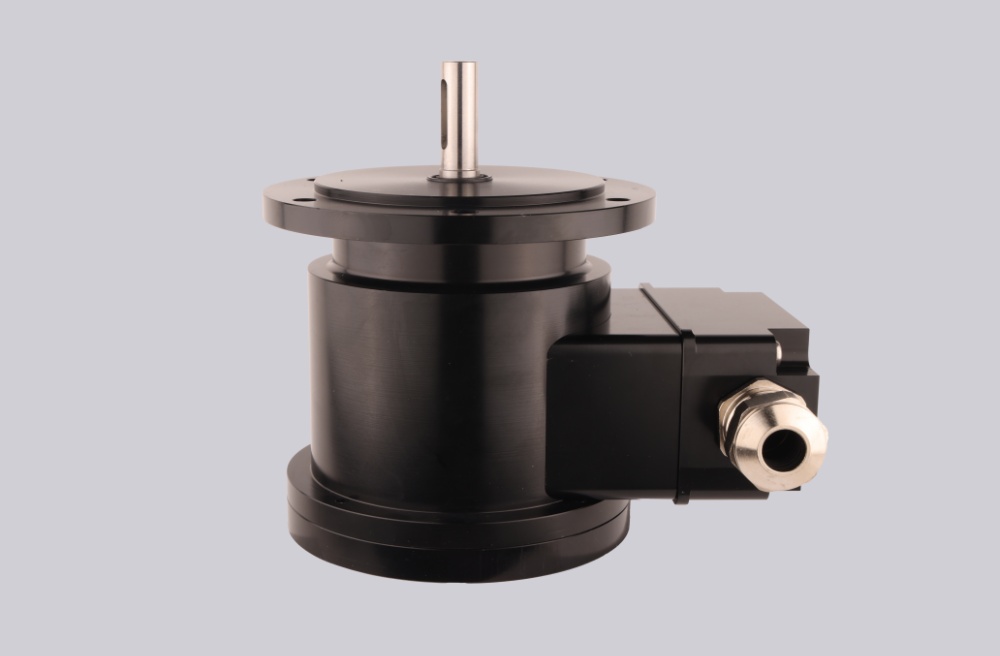
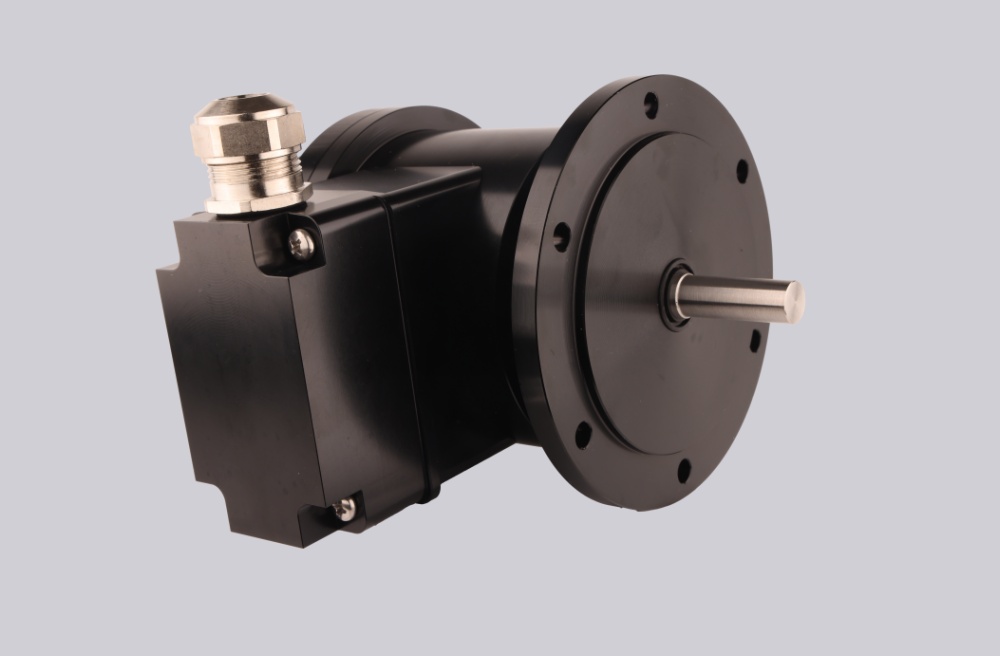
We developed a custom solution for the POG 9G DN 500 I encoder, intended for heavy-duty drive systems where 500 PPR HTL incremental feedback must stay stable under vibration, high temperature, terminal-box wiring, and industrial EMC conditions. This configuration should be treated as a single DN feedback configuration, not a confirmed redundant dual-system combination.
Typical production lead time: 15 working days.
For this model, the code should be read directly:
- DN = K1, K2, K0 output signals
- 500 = 500 pulses per revolution
- I = 9–30 VDC, HTL output with inverted signals
- POG 9G = EURO flange B10, Ø11 mm shaft, terminal-box encoder body
The weak point is not the optical sensing first. At 500 PPR, the pulse load is lower than 1024 PPR or 2500 PPR versions, so the first risk usually moves to grounding, shielding, terminal vibration, and coupling stress, not counter bandwidth.
Where the System Usually Fails
In real installations, this type of encoder usually fails at the signal path before the encoder body fails.
Typical weak points:
- Poor terminal grounding → false HTL edges
- Shield interruption → unstable counter input
- Rigid coupling → torsional shock into the Ø11 mm shaft
- Wrong K1/K2 phase interpretation → reversed speed or position count
- Loose terminal wiring → intermittent K0 reference pulse
The encoder supports output frequency up to 120 kHz, mechanical speed up to 12000 rpm, IP56 protection, and -30 °C to +100 °C operating temperature. These are strong mechanical and electrical margins, but they do not protect the system from bad grounding or unstable cable routing.
Mechanical and Wiring Boundary
The POG 9G body is built for heavy-duty use, with ≤350 N radial load, ≤250 N axial load, 10 g vibration resistance, and 300 g shock resistance. In heavy drives, torsional vibration usually becomes a signal problem before it becomes visible bearing damage.
For this I version, the focus is HTL signal stability, not TTL long-distance behavior. Keep encoder cables away from inverter output and motor power lines. Once the terminal-box shield path becomes unstable, the counter may still see voltage transitions, but the edge timing is no longer trustworthy.
Installation Notes
- Keep the model format as POG 9G DN 500 I
- Use stable terminal-box grounding
- Separate encoder cable from motor and inverter wiring
- Verify K1 / K2 direction before commissioning
- Check K0 reference pulse stability under vibration
- Use a flexible coupling suitable for Ø11 mm shaft
- Do not treat IP56 as washdown protection
Key Data
- Model: POG 9G DN 500 I
- Type: Heavy-duty incremental encoder
- Resolution: 500 PPR
- Output: HTL with inverted signals
- Signals: K1, K2, K0 + inverted
- Supply voltage: 9–30 VDC
- Output frequency: ≤120 kHz
- Shaft: Ø11 mm stainless steel
- Flange: EURO flange B10
- Speed: ≤12000 rpm
- Protection: IP56
- Temperature: -30 °C to +100 °C
- Shaft load: ≤250 N axial / ≤350 N radial
- Vibration: 10 g
- Shock: 300 g
- Connection: Terminal box
- Weight: Approx. 1.7 kg