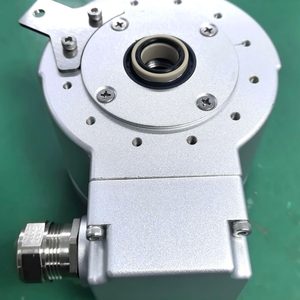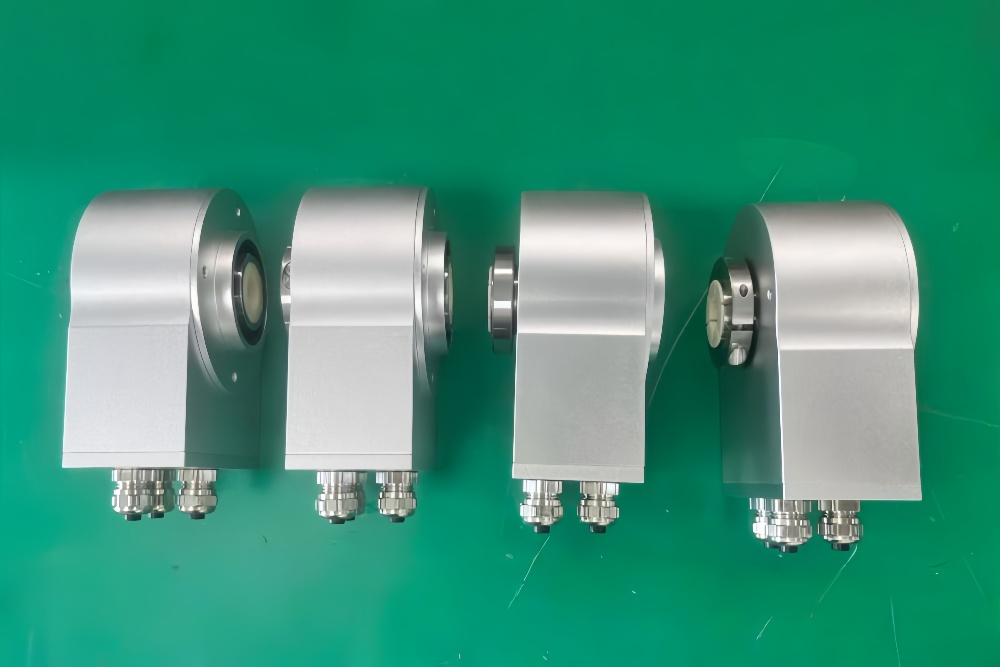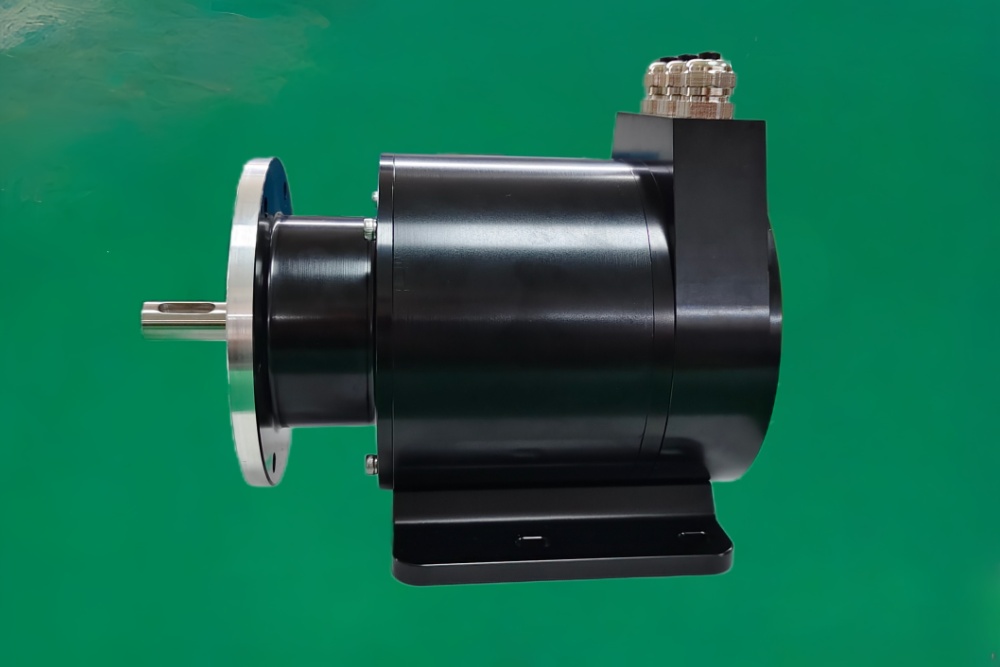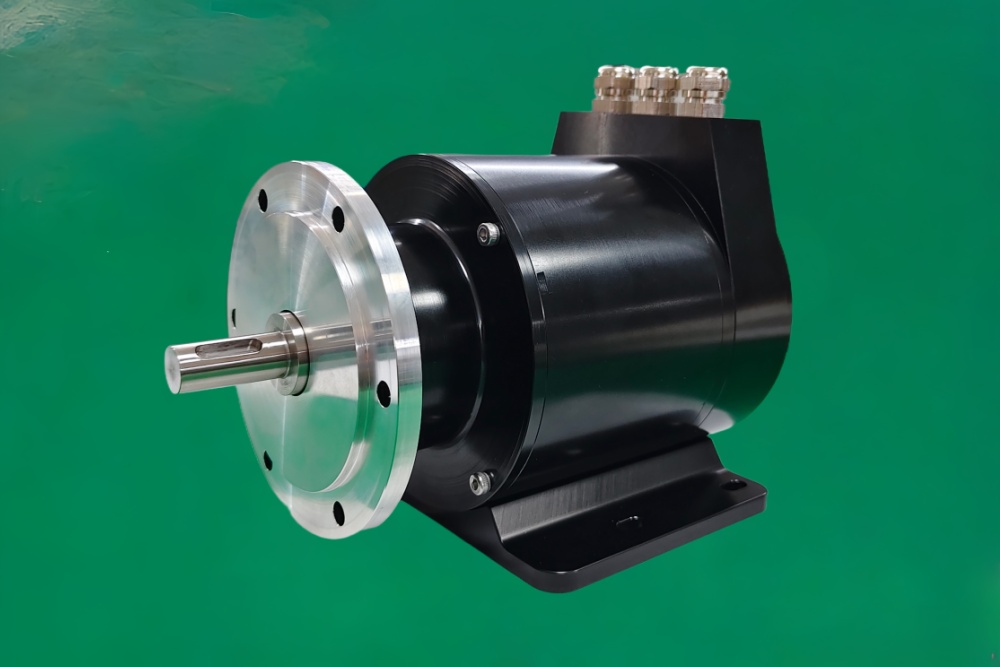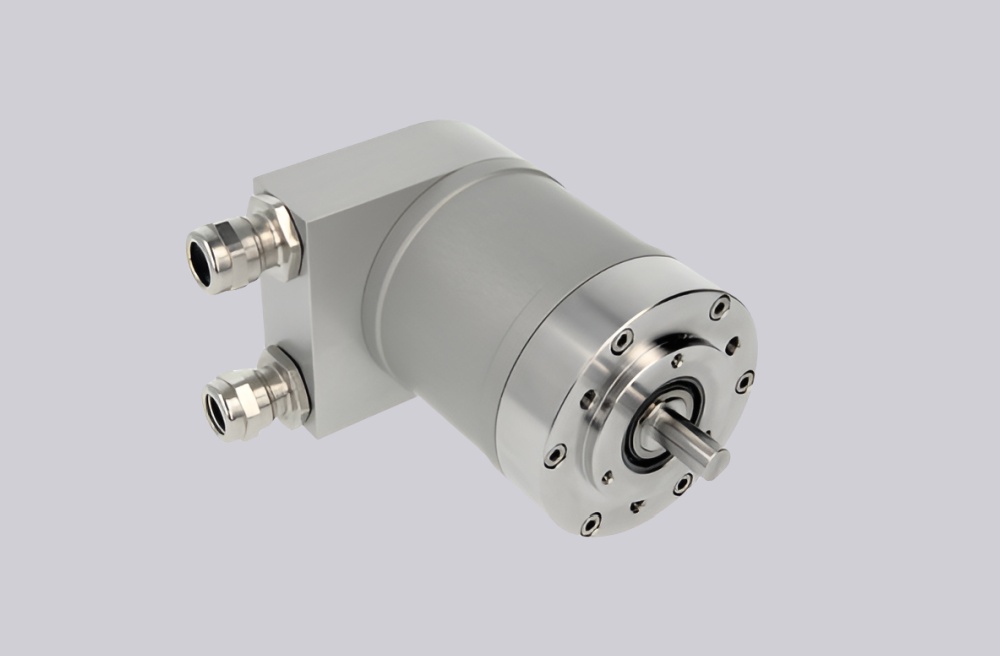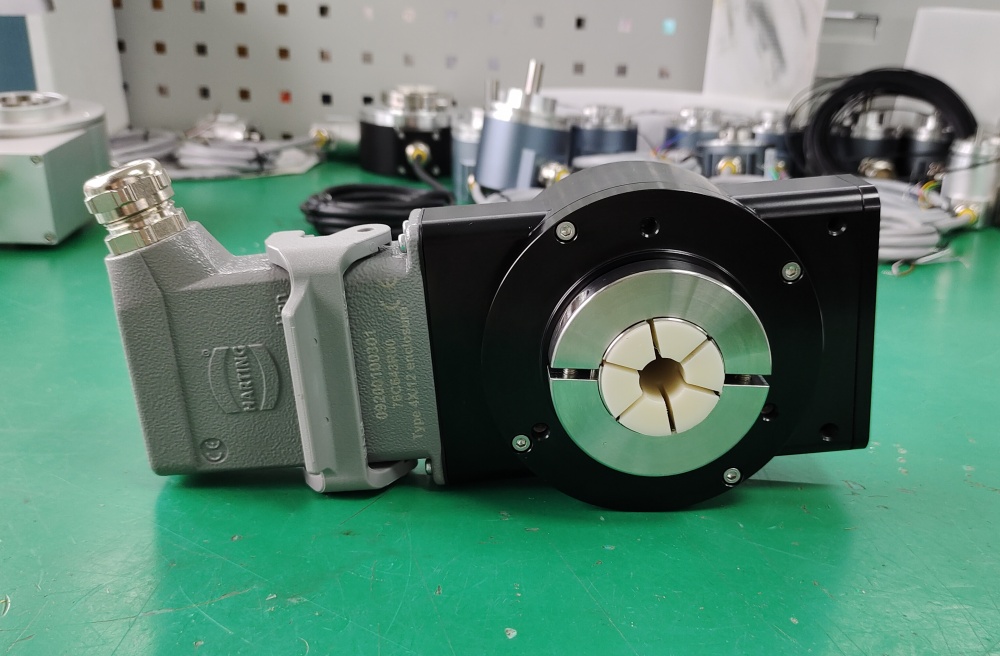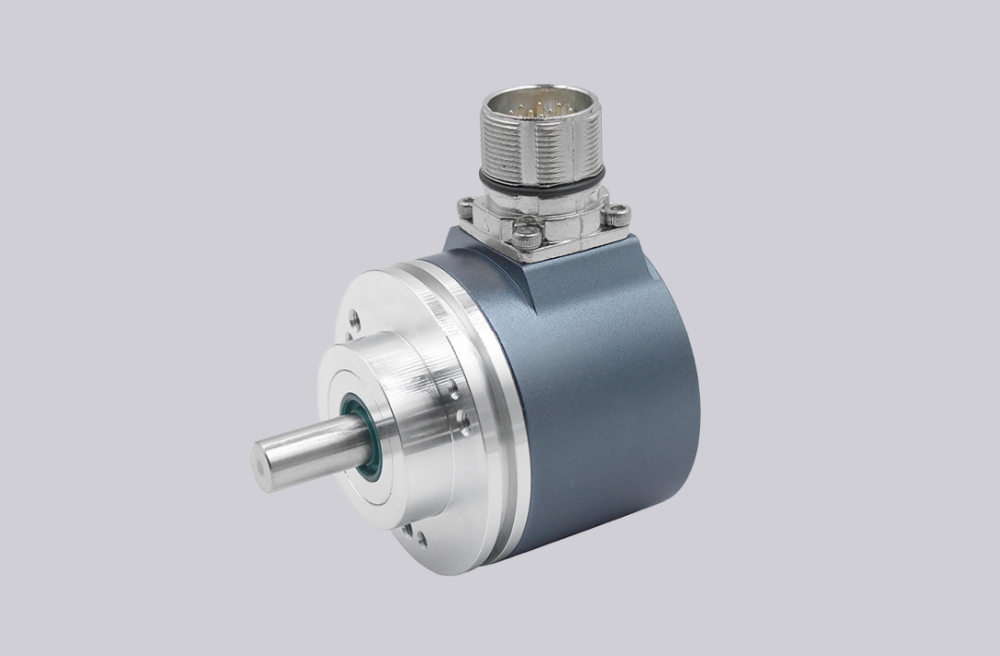




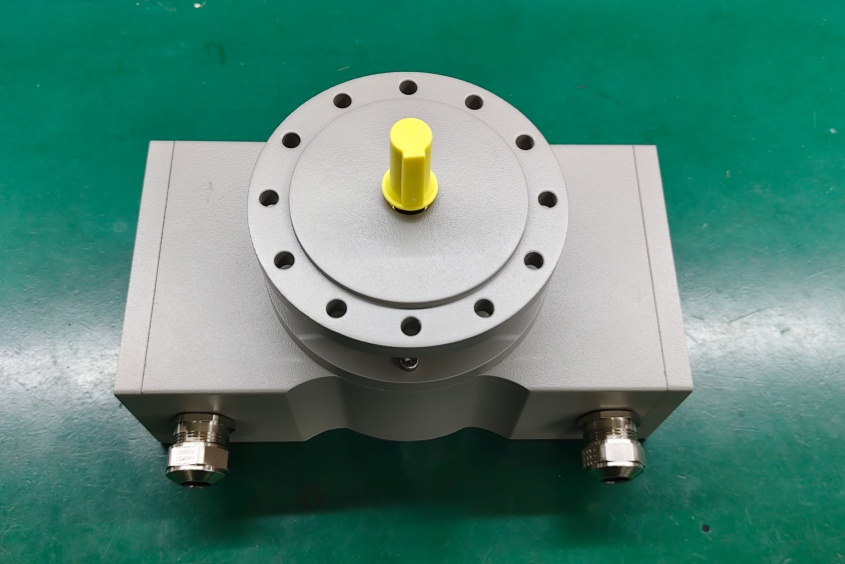
FG4KK-4096G-90G-NG is a redundant glass-disk FG 4 feedback encoder where EncoderWorks can configure a custom compatible replacement solution only when the 4096 PPR scaling, KK dual-terminal-box structure, duplicated scanning systems, A/B 90° phase relationship, inverted signal pairs, N marker behavior, shielded twisted-pair routing, and coupling preload are preserved as one matched feedback boundary. The main failure point is a machine that counts normally on one channel but develops edge jitter, speed deviation, direction disagreement, or marker inconsistency when both redundant outputs are compared under motion and EMC stress. Typical production lead time: 15 working days.
This configuration belongs to the FG 4 optical incremental encoder platform for heavy-duty industrial environments. The 4096 PPR value belongs to the preferred glass-disk pulse-rate group, so the replacement must be checked for both signal edge stability and redundant-channel consistency. The KK version uses two terminal boxes and two scanning/evaluation systems, not a single K terminal-box layout. Both feedback paths must be verified separately for terminal assignment, shield bonding, supply integrity, counter input compatibility, phase sequence, and marker-pulse interpretation.
System Limits
The first system limit is 4096 PPR frequency margin. FG 4 square-wave output is normally defined around a 0–100 kHz frequency range, with 150 kHz only when specified. At 4096 PPR, usable shaft speed must be checked against the counter bandwidth, edge-counting mode, acceleration profile, and any redundant comparison logic. A channel that looks stable at low speed may lose agreement during braking, reversal, or full-load operation.
The second limit is redundant A/B/N consistency. Each terminal box must preserve the expected A, /A, B, /B, N, and /N relationship. If one phase pair is swapped, one inverted signal is omitted, or one marker input is interpreted differently, the controller may detect speed deviation, direction mismatch, homing error, or zero-reference disagreement.
The third limit is glass-disk edge stability under EMC and mechanical load. At 4096 PPR, small shaft runout, coupling preload, vibration, loose cable glands, moisture inside either terminal box, long exposed shield drains, or inverter-side cable routing can appear as edge jitter. A-/A, B-/B, and N-/N should be routed as paired shielded conductors on both redundant channels.
Wiring & Installation
Before replacement, document both KK terminal boxes separately. Record the basic channel, 90° channel, marker pulse, inverted signals, supply voltage, GND, shield connection, LED-check or diagnostic output if used, and the controller or safety input connected to each system. Confirm whether the two channels are read by one drive, two independent counters, or a safety comparison circuit, and verify the 4096 PPR scaling on both paths.
During installation, fit the coupling smoothly and do not strike the shaft or housing. Keep the encoder centered, control angular and parallel offset, and avoid axial preload. Route both sets of A-/A, B-/B, and N-/N through shielded twisted pairs, keep the cable away from inverter output, motor, brake, and contactor wiring, and maintain terminal-box sealing on both sides. After commissioning, verify pulse count, speed scaling, direction, N marker behavior, redundant-channel agreement, terminal-box sealing, and signal stability at the highest operating speed.
Custom Compatible Solution
EncoderWorks can configure the replacement around the installed redundant feedback system:
- Match 4096 PPR square-wave incremental output with 0°/90° channel behavior and inverted signal pairs
- Preserve KK dual-terminal-box structure, redundant channel separation, N marker behavior, supply range, and output level
- Adapt the FG 4 mechanical envelope, shaft interface, flange or foot mounting requirement, coupling alignment, and cable-gland layout
- Review 100 kHz / 150 kHz frequency margin, shielded twisted-pair routing, EMC grounding, terminal-box sealing, bearing load, and redundant-channel agreement
Key Data
| Item | Data |
|---|---|
| Model | FG4KK-4096G-90G-NG |
| Encoder type | Heavy-duty optical incremental encoder |
| Series | FG 4 |
| Connection structure | KK redundant dual terminal boxes |
| Pulses per revolution | 4096 PPR |
| Pulse disk class | Preferred glass-disk pulse rate |
| Signal output | Square wave, 0° and 90° channels |
| Inverted signals | Yes, Option G |
| Marker pulse | Option N with inverted marker signal |
| Redundant structure | Two scanning/evaluation systems |
| Supply voltage | 12–30 VDC |
| Output type | Differential line driver / push-pull style output |
| Frequency range | 0–100 kHz standard, up to 150 kHz if specified |
| Standard shaft | Ø11j6 × 30 mm |
| Optional shaft | Ø14j6 × 30 mm |
| Key checks | 4096 PPR frequency margin, glass-disk edge stability, KK channel agreement, N marker behavior, dual terminal-box shielding |