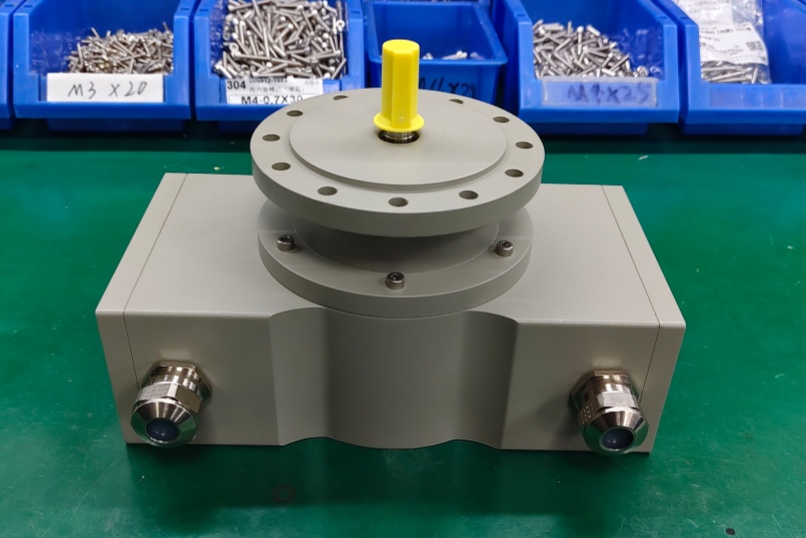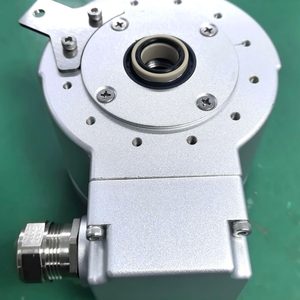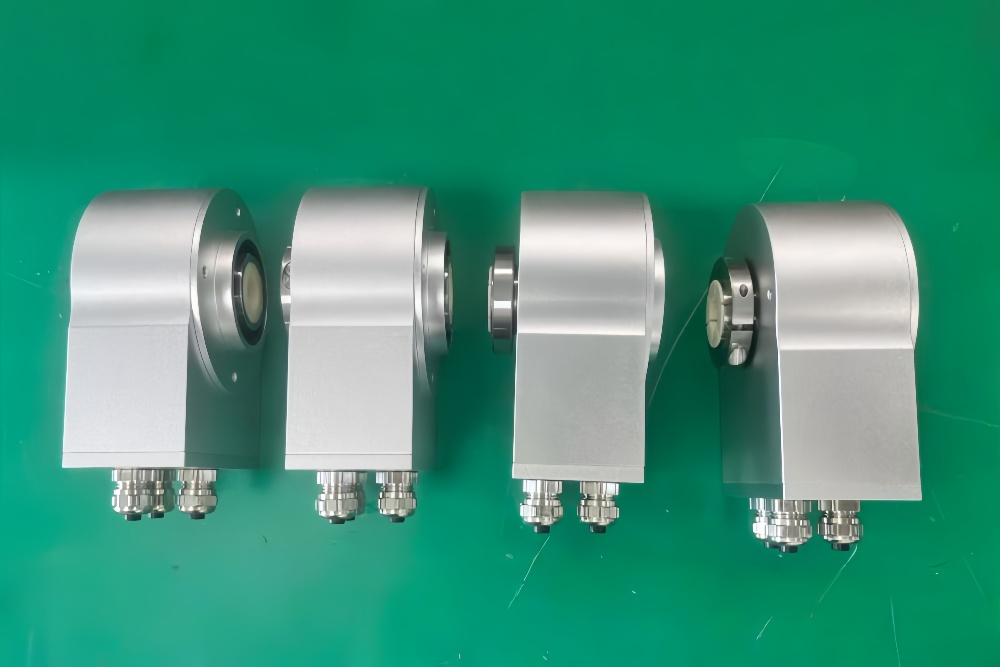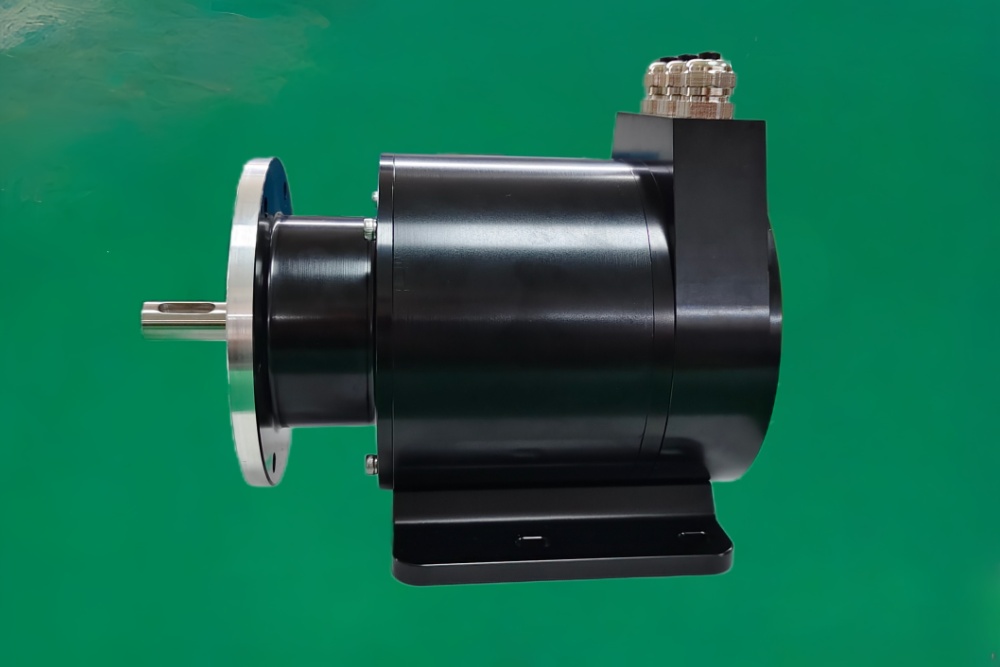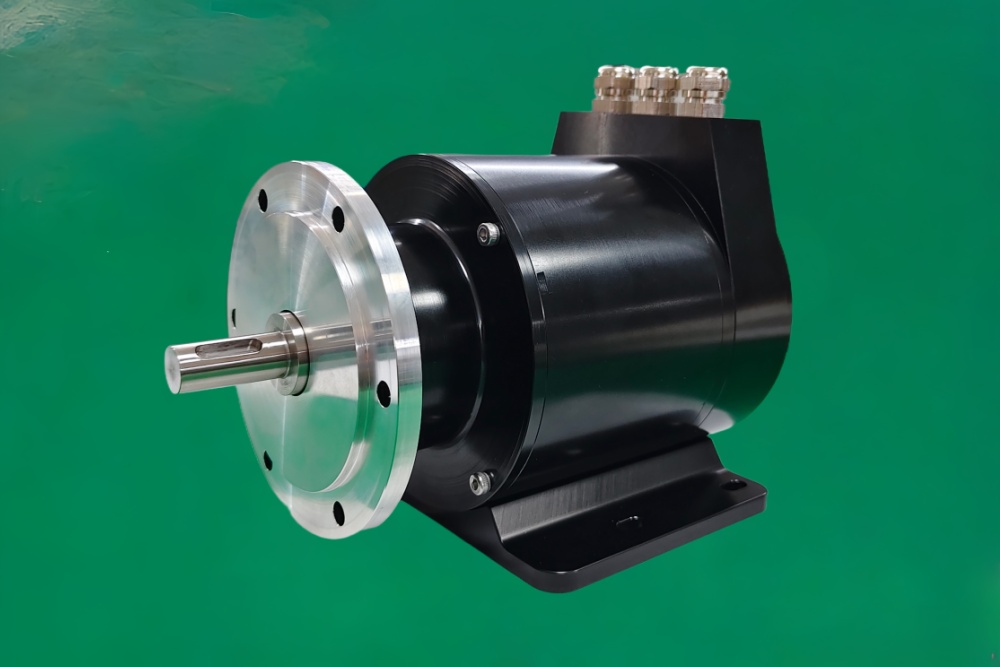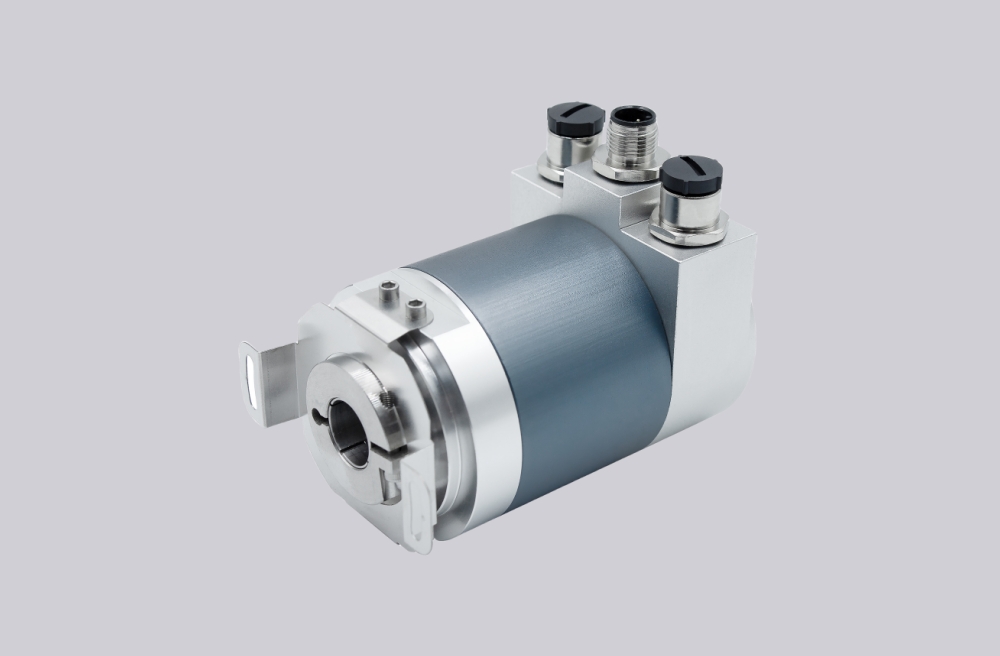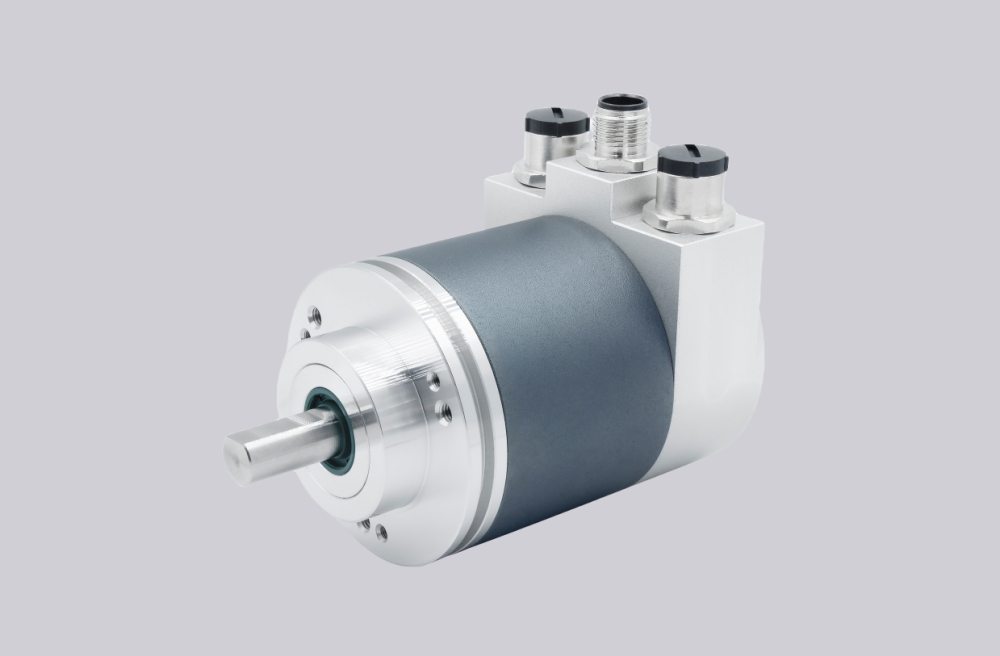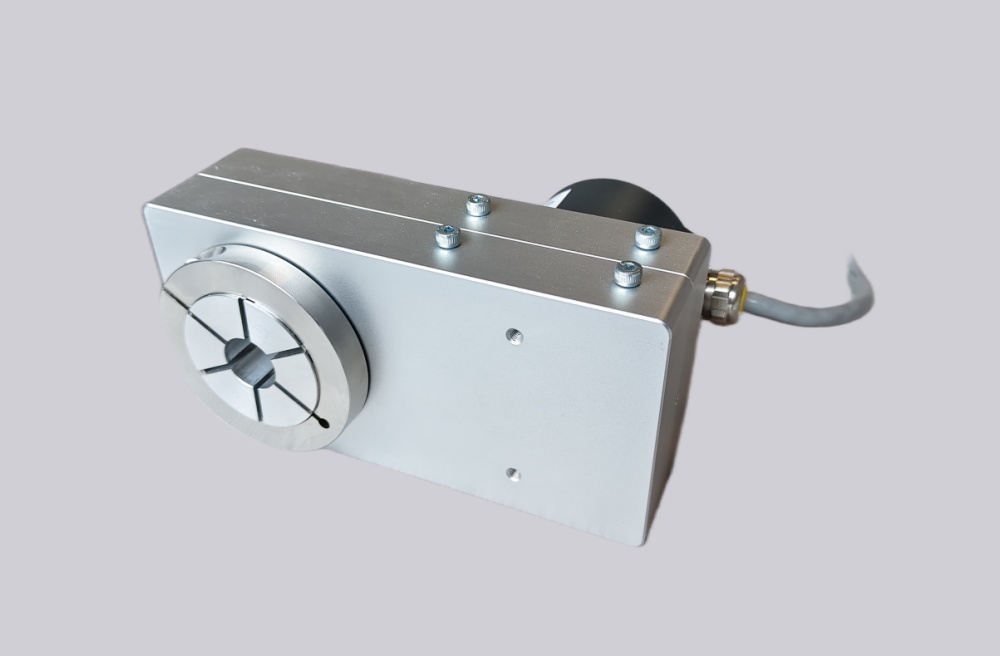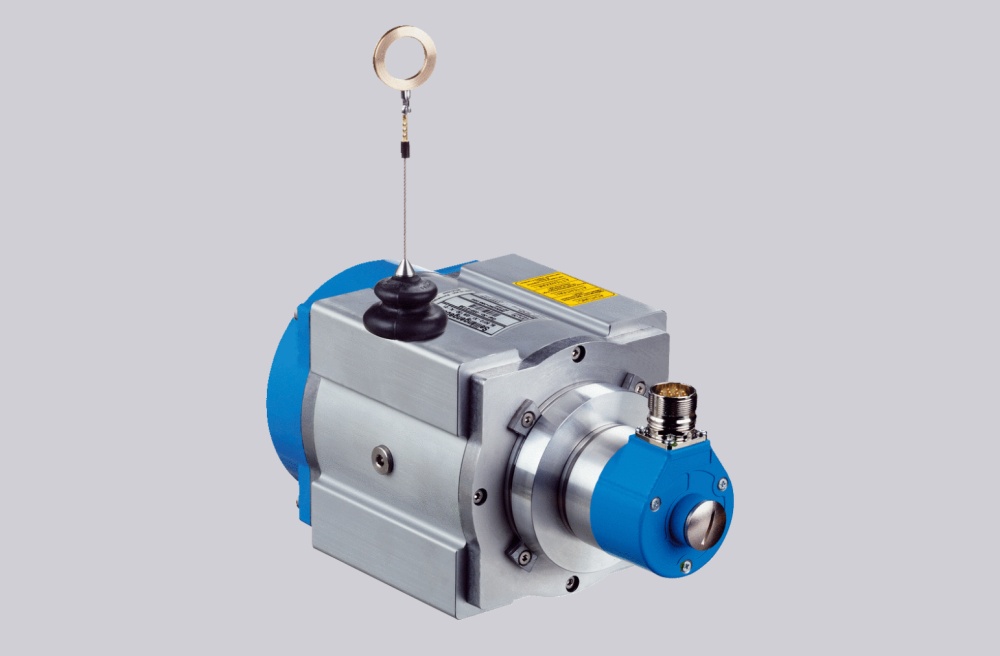




FG40K-1000G-90G-NG should be replaced as a 1000 PPR radial-terminal-box FG 40 encoder, where EncoderWorks can configure a custom compatible replacement solution only if the A/B 90° phase relationship, inverted channels, NG reference pulse, K terminal-box wiring, counter scaling, EMC cable-gland shielding, and coupling preload remain unchanged. The main failure boundary is not a high-frequency limit, but wrong pulse scaling, poor reference repeatability, shield discontinuity, or mechanical preload after replacement. Typical production lead time: 15 working days.
This configuration belongs to the FG 40 heavy-duty incremental encoder platform. It uses 1000 pulses per revolution with square-wave output, basic channel 0° A and pulse channel 90° B, inverted signal pairs, and a mechanically defined NG reference pulse with inverted signal. The K version should be treated as a radial single-terminal-box encoder, not as a KK dual-terminal-box or redundant wiring version. Replacement work should focus on pulse count, controller scaling, A/B phase accuracy, N reference timing, output voltage level, terminal assignment, cable-gland sealing, shield termination, and mechanical coupling alignment.
System Limits
The first system limit is 1000 PPR counter scaling. A controller configured for 1024, 1200, 2000, 4096, or another pulse rate will calculate the wrong speed or travel even if the electrical signal is clean. Edge-counting mode, speed conversion, position scaling, and direction detection must be checked before the replacement is accepted.
The second limit is A/B/N signal behavior. The controller must receive A, /A, B, /B, N, and /N with the expected 90° phase displacement and repeatable reference-pulse timing. If the inverted channels, phase relationship, or N pulse wiring changes, the machine may run normally but fail during homing, zero return, or direction reversal.
The third limit is radial terminal-box installation. Moisture in the terminal box, loose cable glands, long exposed shield drains, poor grounding, or signal cables routed near inverter and motor wiring can create intermittent false edges. Coupling misalignment, axial preload, and radial load can also shorten bearing life and reduce signal stability.
Wiring & Installation
Before replacement, record the radial terminal-box wiring for A, /A, B, /B, N, /N, supply voltage, GND, shield, and any diagnostic or error output used by the machine. Confirm cable diameter, gland sealing condition, shield contact method, grounding strap, and controller scaling for 1000 PPR.
During installation, align the coupling without force and do not strike the shaft or housing. Keep angular error, axial offset, and parallel displacement within the coupling tolerance used on the machine. Route signal and supply wiring away from inverter output, motor power lines, brakes, contactors, and solenoid valves. Tighten the cable gland and blanking plug, maintain shield continuity, and close the terminal-box cover without trapping the cable. After commissioning, verify pulse count, speed scaling, direction, N reference repeatability, terminal-box sealing, and signal stability over the full operating speed range.
Custom Compatible Solution
EncoderWorks can configure the replacement around the installed drive and counter system:
- Match 1000 PPR square-wave incremental output with A/B 90° phase relationship and inverted channels
- Preserve NG reference pulse behavior, K radial terminal-box layout, supply voltage, output level, and counter input compatibility
- Adapt the FG 40 mechanical envelope, shaft interface, flange or foot mounting requirement, coupling alignment, and cable-gland layout
- Review counter scaling, shield grounding, EMC routing, terminal-box sealing, bearing load, and reference-pulse repeatability
Key Data
| Item | Data |
|---|---|
| Model | FG40K-1000G-90G-NG |
| Encoder type | Heavy-duty incremental encoder |
| Series | FG 40 |
| Connection structure | K radial terminal box |
| Pulses per revolution | 1000 PPR |
| Pulse category | Standard pulse rate |
| Signal output | Square wave A/B, 90° phase |
| Inverted signals | Yes |
| Reference pulse | NG, with inverted signal |
| Supply voltage | 12–30 VDC |
| Output type | Push-pull line driver |
| Max frequency | 200 kHz |
| Standard shaft | 11j6 × 30 mm |
| Optional shaft | 14j6 × 30 mm |
| Key checks | 1000 PPR scaling, A/B phase, NG reference pulse, terminal-box shielding, coupling preload |