

Why Hazardous Environments Change Encoder Selection Logic
In hazardous and explosion-prone environments, encoder selection is no longer driven primarily by size or resolution.
Instead, environmental compliance and mechanical containment become the dominant engineering constraints.
For SSI absolute encoders used in such areas, the housing design is not an optional feature but a safety-critical component that directly affects system approval, installation feasibility, and long-term operational reliability.
As a result, explosion-proof SSI encoders represent a distinct selection category rather than a variation of standard designs.
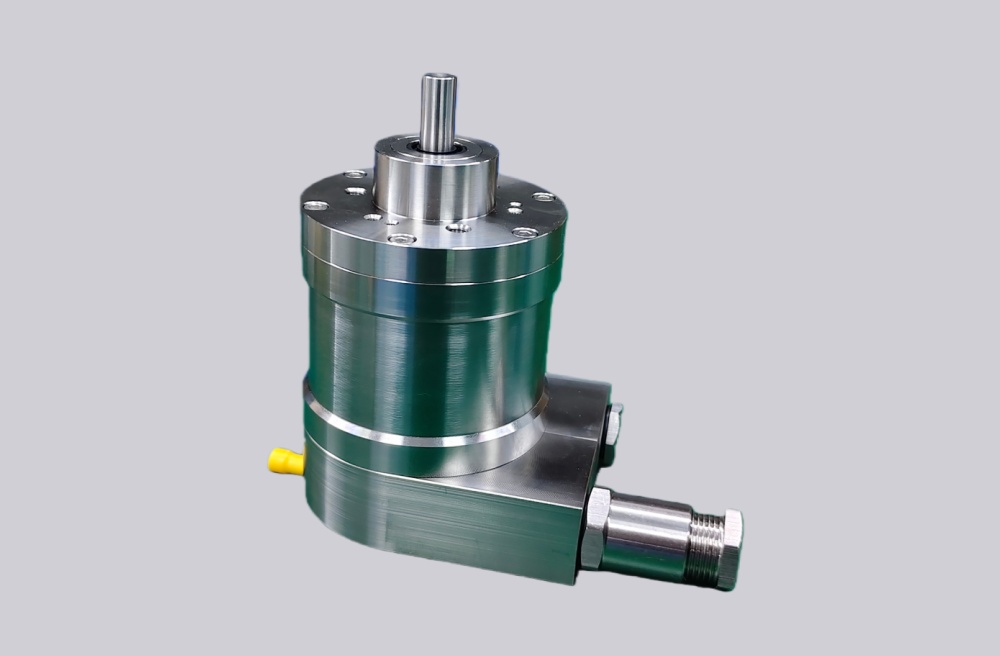
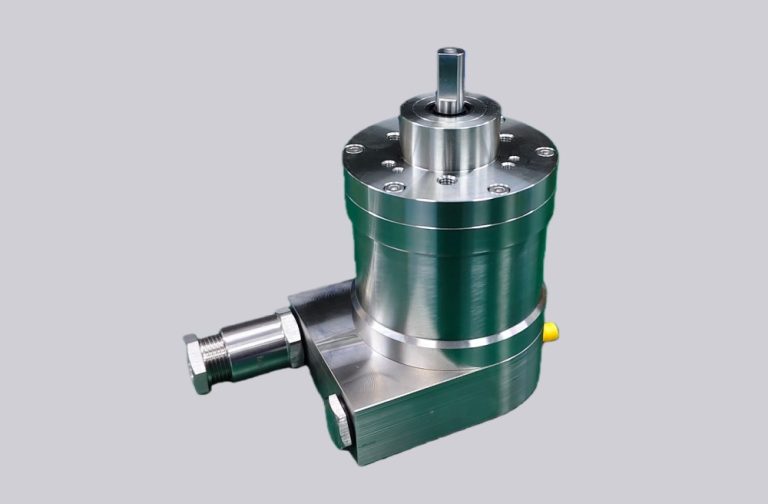
Explosion-Proof Housing as a Mechanical and Safety Concept
Explosion-proof SSI absolute encoders are defined by their ability to contain internal ignition sources and prevent flame or energy transmission to the surrounding environment.
From a mechanical standpoint, this typically involves:
- Reinforced housing structures
- Controlled flame paths and sealing interfaces
- Increased wall thickness and mechanical mass
Unlike standard housings, explosion-proof designs prioritize containment and integrity over compactness, which has a direct impact on installation and mounting planning.
Shaft Interface Considerations in Hazardous Areas
In hazardous environments, shaft interface selection is closely linked to safety and mechanical stability.
Explosion-proof SSI absolute encoders are commonly implemented with solid shaft configurations, which allow the use of flexible couplings to:
- Isolate vibration and shock from the encoder bearings
- Compensate for minor misalignment
- Reduce mechanical stress transferred to the housing
Direct hollow-shaft mounting is less common in explosion-proof applications, as it can introduce additional alignment sensitivity and complicate mechanical sealing requirements.
Flange Design and Mounting Constraints
Due to the increased housing mass and structural reinforcement, explosion-proof SSI encoders impose stricter mounting requirements.
Typical considerations include:
- Rigid mounting surfaces capable of supporting higher loads
- Secure flange fixation to prevent micro-movement
- Controlled axial positioning to maintain sealing integrity
In many cases, the encoder mounting interface becomes part of the overall safety design and must be evaluated accordingly during system integration.
Environmental and Certification Requirements
Explosion-proof SSI absolute encoders are intended for environments where:
- Flammable gases, vapors, or dust may be present
- Electrical equipment is subject to regulatory approval
- System certification is mandatory
From an engineering perspective, certification requirements often influence not only the encoder selection itself, but also cable routing, connector selection, and installation procedures.
Encoder selection in such environments should always consider the complete system compliance, not just individual component ratings.
Functional Characteristics in Hazardous Applications
Functionally, explosion-proof SSI absolute encoders provide the same core benefits as standard designs:
- Deterministic absolute position feedback via SSI
- Immediate position availability after power-up
- Stable signal transmission over defined distances
However, performance expectations should be aligned with application realities.
In hazardous environments, mechanical robustness and operational safety typically outweigh maximum resolution or compact size.
Typical Application Scenarios
Explosion-proof SSI absolute encoders are commonly applied in:
- Oil and gas processing equipment
- Chemical and petrochemical plants
- Mining and bulk material handling systems
- Hazardous-area machinery with position feedback requirements
In these applications, the encoder is often part of a broader safety-critical subsystem rather than a standalone sensing device.
Retrofit and Replacement Considerations
Retrofitting or replacing encoders in hazardous environments requires particular attention to:
- Existing certification constraints
- Mechanical compatibility with mounting interfaces
- Cable entry methods and sealing requirements
Replacing an explosion-proof encoder with a non-certified alternative is typically not permissible, even if the electrical interface appears compatible.
Engineering evaluation should always prioritize compliance and safety continuity.
When Explosion-Proof Designs Are Not Required
Explosion-proof SSI absolute encoders are not necessary when:
- The installation environment is non-hazardous
- Adequate separation from ignition sources exists
- Regulatory certification is not mandated
In such cases, standard-housing or heavy-duty SSI encoder designs may provide a more practical and cost-effective solution.
Engineering Summary
Explosion-proof SSI absolute encoders address a fundamentally different set of engineering challenges compared to standard designs.
Their primary function is to ensure safe and compliant operation in hazardous environments, even at the expense of size, weight, and installation flexibility.
Understanding the mechanical, environmental, and certification implications of explosion-proof housings allows engineers to make informed decisions when absolute position feedback is required in safety-critical applications.

Comments (0)