

Why Standard-Housing CANopen Encoders Are Chosen
Standard-housing CANopen absolute encoders are ideal for applications where industrial automation reliability and mechanical flexibility are required.
Engineers choose these designs based on shaft compatibility, installation space, and mounting requirements, rather than size alone.
Standard-housing encoders allow for straightforward integration into conveyor systems, robotic arms, packaging machines, and other automated equipment.
Mechanical Concept of Standard Housing
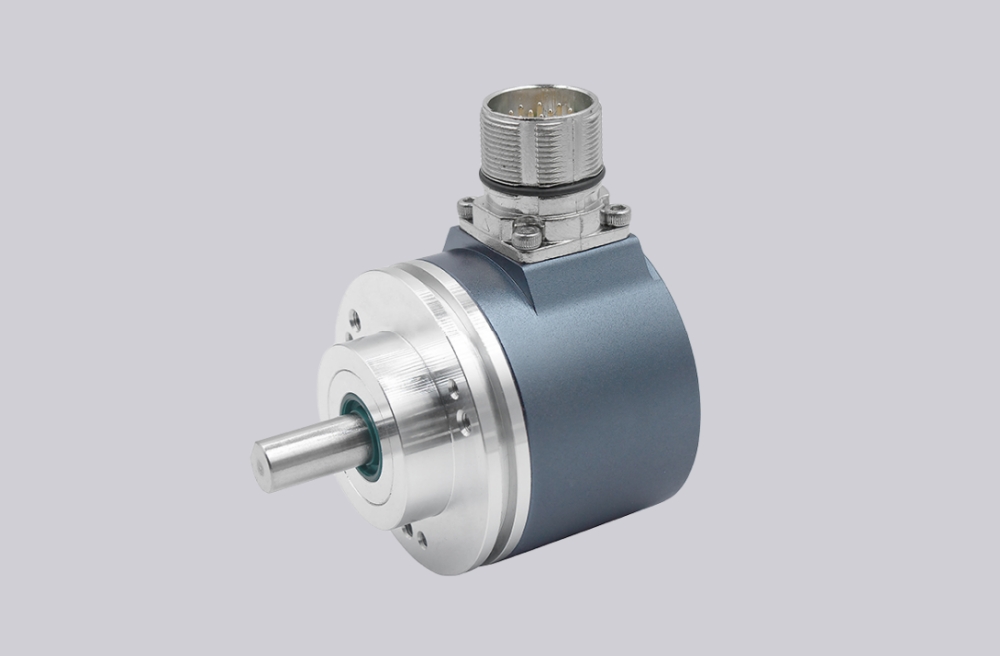
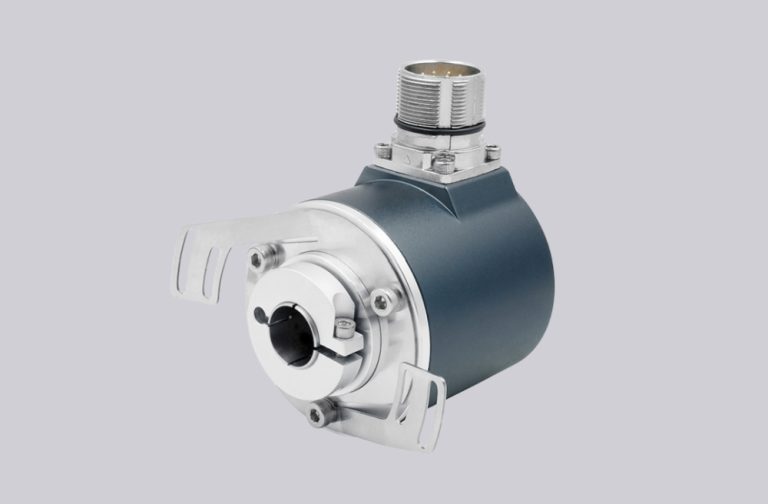
The housing provides protection and structural stability for the encoder while accommodating solid or blind hollow shafts.
Key design features include:
- Compact cylindrical design for tight spaces
- Solid shaft for direct coupling to machinery
- Blind hollow shaft for simple shaft clamping without additional couplings
This flexibility allows engineers to select the optimal mechanical interface for their specific system.
Shaft Interface Options: Solid vs Blind Hollow
- Solid shaft: Allows use of couplings to accommodate misalignment and vibration isolation.
- Blind hollow shaft: Simplifies installation over existing shafts without requiring mechanical modifications.
Correct selection ensures long-term accuracy, mechanical stability, and minimal maintenance.
Flange Types and Mounting Flexibility
Standard-housing CANopen encoders support multiple mounting solutions:
- Face flanges for precise axial positioning
- Clamping flanges for minor adjustments during installation
Flange choice affects repeatability and ease of installation, which is critical for high-precision industrial applications.
Environmental and Operational Considerations
Standard-housing designs are suitable for typical industrial environments:
- Moderate temperatures and humidity
- Indoor or enclosed installation
- Controlled exposure to dust and minor contaminants
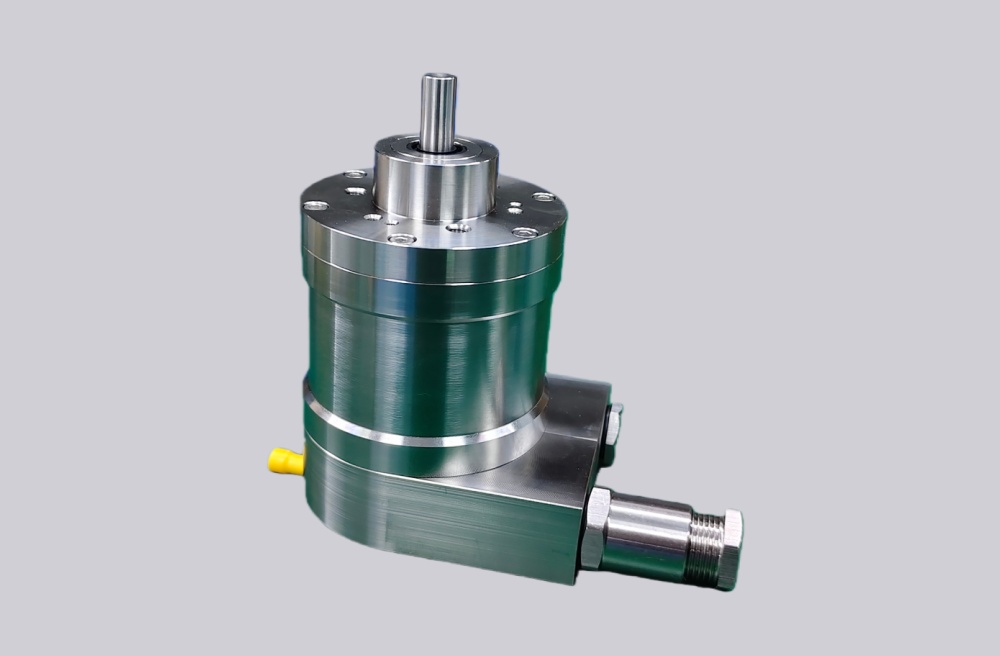
They are not intended for explosion-prone or extreme vibration conditions; in such cases, reinforced housings or explosion-proof models are required.
Functional Characteristics in Automation Systems
CANopen standard-housing encoders provide:
- Deterministic absolute position feedback
- Immediate position availability on power-up
- Stable CANopen communication and network integration
Engineers must ensure shaft alignment, clamping method, and bearing load are appropriate to maintain signal accuracy.
Typical Applications
- Conveyors and material handling systems
- Robotics and automation joints
- Packaging machinery
- Retrofit installations with minimal shaft modifications
The main advantage is mechanical flexibility with reliable position feedback.
Retrofit and Replacement Considerations
When replacing or retrofitting encoders:
- Verify shaft diameter and clamping method
- Confirm flange type compatibility
- Maintain alignment to prevent bearing stress
Proper engineering evaluation ensures system precision is preserved.
When Alternative Designs Should Be Considered
Alternative designs, such as explosion-proof or heavy-duty encoders, are recommended if:
- Hazardous conditions exist
- High shock, vibration, or temperature extremes are present
- Long-term durability under heavy mechanical load is required
Engineering Summary
Standard-housing CANopen absolute encoders provide versatile mechanical integration and reliable absolute feedback for general industrial automation.
Key selection factors include shaft type, flange, and installation environment, which must align with application requirements.

Comments (0)