

Why Voltage Output Analog Encoders Are Used
Voltage-output encoders (0–5 V or 0–10 V) are often chosen when:
- Cabling distances are short
- Integration with analog voltage input modules is desired
- Simpler wiring and diagnostics are prioritized
Voltage signals are easier to scale and interpret directly on many PLC and motion controller inputs.
Voltage Signal Behavior and Selection
Engineers should consider:
- Signal range (0–5 V vs 0–10 V) compatibility with input modules
- Voltage drop over cable (more significant than current output)
- Signal conditioning and filtering requirements
Correct signal selection avoids misinterpretation and improves control stability.
Mechanical Concept of Standard Housing
Standard-housing analog encoders provide robust mechanical integration with:
- Face or clamping flanges
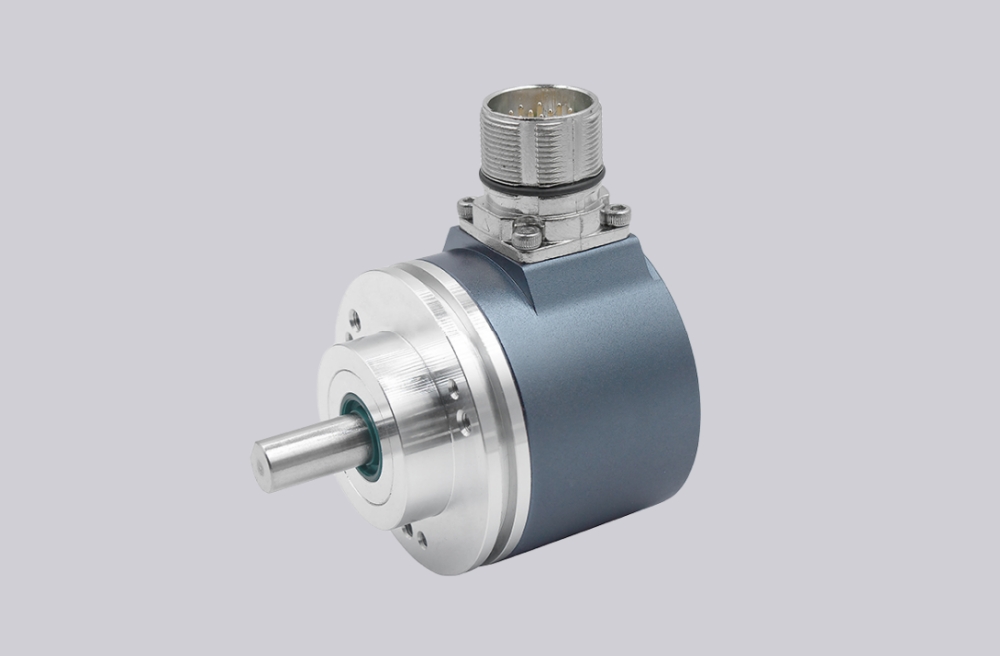
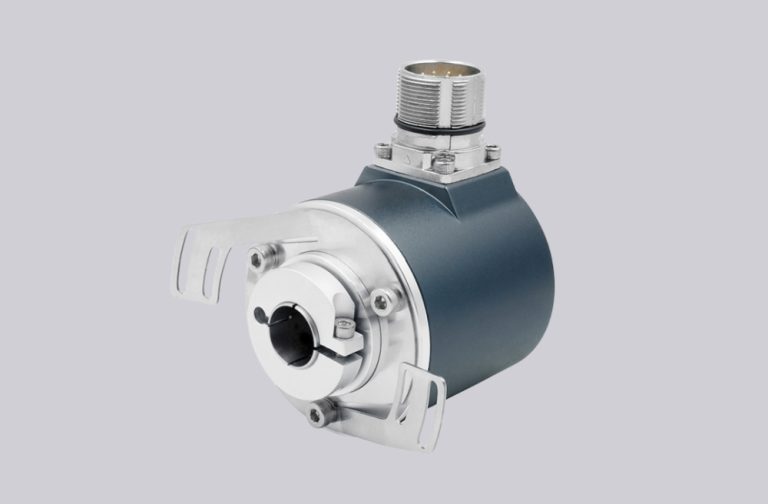
- Solid shaft and blind hollow shaft options
- Compact form factor for general industrial installations
Shaft Interface: Solid vs Blind Hollow
- Solid shaft allows flexible coupling for alignment
- Blind hollow shaft offers direct mounting with minimal parts
Proper interface selection reduces installation complexity and improves positional repeatability.
Environmental and Operational Considerations
Voltage-output encoders perform best in:
- Indoor automation environments
- Moderate temperature and humidity
- Systems with minimal electrical noise
Voltage sensors are typically more sensitive to noise and drop over distance, so cable management is critical.
Functional Integration with Control Systems
Voltage-output encoders can be integrated into:
- PLC analog voltage inputs
- Motion controller feedback loops
- Monitoring systems via data acquisition
Engineers should ensure input scaling, offset calibration, and noise rejection are properly handled.
Typical Application Scenarios
- Conveyor tracking with direct analog monitoring
- Analog feedback loops in robotics and assembly machines
- Short-run analog control applications
Voltage output is often the simplest choice when system architecture is analog-first.
Retrofit and Replacement Considerations
- Match signal range to controller input
- Verify mechanical mounting compatibility
- Adjust cabling and connector standards to maintain signal integrity
When to Consider Other Encoder Types
Consider digital or other protocol encoders when:
- Networked communication is required
- Harsh electrical environments exist
- High precision or long-distance cabling is needed
Engineering Summary
Standard-housing analog absolute encoders with voltage output provide:
- Direct analog position feedback
- Simple integration with voltage-input systems
- Practical performance for short-run industrial applications
Selection requires attention to signal range and electrical environment.

Comments (0)