

Why Current Output Analog Encoders Are Used
In industrial control systems, current-output analog absolute encoders (such as 4–20 mA or 0–20 mA) are widely selected when:
- Long cable runs are required
- Electrical noise immunity is important
- Simple process-level integration is needed
Current signals are less susceptible to voltage drop and interference over long distances, making them a common choice for position feedback in PLC, DCS, and process control environments.
Current Signal Characteristics and Encoder Selection
Key aspects of current signal selection include:
- Signal range (4–20 mA / 0–20 mA)
- 4–20 mA offers inherent “live-zero” capability, making it easier to detect open circuits.
- Voltage compliance with supply and loop resistance
- Resolution and accuracy trade-offs relative to mechanical system requirements
Engineers should evaluate control system input specifications and field wiring conditions prior to choosing a current-output analog encoder.
Mechanical Concept of Standard Housing
Standard-housing analog encoders provide:
- Compact mechanical footprint
- Multiple flange and shaft interface options
- Solid shaft and blind hollow shaft configurations
This flexibility supports a variety of machine mounting scenarios without requiring special enclosures.
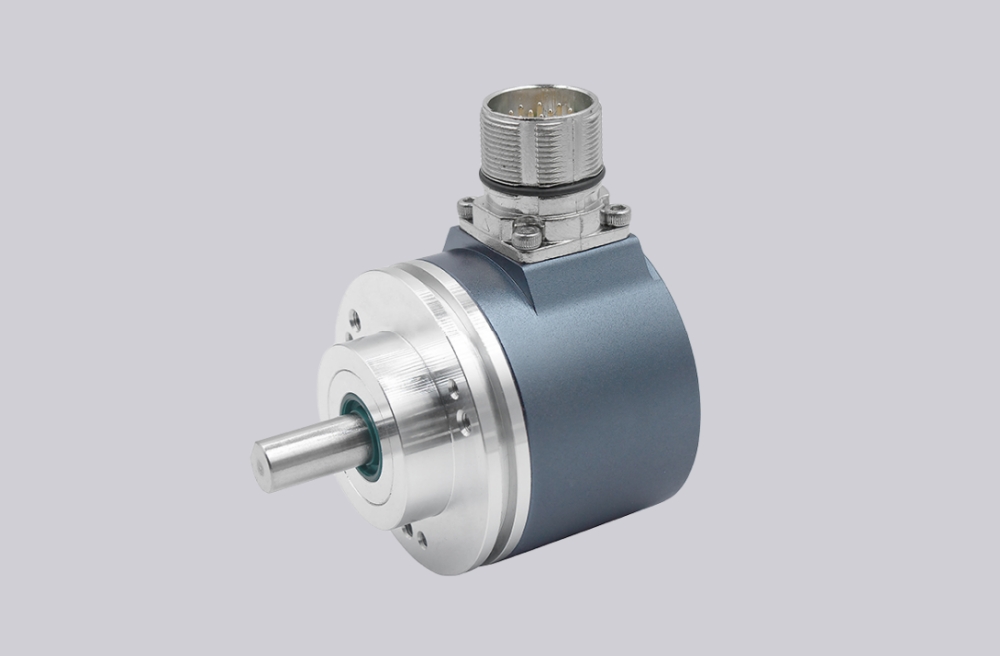
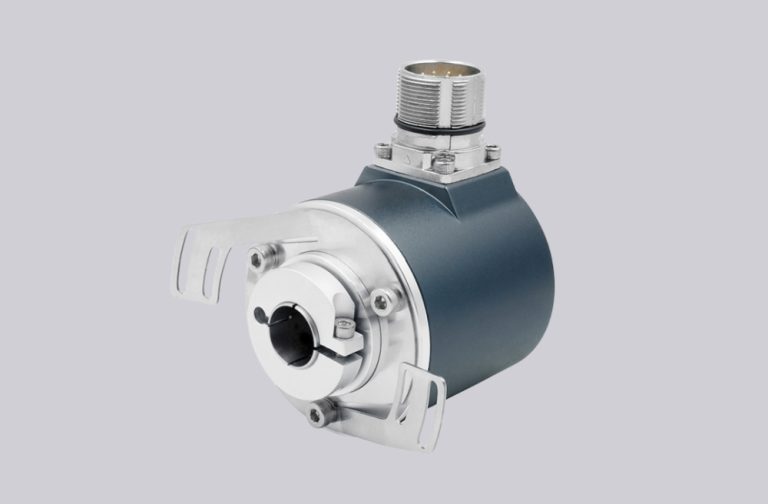
Shaft Interface: Solid vs Blind Hollow
- Solid shaft with flexible coupling → for alignment tolerance
- Blind hollow shaft → for simple installation over existing shafts
Both configurations support stable feedback, but shaft concentricity and clamping precision impact signal quality.
Environmental and Operational Considerations
Standard-housing analog encoders with current output are suitable for:
- Indoor industrial environments
- Moderate temperature ranges
- Locations with controlled contamination levels
They are not designed for explosion-prone or extreme-vibration environments.
Functional Integration with Control Systems
In practice, current-output encoders are integrated into:
- PLC analog input modules
- 4–20 mA process loops
- SCADA / HMI monitoring systems
Engineers should verify input scaling and filtering, especially when interpreting position feedback in PID loops or control algorithms.
Typical Application Scenarios
- Linear position transducers on material handling
- Rotary axis feedback in general automation
- Process control applications requiring robust analog feedback
The simplicity of current output makes these encoders easy to integrate with legacy analog systems.
Retrofit and Replacement Considerations
When replacing an existing analog encoder:
- Confirm signal range compatibility (4–20 mA vs 0–20 mA)
- Match mechanical interface (shaft and flange)
- Verify input module requirements on controller side
When to Consider Other Encoder Types
Alternative designs may be appropriate when:
- Digital communication protocols (SSI, CANopen, Profinet) are required
- Environmental exposure demands explosion-proof solutions
- High-speed precision motion control is prioritized
Engineering Summary
Standard-housing analog absolute encoders with current output provide:
- Reliable position feedback via 4–20 mA / 0–20 mA
- Good noise immunity over long cable runs
- Engineering simplicity in traditional control environments
Selection should consider signal range, cabling, and controller input compatibility.

Comments (0)